 ✨ AI Generated
Old Sakai Lighthouse
Japanese: 旧堺燈台
Sakai Ward, Sakai, Osaka
This information was written by AI and may contain mistakes. Please check official sources for opening hours, fees, and other details before you go.
Found a mistake? Let us know with “✏️ Something's wrong” on this spot's screen in asobot →
🎧 Audio guide(1:09)
In short
A lighthouse built in 1877 (Meiji 10), standing at the tip of Sakai Old Port. As one of the oldest Western-style wooden lighthouses in Japan, it is designated as a National Historic Site. Most of the construction costs and other expenses were covered by donations from the people of Sakai, and after illuminating Osaka Bay for about a century, its light was extinguished in 1968 (Showa 43) due to land reclamation in the surrounding area and other reasons.
- White hexagonal wooden tower: The hexagonal white tower made of wood remains where it was originally built. Even after completing its role, it is preserved as one of the symbols of Sakai. The interior is normally not open to the public, so viewing is from the outside
- Green light: An oil lamp placed inside the fifth-order lens emitted a fixed green light. Its light reached up to 10 nautical miles (approximately 18.5 kilometers) away
- Statue of the Dragon Goddess at the North Breakwater Pier: This statue was originally placed in front of the Ohama Aquarium during the 5th National Industrial Exhibition in 1903 (Meiji 36), and was restored in 2000 (Heisei 12) as a symbol of peace and prosperity
History and Highlights
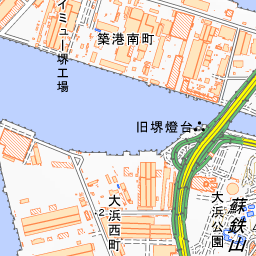
Old Sakai Lighthouse is a lighthouse built in 1877 (Meiji 10), standing at the tip of Sakai Old Port, about 1 kilometer west of Sakai Station on the Nankai Main Line. As one of the oldest Western-style wooden lighthouses in Japan, it is designated as a National Historic Site.
At Sakai Old Port, traditional light beacons had long protected the safety of ships, but with the arrival of the Meiji period, the installation of a Western-style lighthouse was considered. Although a request was made from Sakai to the Meiji government to establish one, it was not realized, and most of the construction costs were covered by donations from the people of Sakai. Tsugikuni Shinkichi, a stonemason from Bizen Province (present-day Okayama Prefecture), worked on the stone foundation, and Omayu Sataro, a carpenter living in Sakai, handled the construction work. The lens, manufactured by France's Barbier company, was purchased from the Lighthouse Bureau in Yokohama, and British engineer Bigglestone came to install it. In this way, the light was lit for the first time on September 15.
For about a century afterward, it continued to illuminate Osaka Bay, but due to land reclamation in the surrounding area, its light was extinguished in 1968 (Showa 43).
Viewing and Experience Points
- White hexagonal wooden tower: The hexagonal white tower made of wood remains where it was originally built. Even after completing its role, it is preserved as one of the symbols of Sakai.
- Green light: An oil lamp placed inside the fifth-order lens emitted a fixed green light. Its light reached up to 10 nautical miles (approximately 18.5 kilometers) away.
- Statue of the Dragon Goddess at the North Breakwater Pier: On the North Breakwater Pier stands the Statue of the Dragon Goddess. This statue was originally placed in front of the Ohama Aquarium during the 5th National Industrial Exhibition in 1903 (Meiji 36), and was restored in 2000 (Heisei 12) as a symbol of peace and prosperity.
Visiting Tips
The nearest station is Sakai Station on the Nankai Main Line. The interior is normally not open to the public, so viewing is from the outside.
About 1.3 kilometers to the southeast are Sakai Plaza of Rikyu and Akiko and the Sen no Rikyu Residence Site, which are associated with Sen no Rikyu.



Guides that include this spot (1)
Use asobot while you walk
- See where you are on the map and find spots nearby
- Listen to the guide's audio in course order, one after another (with subtitles)
- Walk to the next spot while following the map
Open on your phone
Scan to open this spot in asobot on your phone.