 ✨ AI Generated
Joge-cho
Japanese: 上下町
Fuchu, Hiroshima
This information was written by AI and may contain mistakes. Please check official sources for opening hours, fees, and other details before you go.
Found a mistake? Let us know with “✏️ Something's wrong” on this spot's screen in asobot →
🎧 Audio guide(1:03)
In short
Joge-cho is a mountain pass town in Fuchu City, situated on the watershed of the Chugoku Mountains. During the Edo period, it flourished as a post town along the Sekishu Kaido leading to the Iwami Ginzan Silver Mine and became a territory under the direct control of the shogunate. The main street is a shopping district known as the "White-Walled Townscape," lined with townhouses featuring white plaster walls, namako walls, and wooden lattices.
- Traces of the road widening: Around 1937 (Showa 12), Honmachi-dori was widened to roughly twice its former width as a military road, and traces of shortening the eaves and cutting away parts of the walls of the buildings on both sides can still be seen today
- Historic buildings within the townscape: There are Joge Christian Church, with its eye-catching octagonal tower, and the Meiji-era former police station, which still retains its watchtower in its original form
- Okinaza Theater: Built in the Taisho period by local townspeople, it is one of the few authentic wooden playhouses remaining in Japan and is a Registered Tangible Cultural Property of Japan
History and Highlights
Joge-cho is a mountain pass town located in Fuchu City, situated on the watershed of the Chugoku Mountains. During the Edo period, it flourished as a post town along the Sekishu Kaido leading to the Iwami Ginzan Silver Mine and became a territory under the direct control of the shogunate. A magistrate's office (daikansho) was established here, making it the regional political center, and it developed as a town of finance and commerce.
The town's main street is a shopping district known as the "White-Walled Townscape." Townhouses featuring white plaster walls, namako walls (tiled walls with raised plaster joints), and wooden lattices line the street; more than half of the buildings were constructed between the Edo period and the early Showa period, or have been repaired and renovated from that time. Around 1937, Honmachi-dori was widened to roughly twice its former width as a military road. Space for the road was created by shortening the eaves of the roofs or cutting away parts of the roadside walls of the buildings on both sides. Traces of this can still be seen today, which may be considered a distinctive feature unique to the townscape of Joge.
Within the townscape stands the Joge Historical and Cultural Museum, which is the renovated birthplace of writer Okada Michiyo, who served as the model for the heroine in "The Quilt" (Futon), a novel by the Meiji-era literary master Tayama Katai.
Sights and Experiences
- Historic Buildings within the Townscape: Joge Christian Church was originally built during the Meiji period as a storehouse for the wealthy Suminokura family and became a church after the war. With its eye-catching octagonal tower, it is one of the symbols of Joge. The Former Tanabe Residence, an Edo-period townhouse, operated as a kakeya handling the shogunate's public funds and later ran a sake brewery around the beginning of the Meiji period. The Meiji-era former police station still retains its watchtower in its original form.
- Okinaza Theater: This is one of the few authentic wooden playhouses remaining in Japan, completed in the Taisho period after local townspeople formed an organization to build a theater. Historical records show that the popular period-drama actor Hasegawa Kazuo performed here for its opening in 1927. The stage features a revolving stage, a hanamichi (runway) on the left side, and second-floor seats overlooking the stage. It is a Registered Tangible Cultural Property of Japan.
- Townscape during the Hinamatsuri: During the Tenryo Joge Hinamatsuri, a variety of Hina dolls ranging from the Edo period to modern times are displayed throughout the white-walled townscape.
Walking Tips
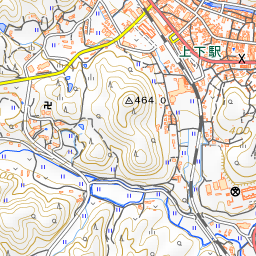
It is about a 5-minute walk from JR Joge Station to the white-walled townscape. Okinaza Theater is located at the end of the road after crossing Okina Bridge from Honmachi-dori. Walking with a local guide allows you to visit places that cannot be entered without a guide. About 8 kilometers to the southwest is Sera Kogen Farm, a sightseeing flower farm.
Guides that include this spot (1)
Use asobot while you walk
- See where you are on the map and find spots nearby
- Listen to the guide's audio in course order, one after another (with subtitles)
- Walk to the next spot while following the map
Open on your phone
Scan to open this spot in asobot on your phone.