 ✨ AI Generated
Hokan-ji Temple
Japanese: 法観寺
Higashiyama Ward, Kyoto
This information was written by AI and may contain mistakes. Please check official sources for opening hours, fees, and other details before you go.
Found a mistake? Let us know with “✏️ Something's wrong” on this spot's screen in asobot →
🎧 Audio guide(1:09)
In short
A temple of the Kennin-ji school of Rinzai Zen Buddhism, known for its five-story pagoda called the "Yasaka Pagoda." It is an ancient temple founded during the Asuka period as the clan temple of the Yasaka clan, and in addition to the five-story pagoda, the Yakushi-do and Taishi-do halls still remain within the temple grounds. The current five-story pagoda was rebuilt in 1440 (Eikyo 12) by Ashikaga Yoshinori.
- Muromachi-Period Five-Story Pagoda: A 46-meter-high five-story pagoda built in the mid-Muromachi period, with a formal tiled roof (hongawarabuki). It was designated as a National Important Cultural Property in 1897 (Meiji 30)
- Scenery of Slopes and Machiya Townhouses: Kyoto City recognizes that the historic buildings of temples and shrines such as the Yasaka Pagoda, the stone steps of Sannenzaka Slope and Ninenzaka Slope, the paved stone slopes, and the machiya townhouses dating from the late Edo period to the Taisho period come together to create an outstanding historical landscape
- The Kiyomizu Area: An area home to a gathering of ancient temples and shrines, including Kiyomizu-dera Temple. It is also where Kyo-yaki and Kiyomizu-yaki Ware flourished at the beginning of the Edo period, serving as a foundation for local industry
History and Highlights
Hokan-ji Temple is a temple of the Kennin-ji school of Rinzai Zen Buddhism, known for its five-story pagoda called the Yasaka Pagoda. It is an ancient temple founded during the Asuka period as the clan temple of the Yasaka clan. In addition to the five-story pagoda, the Yakushi-do and Taishi-do halls still remain within the temple grounds.
The temple faces Yasaka-dori Street, and this Kiyomizu area is home to a gathering of ancient temples and shrines, including Kiyomizu-dera Temple, Rokuharamitsu-ji Temple, and Rokudo Chinno-ji Temple. The Kiyomizu area is also where Kyo-yaki and Kiyomizu-yaki Ware flourished at the beginning of the Edo period, serving as a foundation for local industry. The current five-story pagoda was rebuilt in 1440 by Ashikaga Yoshinori. The pagoda has become an essential presence in the landscape of Higashiyama.
Points for Viewing and Experience
- Muromachi-Period Five-Story Pagoda: The Yasaka Pagoda is a 46-meter-high five-story pagoda built in the mid-Muromachi period. It features a formal tiled roof (hongawarabuki) and was designated as a National Important Cultural Property in 1897.
- Scenery of Slopes and Machiya Townhouses: Kyoto City recognizes that the historic buildings of temples and shrines such as the Yasaka Pagoda, the stone steps of Sannenzaka Slope and Ninenzaka Slope, the curving paved stone slopes, and the machiya townhouses dating from the late Edo period to the Taisho period lining the streets come together to create an outstanding historical landscape.
- Townscape around Gion and Kiyomizu-dera Temple: The buildings around Gion and Kiyomizu-dera Temple are said to house traditional shops, each with its own character, displaying a variety of appearances that make use of the traditions of Kyoto machiya townhouses.
Tips for Walking Around
It is about a 5-minute walk from the "Higashiyama Yasui" or "Kiyomizu-michi" city bus stop. Kodai-ji Temple is about 230 meters to the northeast, Sannenzaka Slope is about 280 meters to the southeast, and Kiyomizu-dera Temple is about 660 meters away. Walking north for about 580 meters leads to Yasaka-jinja Shrine, and Rokuharamitsu-ji Temple is about 570 meters to the west. In this area, there are numerous spots where you can view or look down upon the townscape, temples, and shrines from higher ground.
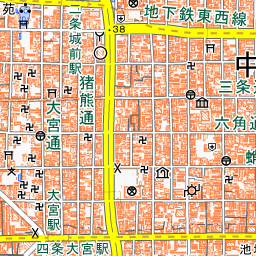

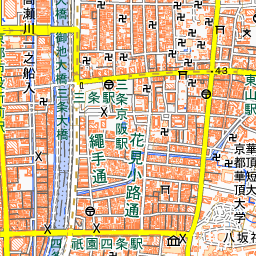


Spot location © OpenStreetMap contributors (ODbL)
Open in Google MapsGuides that include this spot (1)
Use asobot while you walk
- See where you are on the map and find spots nearby
- Listen to the guide's audio in course order, one after another (with subtitles)
- Walk to the next spot while following the map
Open on your phone
Scan to open this spot in asobot on your phone.