 ✨ AI Generated
The Museum of Kyoto
Japanese: 京都府京都文化博物館
Nakagyo Ward, Kyoto
This information was written by AI and may contain mistakes. Please check official sources for opening hours, fees, and other details before you go.
Found a mistake? Let us know with “✏️ Something's wrong” on this spot's screen in asobot →
🎧 Audio guide(1:11)
In short
The Museum of Kyoto is a comprehensive cultural facility of Kyoto Prefecture that opened in October 1988. It combines three functions: a history museum, an art museum, and a film library. Its symbol, the red-brick Annex, was built in 1906 as the Kyoto Branch of the Bank of Japan and is designated a national Important Cultural Property as a Western-style building representative of the Meiji period.
- The former banking hall of the Annex: It was designed by Tatsuno Kingo and his disciple Nagano Uheiji. In the large atrium space, the counter screens, walls, and ceiling decorations clearly reflect the atmosphere of the Meiji period
- The main building's exhibition and film theater: The 2nd-floor comprehensive exhibition room introduces Kyoto's history and culture, and the 3rd-floor film theater screens classic and renowned Japanese films from Kyoto Prefecture's collection
- Roji-tenpo and the former vault: You can enjoy dining and shopping at Roji-tenpo, which reproduces the street-facing facades of Kyoto townhouses from the end of the Edo period. The former vault behind the Annex has been converted into a coffee shop
History and Highlights
The Museum of Kyoto is a comprehensive cultural facility established by Kyoto Prefecture, which opened in October 1988. It combines three functions: a history museum that presents the history and culture of Kyoto, an art museum that showcases the works of painters and craft artists associated with Kyoto, and a film library that exhibits and screens visual culture.
The symbol of the museum is its red-brick Annex facing Sanjo-dori Street. Built in 1906, it originally served as the Kyoto Branch of the Bank of Japan. It was designed by Tatsuno Kingo, often referred to as the father of modern Japanese architecture, and his disciple Nagano Uheiji. Tatsuno is also well known for designing Tokyo Station. The bank relocated in 1965, and the building was designated a national Important Cultural Property in 1969 as a Western-style building representative of the Meiji period.
Viewing and Experience Highlights
- Former Banking Hall of the Annex: Symmetrical facing Sanjo-dori Street, the exterior features red brick accented with white granite. Stepping inside reveals a large atrium space that once served as the banking hall, where the counter screens, walls, and ceiling decorations distinctly reflect the atmosphere of the Meiji period. The ceiling windows are designed to bring in natural light through the small dormer windows in the roof. Today, this space is used as a hall for concerts and lectures.
- Main Building Comprehensive Exhibition and Film Theater: The 2nd-floor comprehensive exhibition room introduces Kyoto's history and culture, focusing on materials in the Kyoto Prefectural collection. The 3rd-floor film theater screens classic and renowned Japanese films from the prefecture's collection. Kyoto was the birthplace of Japan's film industry and was once referred to as the Hollywood of Japan.
- Roji-tenpo Alley Shops and Former Vault: Inside the facility is "Roji-tenpo," an alley reproducing the street-facing facades of late Edo-period Kyoto townhouses (kyo-machiya), where visitors can enjoy dining and shopping. The former vault behind the Annex has been converted into a coffee shop.
Walking Tips
Sanjo-dori Street, which extends east and west in front of the museum, thrived in the Edo period as the western terminus of the Tokaido road, and from the Meiji period onward, it became lined with banks and post offices. Many historic buildings still remain today, and the stretch from Shinmachi-dori Street to Teramachi-dori Street is designated by Kyoto City as a "Kaiwai Landscape Improvement District." It is about a 3-minute walk east along Sanjo-dori Street from Karasuma Oike Subway Station. Approximately 400 meters to the northwest is Kyoto International Manga Museum, and about 300 meters to the southwest is Choho-ji Temple.


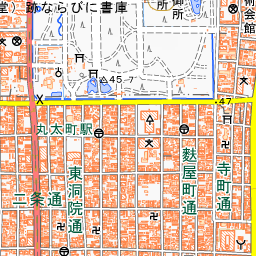


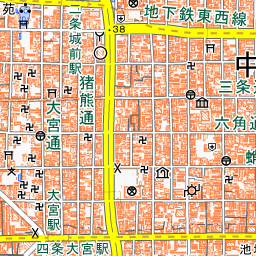

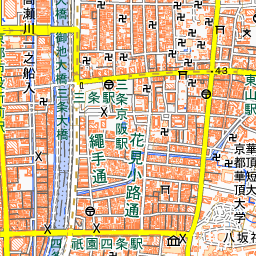


Spot location © OpenStreetMap contributors (ODbL)
Open in Google MapsGuides that include this spot (1)
Use asobot while you walk
- See where you are on the map and find spots nearby
- Listen to the guide's audio in course order, one after another (with subtitles)
- Walk to the next spot while following the map
Open on your phone
Scan to open this spot in asobot on your phone.