 ✨ AI Generated
Shinjuku Golden Gai
Japanese: 新宿ゴールデン街
Shinjuku City, Tokyo
This information was written by AI and may contain mistakes. Please check official sources for opening hours, fees, and other details before you go.
Found a mistake? Let us know with “✏️ Something's wrong” on this spot's screen in asobot →
🎧 Audio guide(1:12)
In short
Shinjuku Golden Gai is an area of drinking and dining establishments located in Kabukicho 1-chome. Originating from postwar street stalls that relocated here, it features low-rise wooden row-house buildings packed into a narrow plot of around 2,000 tsubo (approx. 6,600 square meters), densely packed with more than 280 bars. During Japan's period of rapid economic growth, it became a cultural center of Shinjuku where writers, film directors, and other cultural figures gathered.
- Streets lined with row houses: Row-house style buildings, virtually unchanged since before 1958, line six east-west alleys and one north-south alley.
- A gathering place for cultural figures: Writers, poets, theater artists, and others have stayed up all night sharing drinks and lively discussions here.
- Shiki no Michi: A pedestrian promenade running north-south along the western edge, where Tokyo city trams (Toden) once ran.
History and Highlights
Shinjuku Golden Gai is an area of bars and eateries in Kabukicho 1-chome, Shinjuku Ward. It is about a 5-minute walk from the East Exit of Shinjuku Station. Shortly after the end of World War II, a black market called the "Shinjuku Market" opened on the east side of Shinjuku Station. From 1949 onward, street vendors from Shinjuku 2-chome and the station's east exit relocated here, marking the beginnings of today's Golden Gai. The former name of this neighborhood was Sanko-cho. The popular name "Golden Gai" emerged around 1965.
The area was divided between two associations, with the northern side called "Sanko-cho" and the southern side known as "Hanazono-gai," each operating with different historical origins. Until the Anti-Prostitution Act came into full effect in 1958, it was an unlicensed red-light district known as an "aosen" (blue line) district. Afterward, the businesses converted into drinking establishments, but the wooden row-house style buildings from that era still remain today.
Leading into the era of rapid economic growth, writers, film directors, and other intellectuals gathered in its bars, making it the epicenter of Shinjuku's cultural scene. During the bubble economy era, redevelopment plans arose for this area, but the bar owners banded together and successfully protected it. Today, low-rise wooden row houses stand side-by-side in a tight space of around 2,000 tsubo, home to a dense cluster of more than 280 venues.
Points for Viewing and Experiencing
- Seven Alleys: Golden Gai is primarily composed of seven alleys: six running east-west and one running north-south. From north to south, the east-west alleys are Hanazono 8-bangai, 5-bangai, 3-bangai, 1-bangai, G2-dori, and G1-dori. Among them, 3-bangai is said to be the alley that best captures the quintessential atmosphere of Golden Gai.
- A Gathering Place for Cultural Figures: Around 1970, Shinjuku was a whirlpool of new Japanese culture, spanning music, cinema, theater, and fine arts. The tradition of writers, poets, theater figures, and media professionals drinking through the night and debating remains an enduring hallmark of Golden Gai today.
- Bar Hopping: Tiny bars of only about 10 to 15 square meters are densely packed together. Strolling through the narrow alleys and hopping between bars that catch your interest is the classic way to enjoy this neighborhood. In recent years, its unique streetscape has also become popular among international travelers.
Walking Tips
Running north to south along the western edge of Golden Gai is a promenade named "Shiki no Michi." It is a promenade park developed by Shinjuku Ward where municipal trams (Toden) once operated until their service was discontinued in 1970. Because each alley offers a distinct atmosphere, try walking through several of the east-west alleys from Shiki no Michi. Hanazono-jinja Shrine is located right next to Golden Gai, approximately 120 meters to the southeast. Kabukicho Ichibangai-dori Street is about 320 meters to the west-northwest.

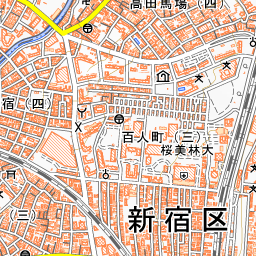


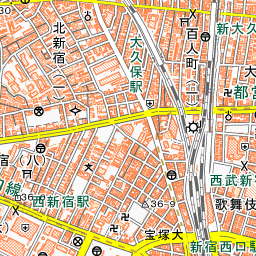


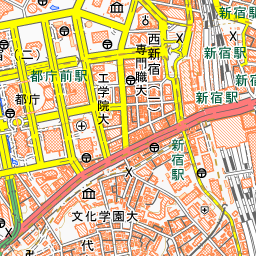


Spot location © OpenStreetMap contributors (ODbL)
Open in Google MapsGuides that include this spot (1)
Use asobot while you walk
- See where you are on the map and find spots nearby
- Listen to the guide's audio in course order, one after another (with subtitles)
- Walk to the next spot while following the map
Open on your phone
Scan to open this spot in asobot on your phone.