 ✨ AI Generated
Hakusan-jinja Shrine
Japanese: 白山神社
Bunkyo City, Tokyo
This information was written by AI and may contain mistakes. Please check official sources for opening hours, fees, and other details before you go.
Found a mistake? Let us know with “✏️ Something's wrong” on this spot's screen in asobot →
🎧 Audio guide(1:08)
In short
Hakusan-jinja Shrine is a shrine located in Hakusan, Bunkyo Ward. It is said to have begun during the Tenryaku era (947–957) when the deity of the Hakusan shrine, the Ichinomiya (first shrine) of Kaga Province, was invited and enshrined. It is known for approximately 3,000 hydrangea bushes spanning the shrine grounds and adjacent Hakusan Park, as well as for faith in curing toothaches. The local place name "Hakusan" also derives from this shrine.
- Hydrangeas and the Fujizuka: The Fujizuka (mound built to resemble Mt. Fuji) surrounded by hydrangeas is specially opened to the public only during the Bunkyo Hydrangea Festival.
- A Shrine Tied to Tsunayoshi: Because the shrine was relocated to its current site to accommodate the construction of his residence, it was devoutly revered by Tsunayoshi, the 5th Tokugawa Shogun, and his birth mother, Keishoin.
- Dr. Sun Yat-sen's Seated Stone: In a corner of the grounds stands a stone monument and a stone on which the Chinese revolutionary Sun Yat-sen is said to have sat.
History and Highlights
Hakusan-jinja Shrine is a shrine situated atop a gentle hill in Hakusan, Bunkyo Ward. Its founding is ancient; it is said that during the Tenryaku era (947–957), the Hakusan shrine of Kaga Ichinomiya was invited and enshrined in what is now the Hongo 1-chome area. It is the shrine from which the place name Hakusan originated, and it is one of the Tokyo Jissha (Ten Shrines of Tokyo).
Subsequently, the shrine relocated twice. During the Genna era (1615–1624), by order of the 2nd Shogun Hidetada, it moved to Sugamohara (now inside the Koishikawa Botanical Garden). Later, in the first year of Meireki (1655), it was moved to its current location to build a residence for Tsunayoshi, Lord of Tatebayashi, before he became shogun. Through this connection, it was deeply worshipped by Tsunayoshi and his birth mother, Keishoin. Renowned as the guardian deity of Koishikawa, it is said to have also gathered faith during the Edo period as a god that stops toothaches.
Its history as a famous hydrangea spot is linked to this faith regarding teeth. In 1975 (Showa 50), the previous head priest planted about 200 hydrangea bushes on the Fujizuka because they bloom around the time of "Dental Hygiene Week" in June. This was the beginning. In the 1978 fiscal year (Showa 53), the ward planted about 1,000 bushes when renovating Hakusan Park, arranging it so that the shrine and the park formed a unified landscape.
Viewing and Experiencing Points
- Hydrangeas and the Fujizuka: Every June, about 3,000 hydrangeas bloom across the grounds and into neighboring Hakusan Park. The Bunkyo Hydrangea Festival, one of the five major flower festivals of Bunkyo, has been held since 1985. During the festival period, the Fujizuka mound on the grounds, "Hakusan Fuji," is specially opened to the public. The entire mound is covered in hydrangeas, and when you reach the top of the stone steps, you can look down over the flowers.
- Dr. Sun Yat-sen's Seated Stone: In one corner of the shrine grounds, there is a stone monument embedded with a bronze relief of the Chinese revolutionary Sun Yat-sen, inscribed with "Dr. Sun Yat-sen's Seated Stone" at the top. The dark, horizontally long stone beneath the monument is said to be the one Sun sat upon. According to the shrine's records, in mid-May of 1910 (Meiji 43), Sun, who was staying nearby with Miyazaki Toten, sat on this stone with Toten and talked about the future of China and the revolution. At that time, a shooting star appeared in the night sky, and Sun is said to have pledged himself in his heart to the revolution. There is also another account stating that it was Toten's eldest son, Ryusuke, who watched the shooting star together with him.
- Tooth Health Prayer Service and Kanto Matsunoo Shrine: As a shrine known for toothache relief, a "Prayer Service for Dental Health" is held during the Hydrangea Festival. On the grounds, there is also Kanto Matsunoo Shrine, which enshrined a divided spirit from Matsunoo Taisha Shrine in Kyoto, worshiped as a deity of sake brewing.
Walking Tips
It is a 3-minute walk from Hakusan Station on the Toei Mita Line, and a 5-minute walk from Hon-komagome Station on the Tokyo Metro Namboku Line. During hydrangea season, try viewing the haiden (worship hall) through the hydrangeas. In the background of the honden (main hall), high-rise university buildings of Toyo University can be seen in the distance. The Koishikawa Botanical Garden, about 610 meters to the west, is the site where this shrine stood until the first year of Meireki.
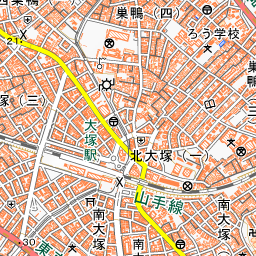

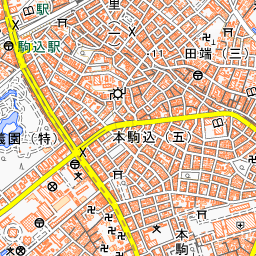


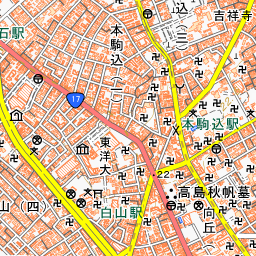

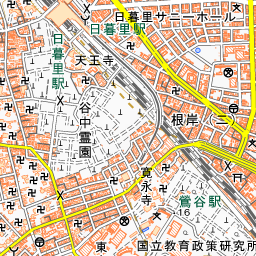
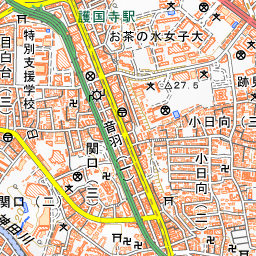
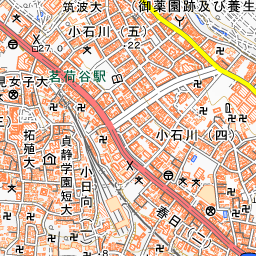

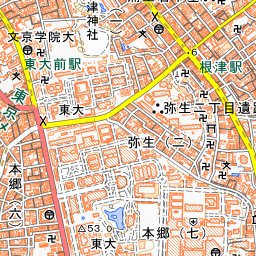

Spot location © OpenStreetMap contributors (ODbL)
Open in Google MapsUse asobot while you walk
- See where you are on the map and find spots nearby
- Listen to the guide's audio in course order, one after another (with subtitles)
- Walk to the next spot while following the map
Open on your phone
Scan to open this spot in asobot on your phone.