 ✨ AI Generated
Shinjuku Gyoen National Garden
Japanese: 新宿御苑
Shinjuku City, Tokyo
This information was written by AI and may contain mistakes. Please check official sources for opening hours, fees, and other details before you go.
Found a mistake? Let us know with “✏️ Something's wrong” on this spot's screen in asobot →
🎧 Audio guide(1:12)
In short
Shinjuku Gyoen National Garden is a 58.3-hectare garden spanning Shinjuku and Shibuya wards. Completed in 1906 as an imperial garden on the site of a residence that belonged to the Naito family, an Edo-period daimyo (feudal lord), it was opened to the public as a national garden in 1949. It is known as one of Japan's preeminent modern Western-style gardens, combining a formal garden, a landscape garden, and a Japanese garden.
- Three Distinct Gardens: You can stroll through a formal garden lined with plane trees, a landscape garden with expansive lawns, and a Japanese garden set around ponds.
- Approximately 900 Cherry Trees: Around 70 varieties of cherry blossoms range from early-blooming to late-blooming, allowing visitors to enjoy them from early to late spring.
- Buildings That Survived the Air Raids: The Kyu-Yokan-Gokyusho (Former Western-Style Rest House) and Kyu-Goryotei (Taiwan Pavilion) are structures that survived the air raids of 1945.
History and Highlights
Shinjuku Gyoen National Garden is a garden spanning Shinjuku and Shibuya wards. It has an area of 58.3 hectares and a perimeter of 3.5 kilometers. It is known as one of Japan's preeminent modern Western-style gardens, combining a formal garden, a landscape garden, and a Japanese garden.
Its history began in 1590 when Tokugawa Ieyasu granted land throughout the Shinjuku area to his close aide, Naito Kiyonari. A garden was later created on this site, which became the shimoyashiki (suburban residence) of the daimyo Naito family; the Tamagawa-en garden completed in 1772 is the origin of today's Tamamo Pond.
In the Meiji period, the Naito-Shinjuku Experimental Station was established on this land in 1872, and in 1879 it came under the jurisdiction of the Imperial Household Ministry and was renamed the Shokubutsu Gyoen (Botanical Garden). Fukuba Hayato, who was in charge, commissioned Henri Martinet, a professor at the National Horticultural College of Versailles, to design the renovation into a Western-style garden. The garden completed through renovations from 1902 to 1906 forms the basis of today's Shinjuku Gyoen layout. After becoming an imperial garden, cherry blossom viewing parties and chrysanthemum viewing parties were also held.
During the air raids of 1945, the grounds were almost completely destroyed by fire. After the war, on May 21, 1949, it was opened to the public as "Shinjuku Gyoen National Garden," and is currently managed by the Ministry of the Environment.
Highlights for Viewing and Experiencing
- Three Garden Styles: The formal garden features a symmetrical design with rose flowerbeds containing about 500 bushes of roughly 100 varieties, as well as an avenue of around 160 plane trees. The landscape garden consists of expansive lawns where giant trees such as tulip trees and Himalayan cedars stand. The Japanese garden, which you can walk through along the Upper Pond, took its present form in 1903.
- Kyu-Yokan-Gokyusho and Kyu-Goryotei: The Kyu-Yokan-Gokyusho is a single-story wooden building erected in 1896 as a resting place for the Emperor and imperial family when viewing the greenhouse, and it is an Important Cultural Property of Japan. Standing in the Japanese garden, the Kyu-Goryotei was presented in 1927 by Japanese volunteers residing in Taiwan to commemorate the marriage of the future Showa Emperor. Both structures survived the air raids of 1945.
- Cherry Blossoms and the Greenhouse: There are approximately 900 cherry trees of around 70 varieties in the garden, ranging from early to late bloomers, which can be enjoyed from early to late spring. The greenhouse was rebuilt in 2012 and displays tropical and subtropical plants, as well as endangered species.
Walking Tips
There are three entrance gates: Shinjuku Gate, Okido Gate, and Sendagaya Gate. Shinjuku Gate is a 5-minute walk from Tokyo Metro Shinjuku-sanchome Station or Shinjuku-gyoemmae Station, while Sendagaya Gate is a 5-minute walk from JR Sendagaya Station. Entering through Okido Gate brings the glass-walled greenhouse into view first. In the Japanese garden, you can gaze out over the garden scenery across the pond from the Kyu-Goryotei, with its red roof and upward-curving white eaves. Tamamo Pond retains traces of the Edo-period daimyo garden and is the location within the park with the deepest history. As it becomes very crowded during the cherry blossom and autumn foliage seasons, it is recommended to visit by public transportation.

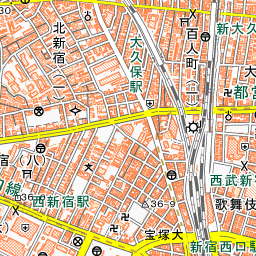


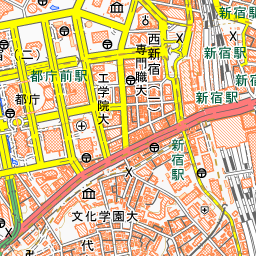


Spot location © OpenStreetMap contributors (ODbL)
Open in Google MapsGuides that include this spot (1)
Use asobot while you walk
- See where you are on the map and find spots nearby
- Listen to the guide's audio in course order, one after another (with subtitles)
- Walk to the next spot while following the map
Open on your phone
Scan to open this spot in asobot on your phone.