 ✨ AI Generated
Taito City Calligraphy Museum
Japanese: 台東区立書道博物館
Taito City, Tokyo
This information was written by AI and may contain mistakes. Please check official sources for opening hours, fees, and other details before you go.
Found a mistake? Let us know with “✏️ Something's wrong” on this spot's screen in asobot →
🎧 Audio guide(1:04)
In short
Taito City Calligraphy Museum is a museum specializing in the history of calligraphy, featuring materials collected single-handedly by Nakamura Fusetsu, a Western-style painter and calligrapher, over more than 40 years of his life. It houses about 16,000 items from China and Japan, including 12 Important Cultural Properties and 5 Important Art Objects.
- Written Materials in the Main Building: The permanent exhibition displays collection items engraved or written with characters, allowing visitors to trace the history of scripts.
- Oracle Bone Script: Characters carved into turtle plastrons and bovine shoulder blades, which are said to be the oldest existing Chinese characters.
- Buildings Surrounding the Garden: A Meiji-era storehouse, a Taisho-era storehouse, the Showa-era Main Building, and the Heisei-era Nakamura Fusetsu Memorial Hall are arranged to enclose a garden.
History and Highlights
Taito City Calligraphy Museum is a museum specializing in the history of calligraphy, featuring materials collected single-handedly over more than 40 years by Nakamura Fusetsu (1866–1943), who was both a Western-style painter and a calligrapher. Its collection of about 16,000 items from China and Japan, such as oracle bone script on tortoise shells and animal bones, bronzeware, stone monuments, rubbings, and Buddhist sutra scrolls, includes 12 Important Cultural Properties and 5 Important Art Objects.
The greatest turning point that led Fusetsu to devote himself to calligraphy research was his journey to China in 1895 (Meiji 28) as a war correspondent during the First Sino-Japanese War alongside Masaoka Shiki. There, he saw rubbings and archaeological materials and brought them back to Japan. His 1908 (Meiji 41) work Ryuminjo caused a major sensation in the calligraphy world. Today, Fusetsu's characters can still be seen on the signage of "Shinjuku Nakamuraya," labels for sake brands "Masumi" and "Nihonsakari," and packaging for "Shinshu-ichi Miso."
The museum opened in November 1936 (Showa 11). The costs for the collected items and the construction were entirely paid for out of the fees Fusetsu earned for his own paintings and calligraphy works. For about 60 years after opening, it was maintained by the Nakamura family, before being donated to Taito City in December 1995 (Heisei 7). In April 2000 (Heisei 12), it reopened under its current name as Taito City Calligraphy Museum.
Viewing and Experience Highlights
- Written Materials in the Main Building: In the Main Building, collection items engraved or written with characters are permanently exhibited. While calligraphy often brings to mind works written with ink on paper, this museum's major distinctive feature is its extensive collection of epigraphic written materials that represent the very origins of the art.
- Oracle Bone Script and Rubbings: The oracle bone script in the collection features characters carved into turtle plastrons and bovine shoulder blades, which are said to be the oldest existing Chinese characters. A rubbing of the carved stone erected on Mount Tai to commemorate the achievements of the First Emperor of Qin was made during the Song Dynasty and is considered an invaluable artifact that preserves the largest number of characters.
- Nakamura Fusetsu Memorial Hall: This hall introduces rubbings, sutra scrolls, and the calligraphy of literati through themed feature exhibitions and special exhibitions. It also contains the Nakamura Fusetsu Memorial Room, which displays Fusetsu's own works and related materials.
Visiting Tips
After viewing the exhibits, take a look at the garden enclosed by the buildings. The Meiji-era storehouse was originally built by Fusetsu in 1899 (Meiji 32) on the grounds of his residence at the time. In 2011 (Heisei 23), it was discovered by chance by someone documenting townscapes that were disappearing due to road widening. Compared with old photographs, it was confirmed to be Fusetsu's storehouse, and it was relocated to this site and preserved. This building, which continued to safeguard Fusetsu's collection, can be said to be the origin of the museum.
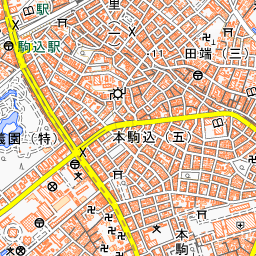
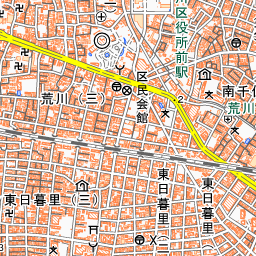
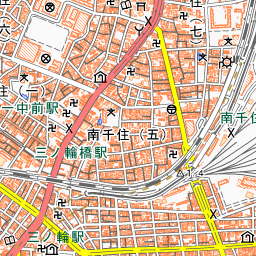
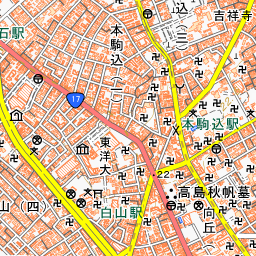
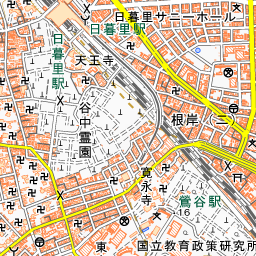
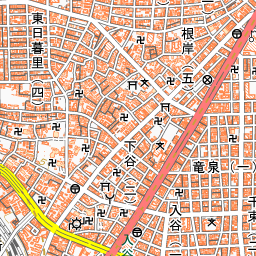
It is a 5-minute walk from the North Exit of JR Uguisudani Station. In the same Negishi, Iriya, and Kanasugi area, you will find Shiki-an, built on the former residence site of Masaoka Shiki. Yanaka Cemetery is located about 540 meters to the west.





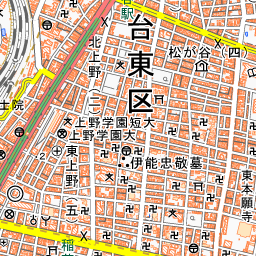

Spot location © OpenStreetMap contributors (ODbL)
Open in Google MapsUse asobot while you walk
- See where you are on the map and find spots nearby
- Listen to the guide's audio in course order, one after another (with subtitles)
- Walk to the next spot while following the map
Open on your phone
Scan to open this spot in asobot on your phone.