 ✨ AI Generated
Tokyo Skytree
Japanese: 東京スカイツリー
Sumida City, Tokyo
This information was written by AI and may contain mistakes. Please check official sources for opening hours, fees, and other details before you go.
Found a mistake? Let us know with “✏️ Something's wrong” on this spot's screen in asobot →
🎧 Audio guide(1:02)
In short
Tokyo Skytree is a 634-meter-tall freestanding broadcast tower standing in Oshiage, Sumida Ward. Opened in 2012, it was certified by Guinness World Records the previous year in 2011 as the world's tallest tower.
- Two Observation Decks: You can overlook the cityscape of Tokyo from the Tembo Deck at 350 meters above ground and the Tembo Galleria at 450 meters above ground.
- A Shape Mindful of Tradition: Conceived in the image of a giant tree reaching toward the sky, its silhouette incorporates sori (concave curves) and mukuri (convex curves) found in traditional Japanese architecture.
- Night Illumination: Three primary lighting patterns color the night sky: the pale blue "Iki," the Edo purple "Miyabi," and the orange-based "Nobori."
History and Highlights
Tokyo Skytree is a 634-meter-tall freestanding broadcast tower standing in Oshiage, Sumida Ward. It held its grand opening alongside Tokyo Skytree Town on May 22, 2012. Its primary role is terrestrial digital broadcasting transmission. Because concerns arose over interference from 200-meter-class skyscrapers rising in central Tokyo, a new 600-meter-class tower was called for.
The height was initially planned to be "around 610 meters." After extensive deliberation aimed at making it the world's tallest freestanding broadcast tower, it was set at 634 meters. In 2011, it was recognized by Guinness World Records as the world's tallest tower. The digits 6-3-4 can be read as "mu-sa-shi," making it an easy-to-remember number that evokes Musashi Province (Musashi no Kuni), the old provincial name. Looking back into history, the area where the tower stands was also once part of Musashi Province.
The design is inspired by a large tree stretching toward the sky. Its base forms a triangle with sides of about 68 meters, which transitions into a circle as it reaches the top. The silhouette reflects the sori and mukuri seen in traditional Japanese architecture, showing various expressions depending on the viewing angle and location.
At the center of the tower is a reinforced concrete cylinder called the shinbashira (central pillar), used in the vibration-control mechanism. Japan's traditional five-story pagodas have also never collapsed in an earthquake, and it is inferred that their secret lies similarly in a central shinbashira.
Viewing and Experience Points
- Tembo Deck: An observation deck 350 meters above ground. It takes about 50 seconds to arrive by elevator from ground level. On Floor 340, there is a 2-meter by 3-meter glass floor where visitors can enjoy the view opening up directly beneath their feet. On clear days, you can gaze out across the Kanto Plain.
- Tembo Galleria: From Floor 350 of the Tembo Deck, the Tembo Shuttle ascends to 445 meters above ground. From there, visitors proceed along a tube-shaped glass corridor with the feeling of walking on air. The highest reachable point is the "Sorakara Point" at 451.2 meters.
- Illumination: There are three main lighting themes: "Iki," a pale blue evoking the waters of the Sumida River; "Miyabi," clad in Edo purple; and "Nobori," based on orange to represent the liveliness of festivals.
Tips for Exploring
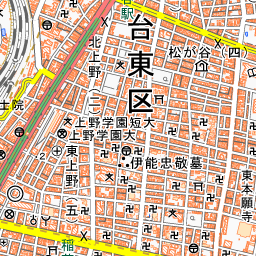
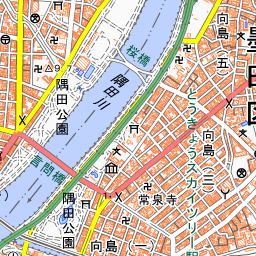
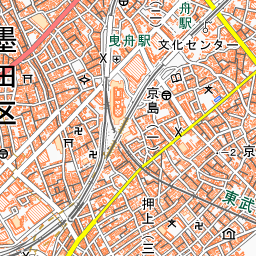
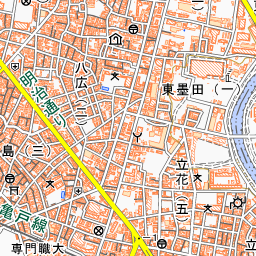
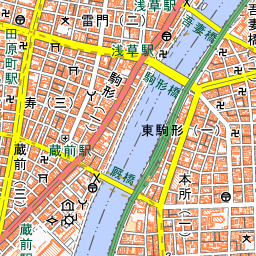
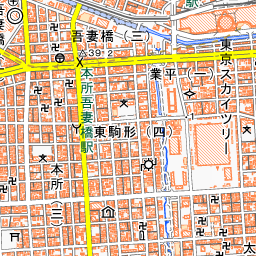
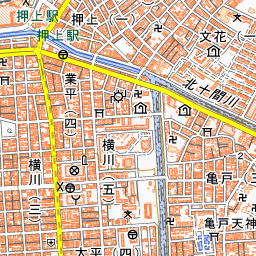
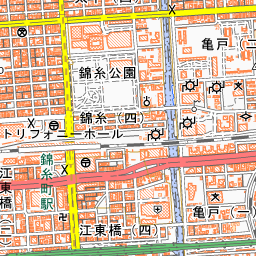
The nearest stations are Tokyo Skytree Station on the Tobu Skytree Line and Oshiage (Skytree) Station on lines such as the Hanzomon Line. Tokyo Skytree Station was renamed from "Narihirabashi Station" in March 2012. On the 5th and 6th floors of Tokyo Solamachi at the base, you will find the Sumida Aquarium. About 650 meters to the west along the Kitajukken River lies TOKYO mizumachi, from where you can cross the Sumida River on foot toward Asakusa.




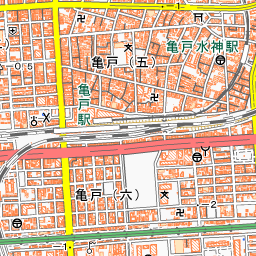
Spot location © OpenStreetMap contributors (ODbL)
Open in Google MapsGuides that include this spot (1)
Use asobot while you walk
- See where you are on the map and find spots nearby
- Listen to the guide's audio in course order, one after another (with subtitles)
- Walk to the next spot while following the map
Open on your phone
Scan to open this spot in asobot on your phone.