 ✨ AI Generated
Zojo-ji Temple
Japanese: 増上寺
Minato City, Tokyo
This information was written by AI and may contain mistakes. Please check official sources for opening hours, fees, and other details before you go.
Found a mistake? Let us know with “✏️ Something's wrong” on this spot's screen in asobot →
🎧 Audio guide(1:10)
In short
Zojo-ji Temple is one of the seven head temples of the Jodo sect and the family temple of the Tokugawa clan. It was founded in 1393 by the priest Yuyo Shoso and relocated to its current site in Shiba in 1598. It houses the graves of six Tokugawa shoguns and is also known for its view with Tokyo Tower rising in the background.
- Sangedatsumon Gate: Rebuilt in 1622, this is one of the largest temple gates in eastern Japan. It is currently undergoing preservation and repair work, scheduled to continue until 2032.
- Tokugawa Shogun Family Graveyard: Entered through the bronze Inukimon Gate, this area features the stone lanterns and treasure stupas (hoto) of the shoguns.
- Sentai Kosodate Jizo-son: Located on the northern edge of the grounds, around 1,300 Jizo statues are lined up, adorned with pinwheels offered to them.
History and Highlights
Zojo-ji Temple is one of the seven head temples of the Jodo sect, and its official name is San'enzan Kodoin Zojo-ji. In 1393, it was founded by Yuyo Shoso, the eighth patriarch of the Jodo sect. It is said to have originally been located in Kaizuka, Toshima District, Musashi Province, an area stretching between present-day Hirakawacho and Kojimachi in Chiyoda Ward.
In 1590, shortly after gaining control of the Kanto region, Tokugawa Ieyasu chose Zojo-ji Temple as the Tokugawa family temple. The temple was moved to Shiba in 1598 and flourished greatly during the Edo period. It served as the head of the Kanto Juhachi Danrin (eighteen training seminaries of the Kanto region), and it is said that there were constantly as many as 3,000 monk students practicing here. The temple's estate was over 10,000 koku, and it was celebrated as having the status of a "million koku temple."
During the Meiji period, the main hall (Daiden) was lost twice to major fires, and during the air raids of 1945, most of the temple complex and the Otamaya (mausoleums) were burned down. The current Daiden was completed in 1974, standing within the grounds alongside the Sangedatsumon Gate and the Kuromon (Black Gate), both of which escaped destruction by fire.
Viewing and Experience Highlights
- Sangedatsumon Gate: The inner gate of Zojo-ji Temple, commonly called the Sanmon. Its name signifies liberation from the three defilements of greed, anger, and ignorance. Rebuilt in 1622, this vermilion-lacquered two-story gate is one of the largest in eastern Japan and is designated as a National Important Cultural Property. Preservation and repair work is scheduled to run from January 2025 to 2032.
- Daiden and Ankokuden: The Daiden is one of the largest Buddhist halls in the Tokyo metropolitan area, with the main sanctuary located on the second floor at the top of the stone stairs. In the Ankokuden to the north, the "Kurohonzon"—a secret image of Amida Buddha deeply revered by Tokugawa Ieyasu—is enshrined, and is put on public display on the 15th of January, May, and September.
- Tokugawa Shogun Family Graveyard and Sentai Kosodate Jizo-son: Six shoguns—Hidetada, Ienobu, Ietsugu, Ieshige, Ieyoshi, and Iemochi—rest in the graveyard, alongside Princess Kazunomiya, the principal wife of Iemochi. The bronze Inukimon Gate at the entrance was originally the inner gate of Ienobu's mausoleum, featuring the Tokugawa hollyhock crest on its doors and an ascending dragon and descending dragon on either side. On the northern edge of the grounds, around 1,300 Jizo statues stand in rows with pinwheels offered to them.
Walking Tips
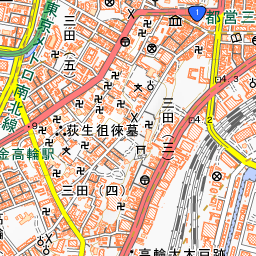
The temple is a 3-minute walk from Onarimon and Shibakoen Stations on the Toei Mita Line, 5 minutes from Daimon Station on the Toei Asakusa and Oedo Lines, and 10 minutes from Hamamatsucho Station on the JR Line. The path from the main outer gate, Daimon, to the Daiden represents the journey from our world to the Pure Land. The distance of approximately 108 ken (approx. 196 meters) from Daimon to the Sanmon derives from the 108 earthly desires, while the roughly 48 ken (approx. 87 meters) from the Sanmon to the Daiden corresponds to the 48 vows of Amida Buddha. The view of Tokyo Tower rising beyond Zojo-ji Temple is known as one of Tokyo's iconic sights. Tokyo Tower lies about 290 meters to the west-northwest, and Atago-jinja Shrine is located approximately 860 meters to the north.
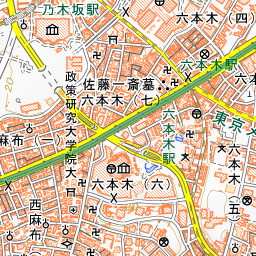
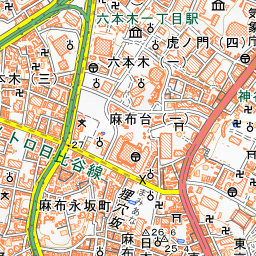
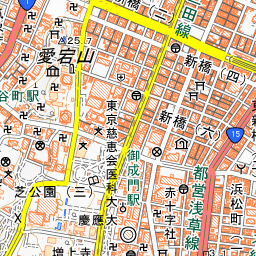

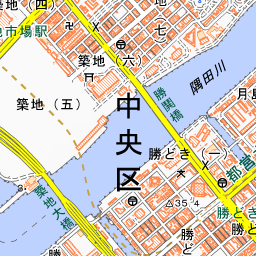
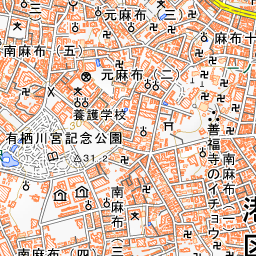
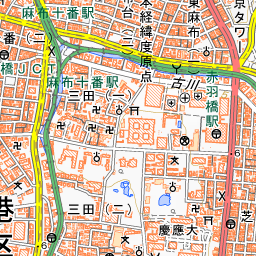
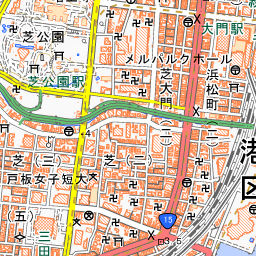
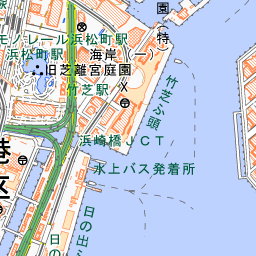


Spot location © OpenStreetMap contributors (ODbL)
Open in Google MapsGuides that include this spot (1)
Use asobot while you walk
- See where you are on the map and find spots nearby
- Listen to the guide's audio in course order, one after another (with subtitles)
- Walk to the next spot while following the map
Open on your phone
Scan to open this spot in asobot on your phone.