 ✨ AI Generated
The Shoto Museum of Art
Japanese: 渋谷区立松濤美術館
Shibuya City, Tokyo
This information was written by AI and may contain mistakes. Please check official sources for opening hours, fees, and other details before you go.
Found a mistake? Let us know with “✏️ Something's wrong” on this spot's screen in asobot →
🎧 Audio guide(0:55)
In short
The Shoto Museum of Art is a municipal art museum located in Shoto, Shibuya Ward, known as a quiet residential area. It opened in October 1981. The building was designed by Shirai Seiichi, who is said to be a philosophical architect, and it is also said to be one of the representative works of Shirai's later years.
- Exterior walls of kounseki stone: The exterior walls are made of stacked granite imported from South Korea, and the name "kounseki" was given by Shirai himself.
- Central atrium and fountain pool: There is an atrium in the center of the building, at the bottom of which is an elliptical pool with a fountain.
- Two floors above ground, two below: On a site in a residential area with limited area and height, two basement floors were created to accommodate exhibition rooms as well as a hall and a library.
History and Highlights
The Shoto Museum of Art opened on October 1, 1981. It was the second municipal ward museum to open, following the Itabashi Art Museum.
The architect, Shirai Seiichi, was born in Kyoto in 1905. After studying philosophy at Heidelberg University and the University of Berlin in Germany, he embarked on his career as an architect. He is also referred to as a philosophical architect. This museum, along with the Shizuoka City Serizawa Keisuke Art Museum, is said to be one of the representative works of Shirai's later years.
Shoto is known as a quiet, upscale residential area. Under the plans at that time, the building area was set at 150 tsubo (approx. 496 square meters), and the building height was restricted to no more than 10 meters above ground. By keeping the above-ground structure to two stories and creating two basement levels, Shirai accommodated not only exhibition rooms, but also a hall for art classes and a library. In addition, out of consideration for the residential neighborhood, exterior windows were minimized, and the structure was designed to draw in light through the central atrium.
It is said that the two major elements that make up Shirai's art museums are stone, which endures eternally, and water, which is constantly being reborn. In this museum as well, the exterior walls built of kounseki stone and the pool nestled in the center represent these two elements.
Points for Viewing and Experiencing
- Curved facade: The front wall curves inward as if drawing visitors inside. This was an ingenious way to make the space feel larger on a narrow site. The stone on the exterior walls is granite imported from South Korea, named "kounseki" by Shirai himself. On the right side of the facade, there is also a curious faucet that was not in the architectural blueprints.
- Atrium and bridge: The center of the building is an open atrium with an elliptical pool at the bottom, crossed by a bridge. In Shirai's original plan, visitors were to cross this bridge to enter the exhibition rooms. The pool lies below the bridge, while the open sky spreads above.
- Spiral staircase and luminous ceiling: There is a story told about the spiral staircase that craftsmen struggled for a long time to realize the curve Shirai envisioned. Inside the museum, there is also a luminous ceiling made of onyx stone.
Tips for Exploring
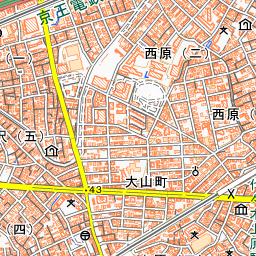
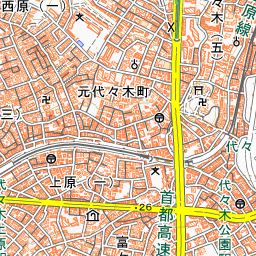
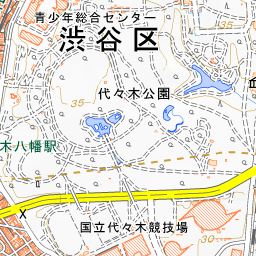
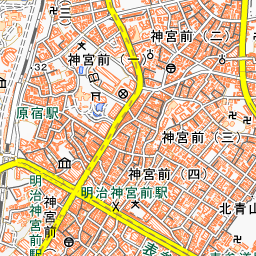
The museum is about a 5-minute walk from Shinsen Station on the Keio Inokashira Line, and about a 15-minute walk from Shibuya Station. There is no parking lot. Before entering the building, stand in front to take in the curved stone wall and look for the faucet on the right side. Inside the building, admire the fountain and pool as well as the light streaming in through the windows facing the atrium. Architectural tours of the building guided by staff members are also held on occasion. SHIBUYA109 is located approximately 630 meters to the east.
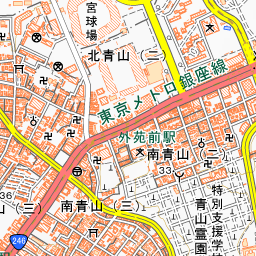
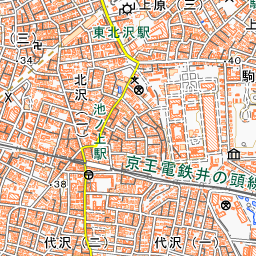
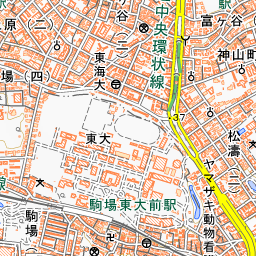
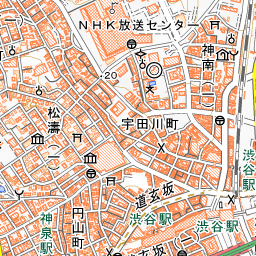
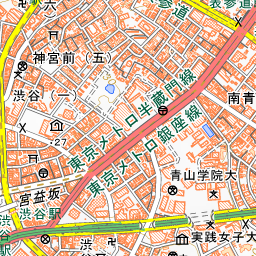
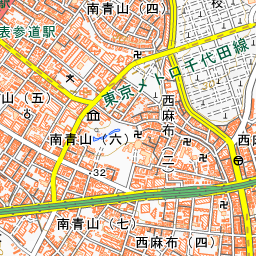


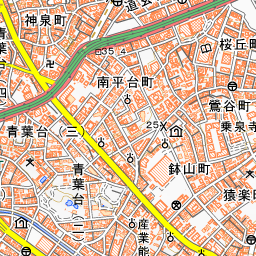
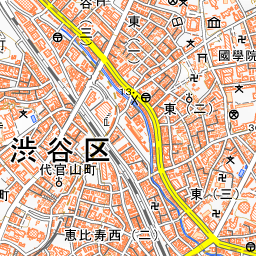
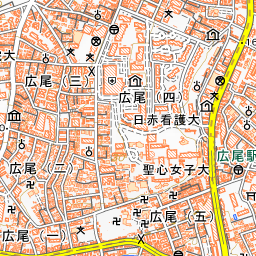
Spot location © OpenStreetMap contributors (ODbL)
Open in Google MapsUse asobot while you walk
- See where you are on the map and find spots nearby
- Listen to the guide's audio in course order, one after another (with subtitles)
- Walk to the next spot while following the map
Open on your phone
Scan to open this spot in asobot on your phone.