 ✨ AI Generated
Eisei Bunko Museum
Japanese: 永青文庫
Bunkyo City, Tokyo
This information was written by AI and may contain mistakes. Please check official sources for opening hours, fees, and other details before you go.
Found a mistake? Let us know with “✏️ Something's wrong” on this spot's screen in asobot →
🎧 Audio guide(1:06)
In short
The Eisei Bunko Museum, located in Mejirodai, Bunkyo Ward, is an art museum that preserves and exhibits cultural properties passed down through the daimyo Hosokawa family. It was established in 1950 by Hosokawa Moritatsu, the 16th head of the Hosokawa family. The collection includes about 6,000 works of art and crafts, including 8 National Treasures and 35 Important Cultural Properties, as well as 88,000 historical documents.
- Themed exhibitions: Because the collection is so diverse, exhibitions are held under specific themes each time.
- Former administrative office building: The building was constructed in 1930 as the kaseijo (administrative office) of the former Marquis Hosokawa family.
- Strolling in Mejirodai: Visits can be combined with the neighboring Higo Hosokawa Garden and the steep Munatsukizaka Slope.
History & Highlights
The Eisei Bunko Museum is an art museum located in a corner of Mejirodai that retains traces of the Musashino landscape. This is the former site of the vast Hosokawa family residence that existed from the Edo period until after World War II. With Fujitaka (Yusai) as its founder, the Hosokawa family was a daimyo clan that was granted the 540,000-koku domain of Higo Kumamoto during the time of the third head, Tadatoshi, and continued until the end of the Edo period.
The Eisei Bunko Museum preserves, researches, and publicly exhibits the historical documents and artworks passed down through this family. It was founded in 1950 by the 16th head, Hosokawa Moritatsu. The name was chosen by Moritatsu, taking the "Ei" from Eigen-an—a sub-temple of Kennin-ji Temple in Kyoto and itself the Hosokawa family's mortuary temple—and the "Sei" from Shoryuji Castle, which was Fujitaka's stronghold. It opened to the general public in 1972. The current building was constructed in 1930 as the kaseijo, or administrative office, of the former Marquis Hosokawa family.
The collection is divided into items handed down through the daimyo Hosokawa family since before the Edo period, and items collected mainly by Moritatsu in modern times. Tadaoki, whose wife was Gracia, was a senior disciple of Sen no Rikyu and excelled in the tea ceremony. Because Tadatoshi invited Miyamoto Musashi to Kumamoto in Musashi's later years, historical materials related to Musashi have also been preserved.
Viewing & Experience Highlights
- Themed exhibitions: The museum holds about 6,000 works of art and crafts, including 8 National Treasures and 35 Important Cultural Properties, as well as 88,000 historical documents. Because the collection spans a wide variety of genres, exhibitions are held according to set themes each time, and the works on display change from period to period.
- Treasures passed down in the daimyo family: The handwritten letter of commendation from Oda Nobunaga to Tadaoki is designated as an Important Cultural Property. The tea caddy "Rikyu Shirifukura," associated with Sen no Rikyu, is also preserved here. Shigekata, the 8th head, had a passion for natural history and commissioned numerous illustrated albums depicting various living creatures.
- Masterpieces collected by Moritatsu: Moritatsu is known as one of modern Japan's leading art collectors. Works by Hakuin and Sengai number over 400 pieces. The National Treasure "Kinginsaku Shuryomon Kyo" (mirror with hunting scenes in gold and silver inlay) is also called the "Hosokawa Mirror," and it is said that Moritatsu fell in love with it the moment he saw it and decided to buy it immediately.
Walking Tips
From JR Mejiro Station or Zoshigaya Station on the Fukutoshin Line, take the Toei Bus Shiro 61, get off at "Mejirodai Sanchome," and walk for about 5 minutes. From Edogawabashi Station on the Yurakucho Line or Waseda Station on the Tozai Line, it is about a 15-minute walk. Immediately to the west is Higo Hosokawa Garden, located on the former site of the Edo shimoyashiki (suburban residence) of the Kumamoto Domain's Hosokawa family. Next to the Eisei Bunko Museum runs the Munatsukizaka Slope, which leads down to the Kanda River. It is a steep stairway of about 65 meters, with a resting area and chairs along the way. At the foot of the slope are Suijin-ja Shrine, the guardian deity of the Kanda Waterworks, and Sekiguchi Basho-an, which has ties to Matsuo Basho.


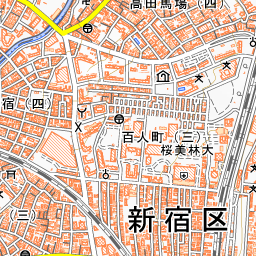


Spot location © OpenStreetMap contributors (ODbL)
Open in Google MapsUse asobot while you walk
- See where you are on the map and find spots nearby
- Listen to the guide's audio in course order, one after another (with subtitles)
- Walk to the next spot while following the map
Open on your phone
Scan to open this spot in asobot on your phone.