 ✨ AI Generated
Mitsui Memorial Museum
Japanese: 三井記念美術館
Chuo City, Tokyo
This information was written by AI and may contain mistakes. Please check official sources for opening hours, fees, and other details before you go.
Found a mistake? Let us know with “✏️ Something's wrong” on this spot's screen in asobot →
🎧 Audio guide(1:05)
In short
This museum houses fine and decorative art pieces collected and passed down through the Mitsui family, whose history began with a kimono merchant business in the Edo period. It is located on the 7th floor of the Mitsui Main Building, a Western-style structure designated as an Important Cultural Property of Japan. The collection comprises approximately 4,000 items, including 6 National Treasures and 75 Important Cultural Properties, which are presented to the public through five exhibitions held each year.
- National Treasure Tea Bowl: Only two tea bowls crafted in Japan are designated as National Treasures, and the museum holds one of them: the Shino tea bowl named "Unohanagaki".
- Folding Screen by Maruyama Okyo: The museum houses the National Treasure "Pine Trees in the Snow Screens", painted by Maruyama Okyo specifically for the Mitsui family.
- Exhibition Room Recreating a Teahouse: One of the exhibition rooms recreates "Jo-an", a tea room originally built by Oda Urakusai.
History & Highlights
The Mitsui Memorial Museum opened in 2005 when the Mitsui Bunko Annex, previously in Nakano Ward, relocated to the Mitsui Main Building in Nihonbashi—an area deeply connected to the Mitsui family and the Mitsui Group. Its collection was gathered and passed down through approximately 350 years of Mitsui family history.
There are roughly 4,000 works of fine and applied arts, centered around tea utensils and spanning paintings, calligraphy, swords, Noh masks, Noh costumes, and furnishings. The museum also preserves a world-class collection of about 130,000 postage stamps. Among these holdings are 6 National Treasures and 75 Important Cultural Properties. There are no permanent exhibits; instead, the museum hosts five exhibitions a year, consisting of exhibitions from its own holdings and special exhibitions borrowing works from external institutions.
The Mitsui Main Building housing the museum is an Important Cultural Property of Japan, rebuilt in 1929 (Showa 4) after the previous main building was damaged in the Great Kanto Earthquake. Its granite-finished exterior features grand Corinthian columns aligned along three street-facing facades.
Viewing & Experience Highlights
- Shino Tea Bowl "Unohanagaki": This is one of only two tea bowls crafted in Japan that are designated as National Treasures. Fired in Mino, its body features a fence motif painted in iron pigment. It was given the name "Unohanagaki" based on a classical waka poem comparing this pattern to a "deutzia flower fence" (unohanagaki). The Mitsui Memorial Museum possesses over 200 tea bowls passed down through the Mitsui family.
- Maruyama Okyo's "Pine Trees in the Snow Screens": A National Treasure folding screen painted by Maruyama Okyo for the Mitsui family. The museum also owns the National Treasure "Kumano Goko-ki" brushed by Fujiwara no Teika. Display items rotate with each exhibition.
- Exhibition Room Recreating Jo-an: Exhibition Room 3 recreates the "Jo-an" tea room. Jo-an is a teahouse originally built within the grounds of Kennin-ji Temple by Oda Urakusai, the younger brother of Oda Nobunaga. In 1908 (Meiji 41), Mitsui Takamine, the 10th head of the Kita-Mitsui family, acquired it and moved it to his main residence in Azabu, Tokyo, for its preservation.
Tips for Exploring
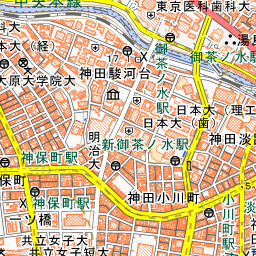
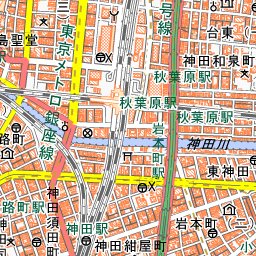
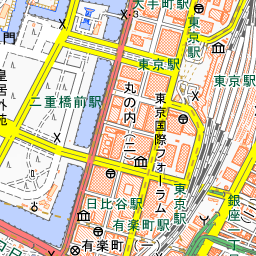
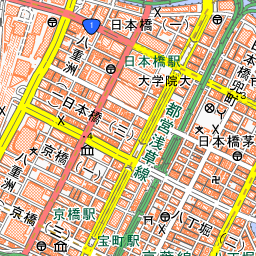
The museum is a 1-minute walk from Exit A7 of Mitsukoshimae Station on the Tokyo Metro Ginza Line, and 4 minutes from Nihonbashi Station. Before going inside, looking up at the exterior of the Mitsui Main Building from the street to view the granite walls and massive Corinthian columns helps visitors appreciate the architectural history of the museum's building. The Nihombashi Mitsukoshi Main Store is located about 140 meters to the south, and the Nihonbashi bridge is about 360 meters to the south.



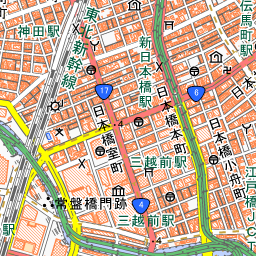
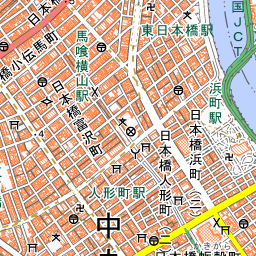
Spot location © OpenStreetMap contributors (ODbL)
Open in Google MapsUse asobot while you walk
- See where you are on the map and find spots nearby
- Listen to the guide's audio in course order, one after another (with subtitles)
- Walk to the next spot while following the map
Open on your phone
Scan to open this spot in asobot on your phone.