 ✨ AI Generated
Jisen Kaikan
Japanese: 自泉会館
Kishiwada, Osaka
This information was written by AI and may contain mistakes. Please check official sources for opening hours, fees, and other details before you go.
Found a mistake? Let us know with “✏️ Something's wrong” on this spot's screen in asobot →
🎧 Audio guide(1:01)
In short
An early Showa period building located just north of Kishiwada Castle. Terada Jinkichi, the second president of Kishiwada Boseki (one of the predecessors of today's Unitika), created it in 1932 (Showa 7) as a social club for the company, among other uses, and it was donated to Kishiwada City in 1943 (Showa 18). It was designed by Kansai-based architect Watanabe Setsu, and was registered as a national Registered Tangible Cultural Property in 1997 (Heisei 9).
- Spanish-Style Exterior: The exterior is simple with minimal ornamentation, yet motifs of classical architecture can be seen in areas such as the colonnaded entrance
- Great Hall and Fireplace: The great hall, now used as a music hall, evokes the atmosphere of a church, and its large fireplace set with three-dimensional tiles commands a strong presence
- Ingenious Use of Materials: Walls that appear to be lined with stone at first glance are made of wooden boards in three colors, and the ceiling beams are concrete coated with mortar and painted with wood grain. The walls of the corridors and staircases use artificial travertine, which was cutting-edge at the time
History and Highlights
Jisen Kaikan is an early Showa period building located just north of Kishiwada Castle. Built in 1932 by Terada Jinkichi, the second president of Kishiwada Boseki (one of the predecessors of today's Unitika), it was created as a social club for the company and donated to Kishiwada City in 1943. Since then, it has been open to the public as a venue for cultural activities, featuring a music hall, gallery, and conference rooms.
It was designed by Kansai-based architect Watanabe Setsu. While Watanabe was known for designing large-scale office buildings, this work draws attention as a relatively small-scale, residential-style building. Built around the same period as the Mengyo Kaikan in Osaka, it is a reinforced concrete two-story salon club building constructed for the social gatherings of Kishiwada Boseki. It was registered as a national Registered Tangible Cultural Property in 1997.
Highlights to See and Experience
- Spanish-Style Exterior: Featuring an early modern Spanish architectural style, the exterior is simple with minimal ornamentation, yet motifs of classical architecture can be seen in areas such as the colonnaded entrance. The arrangement of plantings around the entrance is also a notable feature.
- Great Hall and Fireplace: The greatest highlight is the great hall, which is currently used as a music hall. Evoking the atmosphere of a church, the space features a large fireplace set with three-dimensional tiles that commands a strong presence as the focal point of the room.
- Ingenious Use of Materials: Walls that appear to be lined with stone at first glance are actually made by combining wooden boards in three different colors. The ceiling beams are made by coating concrete with mortar and painting faux wood grain to give them a wooden finish. The walls of the corridors and staircases make use of artificial travertine, which was cutting-edge at the time.
Tips for Strolling
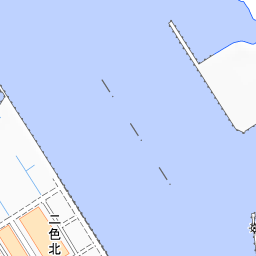
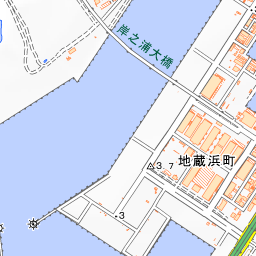
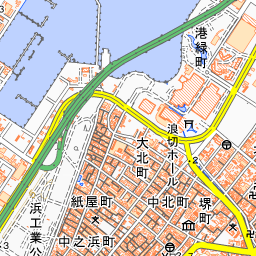
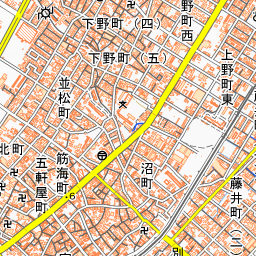
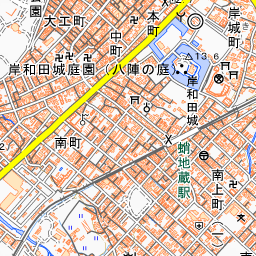
The interior of the building can only be toured when there are no events being held. Kishiwada Castle is located about 220 meters to the south-southwest, and Kishiki-jinja Shrine, the guardian shrine of the castle, is located about 200 meters to the south-southeast. Together with Gofuso to the south of the castle, these spots can be explored on a walking tour around the castle.
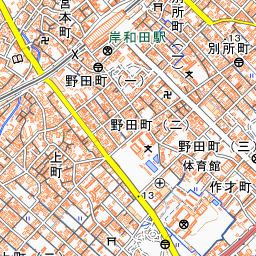
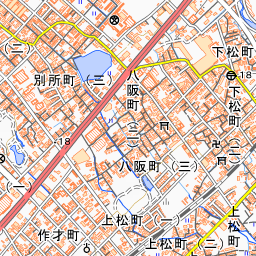
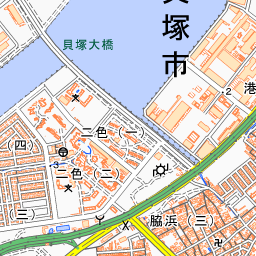
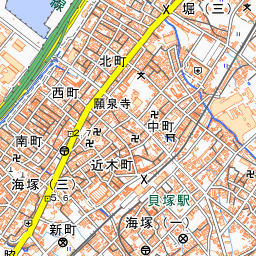
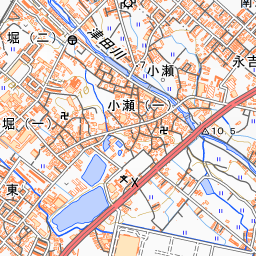
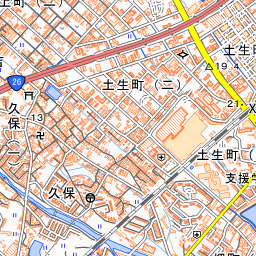
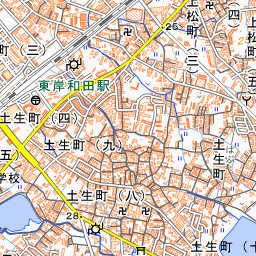
Spot location © OpenStreetMap contributors (ODbL)
Open in Google MapsUse asobot while you walk
- See where you are on the map and find spots nearby
- Listen to the guide's audio in course order, one after another (with subtitles)
- Walk to the next spot while following the map
Open on your phone
Scan to open this spot in asobot on your phone.