 ✨ AI Generated
Honno-ji Temple
Japanese: 本能寺
Nakagyo Ward, Kyoto
This information was written by AI and may contain mistakes. Please check official sources for opening hours, fees, and other details before you go.
Found a mistake? Let us know with “✏️ Something's wrong” on this spot's screen in asobot →
🎧 Audio guide(1:11)
In short
The head temple of the Hokke sect Honmon school, widely known as the site of the "Honno-ji Incident" in 1582 (Tensho 10), where Oda Nobunaga met his end due to the rebellion of Akechi Mitsuhide. The incident took place at the temple built in 1545 at Shijo Nishinotoin, and after being burned down in the incident, it was rebuilt in 1592 and relocated to its current site by order of Toyotomi Hideyoshi.
- Nobunaga Mausoleum: A mausoleum built by order of Oda Nobunaga's third son, Nobutaka, after Nobunaga took his own life, located southeast of the main hall. Its worship hall for venerating the mausoleum is a National Registered Tangible Cultural Property along with the main hall and the front gate
- Main Hall and the Character "No": The current main hall, rebuilt in 1928 (Showa 3) and designed by Amanuma Shunichi, is a large wooden structure built entirely of zelkova wood. Because the temple suffered fires as many as five times, the character for "No" (能) in the temple's name uses an alternative character that replaces the right-hand radical "ヒ" with "去"
- Daihoden Treasure House: Displays treasures that were preserved and protected through the temple being burned down five times and rebuilt seven times. Handed down here are items such as the "Three-Legged Frog" censer, which legend says began to croak on the eve of the incident to give warning of the danger, and the kensan tenmoku teabowl that Oda Nobunaga once possessed
History and Highlights
Honno-ji Temple is the head temple of the Hokke sect Honmon school. It is widely known as the site of the "Honno-ji Incident" in 1582 (Tensho 10), where Oda Nobunaga met his end due to the rebellion of Akechi Mitsuhide.
Its origins date back to 1415 (Oei 22), when Saint Nichiryu built "Hon'o-ji" between Aburanokoji Takatsuji and Gojobomon. Later, the temple was destroyed and burnt down several times, being rebuilt in different locations, and it was at the temple built in 1545 at Shijo Nishinotoin where the Honno-ji Incident took place. It is said that Honno-ji Temple at the time of the incident was much larger than it is today, surrounded by high walls and a deep moat. According to records alone, Oda Nobunaga stayed at Honno-ji Temple at least four times. After being burned down in the incident, it was rebuilt in 1592 and relocated to its current site by order of Toyotomi Hideyoshi.
Because Honno-ji Temple suffered fires as many as five times, the temple's character for "No" (能) uses an alternative character that replaces the right-hand radical "ヒ" with "去", out of aversion to the similarity of "ヒ" to "火" (fire). The current main hall was rebuilt in 1928 (Showa 3); designed by Amanuma Shunichi, it is a large wooden structure built entirely of zelkova wood.
Highlights and Experiences
- Nobunaga Mausoleum: A mausoleum built by order of Oda Nobunaga's third son, Nobutaka, after Oda Nobunaga took his own life. Located southeast of the main hall, its worship hall for venerating the mausoleum is registered as a National Registered Tangible Cultural Property along with the main hall and the front gate.
- Main Hall and Sub-temples: The main hall measures seven bays on each side. To secure a spacious inner sanctuary, trusses were combined to realize wide spans between pillars while the details faithfully follow classical traditions. Beside the main hall stand seven sub-temples (tatchu) that support Honno-ji Temple.
- Daihoden Treasure House: Displays treasures that were preserved and protected through the temple being burned down five times and rebuilt seven times amid destruction by other sects and conflicts. Handed down here are items such as the "Three-Legged Frog" censer, which legend says suddenly began to croak on the eve of the Honno-ji Incident to give warning of the impending danger, and the kensan tenmoku teabowl that Oda Nobunaga once possessed.
Tips for Exploring
It is located right near Kyoto Shiyakusho-mae Station on the Subway Tozai Line, and about a 5-minute walk west from Sanjo Station on the Keihan Railway. The front gate faces Teramachi-dori Street. Walking about 350 meters to the east brings you to Sanjo Ohashi Bridge spanning the Kamo River.


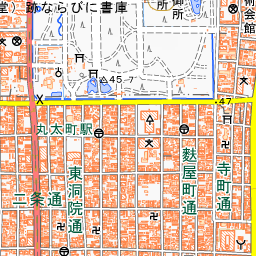


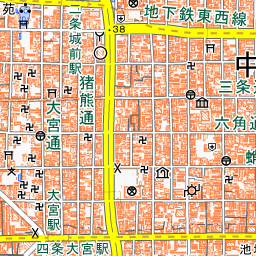

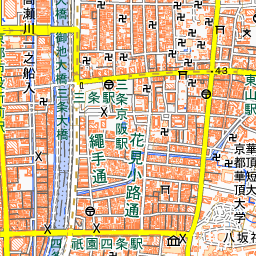


Spot location © OpenStreetMap contributors (ODbL)
Open in Google MapsGuides that include this spot (1)
Use asobot while you walk
- See where you are on the map and find spots nearby
- Listen to the guide's audio in course order, one after another (with subtitles)
- Walk to the next spot while following the map
Open on your phone
Scan to open this spot in asobot on your phone.