 ✨ AI Generated
State Guest House, Akasaka Palace
Japanese: 迎賓館赤坂離宮
Minato City, Tokyo
This information was written by AI and may contain mistakes. Please check official sources for opening hours, fees, and other details before you go.
Found a mistake? Let us know with “✏️ Something's wrong” on this spot's screen in asobot →
🎧 Audio guide(1:05)
In short
State Guest House, Akasaka Palace was built in 1909 as the Crown Prince's Palace (Togu Gosho) and is the only Neo-Baroque style palace architecture in Japan. Today, it serves as the nation's reception facility welcoming monarchs, presidents, and other dignitaries from around the world, and is open to the public throughout the year to the extent that it does not interfere with official state duties. It was designated as a National Treasure in 2009.
- Kacho no Ma: The wood-paneled walls are decorated with 30 oval cloisonné enamel plaques depicting flowers and birds of the four seasons.
- Hagoromo no Ma: Features ceiling paintings depicting scenes from the Noh play "Hagoromo" and the largest chandeliers in the palace.
- Front Garden and Main Garden: The front garden is lined with 142 pine trees, and the fountain pond in the main garden is also designated as a National Treasure.
History and Highlights
Ahead of the wedding of the Crown Prince (later Emperor Taisho), momentum grew to build a new Western-style Crown Prince's Palace (Togu Gosho) as his residence. Katayama Tokuma, a direct student of Josiah Conder, took overall charge of the project, mobilizing prominent scholars, artists, and engineers. Completed in 1909 (Meiji 42), it is Japan's only Neo-Baroque style palace architecture, and it became the Akasaka Palace after the Crown Prince ascended the throne.
After World War II, the building and grounds were transferred to the state and used for purposes such as the National Diet Library. As occasions to welcome foreign dignitaries increased, it was decided to repurpose Akasaka Palace as a state guest house. Renovation work that began in 1968 was completed in 1974, reopening as the State Guest House. In 2009, the Main Building, the Main Gate, and the fountain pond in the main garden, among others, were designated as National Treasures, marking the first time modern architecture received this status.
The Main Building is a completely symmetrical structure built of imposing granite. The gentle arc of its facade evokes a phoenix spreading its wings. At the center of the verdigris-covered roof, bronze armored warriors are positioned symmetrically in pairs. In the front garden spreading between the Main Gate and the Main Building, 142 pine trees stand in line.
Viewing and Experience Points
- Kacho no Ma: This room is mainly used for official banquets. The Japanese ash-paneled walls are decorated with 30 oval cloisonné enamel plaques depicting flowers and birds of the four seasons. The painter Watanabe Seitei provided the original designs, which were then fired by Namikawa Sosuke.
- Hagoromo no Ma: Formerly called the ballroom, its name derives from the ceiling painting depicting scenes from the Noh play "Hagoromo." Its three chandeliers, each composed of roughly 7,000 parts, are the largest and most magnificent in the State Guest House.
- Asahi no Ma and Sairan no Ma: Asahi no Ma is the most formal room in the State Guest House, with a ceiling depicting Aurora, the goddess of dawn, backed by the rising sun. Sairan no Ma, located directly above the main entrance, is adorned with sculptures of the mythical bird "Ran," from which the room gets its name, while Japanese elements such as armored samurai can also be seen on its gilded reliefs.
Walking Tips
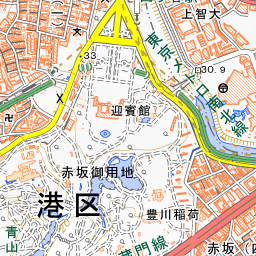
The State Guest House is open to the public throughout the year as long as official duties are not disrupted. It is about a 7-minute walk from JR and Tokyo Metro Yotsuya Station. The visitor entrance is at the West Gate on the Gakushuin Primary School side; entry is not possible through the Main Gate. A baggage inspection is conducted before entering. Inside the Main Building, visitors are welcomed by a checkered floor of white marble and black slate (genshoseki). At the central staircase, look up at the paintings in the north and south arches. They embody the spirit of hospitality, greeting guests ascending to the second floor with the morning sun and seeing them off with the evening sun as they leave. The Japanese-style Annex "Yushintei" can be viewed via a separate route that requires advance reservations. Suga-jinja Shrine is located approximately 820 meters to the northwest.
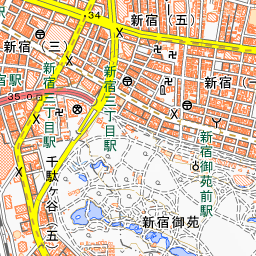
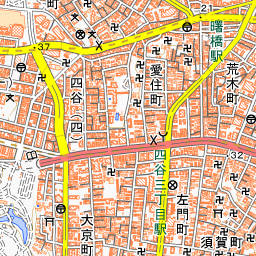
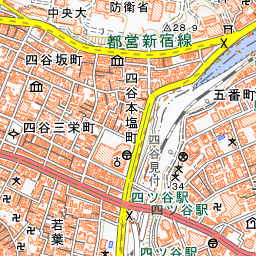
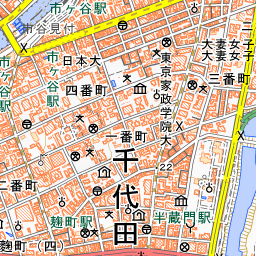
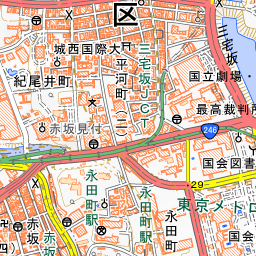
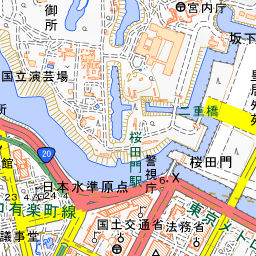
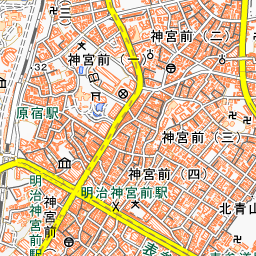
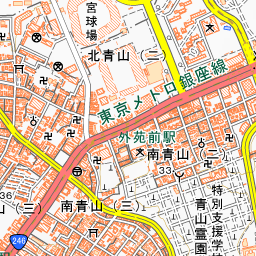
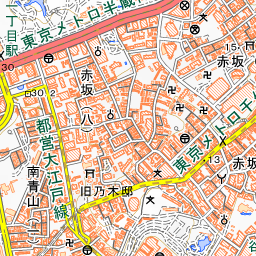


Spot location © OpenStreetMap contributors (ODbL)
Open in Google MapsGuides that include this spot (1)
Use asobot while you walk
- See where you are on the map and find spots nearby
- Listen to the guide's audio in course order, one after another (with subtitles)
- Walk to the next spot while following the map
Open on your phone
Scan to open this spot in asobot on your phone.