 ✨ AI Generated
Gojo Shinmachi
Japanese: 五條新町
Gojo, Nara
This information was written by AI and may contain mistakes. Please check official sources for opening hours, fees, and other details before you go.
Found a mistake? Let us know with “✏️ Something's wrong” on this spot's screen in asobot →
🎧 Audio guide(1:06)
In short
Gojo Shinmachi is a townscape in Gojo City lined with many imposing merchant houses (machiya) from the Edo period. It consists of two districts: "Gojo," whose origins date back to the Middle Ages, and "Shinmachi," which was established as a castle town at the beginning of the early modern era. It has been designated as a national Important Preservation District for Groups of Traditional Buildings. During the Edo period, it developed as a post town and merchant town.
- Shinmachi-dori Street: A street along the former Kishu Kaido road, lined with traditional townhouses for about 1 km.
- Kuriyama Residence: Featuring a munafuda (ridgepole dedication plaque) from 1607 (Keicho 12), it is said to be the oldest private house in Japan whose date of construction is known. The interior is not open to the public.
- Machiyakan: A facility renovated from a traditional townhouse facing Shinmachi-dori Street, where visitors can see the interior structure.
History and Highlights
Gojo Shinmachi is a preservation district selected in the merchant town category, covering an area of approximately 7.0 hectares. In December 2010 (Heisei 22), it became the 88th Important Preservation District for Groups of Traditional Buildings in Japan.
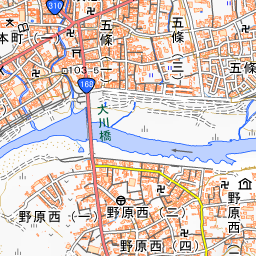
The two areas differ in their layout. Gojo, which extends along the eastern bank of the Nishi River, has an irregular plot layout with varying frontages and depths, and large townhouses spread out across the area. In contrast, Shinmachi, which extends along the old Kishu Kaido on the north bank of the Yoshino River, features townhouses with uniform frontages and depths arranged in a straight line.
It was Matsukura Shigemasa who created Shinmachi. Said to have entered Futami Castle in 1608 (Keicho 13), he established Shinmachi Village as a policy to promote the castle town. By granting exemptions from various taxes and corvée duties, he made it easier to do business and attracted merchants. During the Edo period, Gojo developed as a key transport hub along the Kishu Kaido, thriving as both a post town and a merchant town.
There is another side to the story of Shigemasa. While he is regarded as the figure whose harsh rule over his domain's people in Shimabara led to the Shimabara Rebellion, in Gojo, a shotokuhi (monument honoring his virtues) stands at Saiho-ji Temple in Shinmachi. During the Edo period, he was venerated as "Bungo-sama" and revered as an enlightened ruler.
Highlights for Viewing and Experiencing
- Townhouse Walls and Windows: Shinmachi-dori Street is lined with houses featuring plaster walls, mushikomado (latticed "insect cage" windows), and wooden latticework. The street preserves townhouses spanning the Edo, Meiji, Taisho, and early Showa periods, and the differences in eras can also be observed in the shapes of the windows.
- Kuriyama Residence: An Important Cultural Property of Japan located in Gojo 1-chome. Its hongawarabuki (traditional tiled) roof has a gentle curve, giving it a dignified appearance. As it remains a private residence today, it can only be viewed from the outside.
- Machiyakan: The birthplace of Kimura Tokutaro, who served as Minister of Justice and held other positions. The interior stretches deep from the front, with an earthen passageway (tori-doma) connecting the kitchen stove area (kamadaya), the inner courtyard, the detached wing, and the storehouse (kura).
Strolling Tips
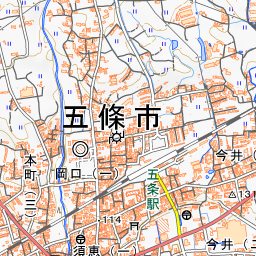
It takes about a 15-minute walk from JR Gojo Station to the Kuriyama Residence near Shinmachiguchi. Entering Shinmachi-dori Street from Shinmachiguchi, you will immediately find Kanayabashi Bridge spanning the Nishi River. Machiyakan faces this street. Proceeding west along the street, you will see an arched elevated bridge, which is the remains of the unfinished Goshin Railway.
Because Shinmachi-dori Street is a narrow one-way road for vehicles, park your car in nearby parking lots and explore on foot. There are also several narrow paths leading out to the walking trail along the Yoshino River. The Folklore Museum in Shinmachi 3-chome, housed in a building that was once the nagayamon (row-house gate) of the Gojo Daikansho (Magistrate's Office), exhibits materials on the Tenchugumi from the end of the Edo period. From July to early September, wind chimes are hung from the eaves of the townhouses. Kongo-ji Temple is located approximately 860 meters in a straight line to the east-southeast.


Guides that include this spot (1)
Use asobot while you walk
- See where you are on the map and find spots nearby
- Listen to the guide's audio in course order, one after another (with subtitles)
- Walk to the next spot while following the map
Open on your phone
Scan to open this spot in asobot on your phone.