 ✨ AI Generated
St. Mary's Cathedral, Tokyo
Japanese: 東京カテドラル聖マリア大聖堂
Bunkyo City, Tokyo
This information was written by AI and may contain mistakes. Please check official sources for opening hours, fees, and other details before you go.
Found a mistake? Let us know with “✏️ Something's wrong” on this spot's screen in asobot →
🎧 Audio guide(1:02)
In short
St. Mary's Cathedral, Tokyo, located in Sekiguchi, Bunkyo Ward, is the cathedral of the Roman Catholic Archdiocese of Tokyo. The present cathedral was designed by Tange Kenzo and dedicated in 1964. It is known for its structure of eight curved walls rising up to form a cross at the top.
- Exterior of Eight Walls: Eight stainless steel-clad hyperbolic paraboloid (HP) shells rise vertically toward the sky.
- Light-Filled Interior: Exposed concrete walls overlap, and soft light streams down from the cross-shaped skylight at the top.
- Bell Tower and the Grotto of Lourdes: A 62-meter-tall bell tower stands south of the cathedral, and a Lourdes Grotto is situated at the back of the grounds.
History and Highlights
In the name St. Mary's Cathedral, Tokyo, the word "cathedral" refers to a church containing the "cathedra," or the bishop's throne. It is the church where the Archbishop of Tokyo officially presides over ceremonies and teaches; the red seat bearing a coat of arms to the left of the altar is this cathedra.
The church's origin traces back to a chapel built in 1899 as an annex to the Maikaijuku French Language School. It became the church of the Sekiguchi parish the following year and the cathedral of the Archdiocese of Tokyo in 1920. At that time, it was a wooden Gothic-style structure where tatami mats were laid in the congregation seating and visitors took off their shoes to enter. This chapel was destroyed by fire during the Bombing of Tokyo in 1945.
The reconstruction was made possible through the support of the Archdiocese of Cologne in Germany. In an invited competition among three architects—Maekawa Kunio, Taniguchi Yoshiro, and Tange Kenzo—Tange's design was selected. Construction began in April 1963, and the dedication ceremony was held on December 8, 1964. Tange is said to have favored this building most among his works. Following his death in 2005, his funeral and memorial services were held here in accordance with his wishes, and his remains rest in the crypt in the basement.
Viewing and Experience Highlights
- Exterior: An integrated structure utilizing eight HP shells (hyperbolic paraboloids) mutually supports one another to trace a cross at the top. When viewed from above, the entire cathedral forms the shape of a large cross. Its highest point reaches 39.41 meters.
- Interior: Soft light pours from the top onto the marble floor and swelling exposed concrete walls. Inside, there is a bust of Saint Francis Xavier gifted by the Archdiocese of Cologne, as well as a full-size replica of Michelangelo's Pietà. At the rear stands an Italian-made pipe organ measuring 10 meters in height with 3,300 pipes.
- Bell Tower and the Grotto of Lourdes: The bell tower standing south of the cathedral is made of reinforced concrete and rises 62 meters high. Four bells are suspended at the top. Along with the cathedral, it is a national Registered Tangible Cultural Property. The Grotto of Lourdes at the back of the grounds was built in 1911 by Father Demangelle, a French missionary.
Tips for Visitors
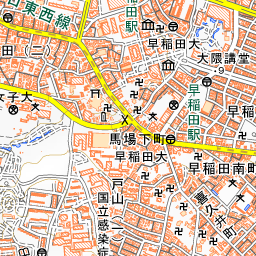
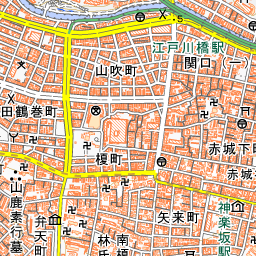
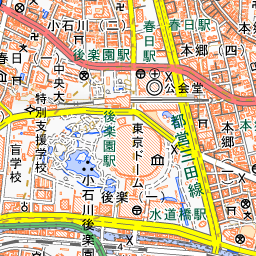
It is a 10-minute walk from Exit 6 of Gokokuji Station or a 15-minute walk from Exit 1a of Edogawabashi Station on the Tokyo Metro Yurakucho Line. If taking the Toei Bus Shiro 61 line, it is a 1-minute walk from the "Hotel Chinzanso Tokyo-mae" bus stop. Start outside by looking up at the bell tower and the stainless steel walls. Once inside, look up at the cross-shaped light on the ceiling before looking for the red seat to the left of the altar. After leaving, you can walk around to the Grotto of Lourdes at the back of the grounds. Anyone is welcome to participate in the mass. About 250 meters to the south is Hotel Chinzanso Tokyo, which is renowned for its garden.


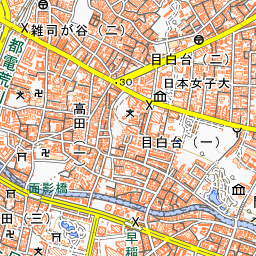
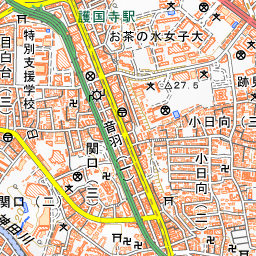
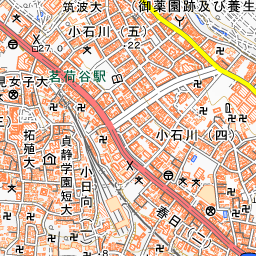

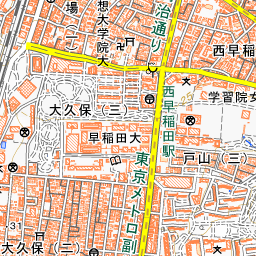
Spot location © OpenStreetMap contributors (ODbL)
Open in Google MapsUse asobot while you walk
- See where you are on the map and find spots nearby
- Listen to the guide's audio in course order, one after another (with subtitles)
- Walk to the next spot while following the map
Open on your phone
Scan to open this spot in asobot on your phone.