 ✨ AI Generated
Omotesando Hills
Japanese: 表参道ヒルズ
Shibuya City, Tokyo
This information was written by AI and may contain mistakes. Please check official sources for opening hours, fees, and other details before you go.
Found a mistake? Let us know with “✏️ Something's wrong” on this spot's screen in asobot →
🎧 Audio guide(1:02)
In short
Omotesando Hills is a complex facing the street of Omotesando, opened in 2006. It was created through the redevelopment of the Dojunkai Aoyama Apartments, which had long been cherished as a landmark of Omotesando. Designed by architect Ando Tadao, the building extends for approximately 250 meters along the street.
- Spiral Slope: A 700-meter-long ramp that spirals around the central atrium of the Main Building.
- Height matching the zelkova trees: Most of the building is buried underground to keep its height about the same as the tree-lined avenue.
- Dojunkan: A building recreating a portion of the Dojunkai Aoyama Apartments conveys its memories to the present day.
History and Highlights
Omotesando Hills is a complex facing the street of Omotesando. It opened on February 11, 2006. In addition to a commercial area filled with shops, it includes residences and parking facilities. The complex consists of three buildings: the Main Building, the West Wing, and the Dojunkan.
In the past, the Dojunkai Aoyama Apartments stood on this site. Built of reinforced concrete, Dojunkai apartments were constructed in various locations across Tokyo and Yokohama for reconstruction after the 1923 Great Kanto Earthquake. The Aoyama Apartments along Omotesando consisted of ten 3-story buildings. Equipped with state-of-the-art facilities of the time, such as electricity, gas, running water, and flush toilets, they attracted significant attention. After World War II, boutiques and galleries gradually opened in the rooms, triggering the development of this neighborhood as a center of fashion.
Momentum for rebuilding the apartments grew following the Great Hanshin-Awaji Earthquake. Architect Ando Tadao was entrusted with the design. In the redevelopment plan, how to preserve the scenery that the apartments had created became one of the main themes. Two ideas were devised as a result. One was to place most of the building underground to keep its height low, roughly matching the zelkova trees. The other was to incorporate the gentle slope of Omotesando directly into the interior of the building.
Viewing and Experience Highlights
- Spiral Slope: In the center of the Main Building, there is a six-story atrium spanning from the third basement level to the third floor above ground. Surrounding it in a spiral is the Spiral Slope. Its gradient is about 3 degrees, which is nearly identical to the slope of Omotesando. Measuring 700 meters in length, it connects the town with the facility as a "second Omotesando."
- Dojunkan: From the desire to pass down the scenery engraved in people's memories to the next generation, the former Dojunkai Aoyama Apartments were revitalized as the Dojunkan. As a building that recreates part of the apartments, it brings to mind the scenery of Omotesando in days gone by.
- 250-Meter Facade: The building stretches along the road of Omotesando for about 250 meters. This accounts for roughly one-fourth of the length of Omotesando. On the exterior wall, a 250-meter-long LED wall adds color to the nighttime scenery of Omotesando.
Walking Tips
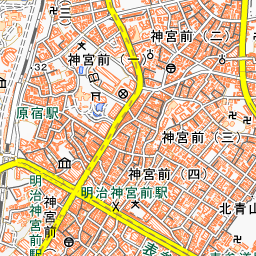
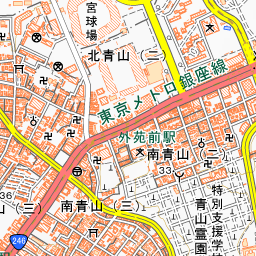
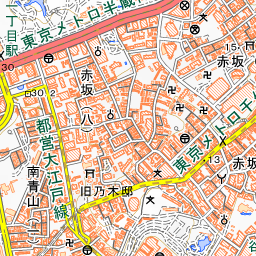
A grand staircase sits in the center of the Main Building's atrium, leading down to the "Space O" event space on the third basement floor. Shops are primarily lined along the Spiral Slope. The north wall was greened in 2007, where seven types of plants create a scenery that blends with the zelkova trees. Once outside, take a walk along the zelkova-lined Omotesando. Cat Street is approximately 310 meters to the west-southwest, and the Ota Memorial Museum of Art is approximately 440 meters to the northwest.
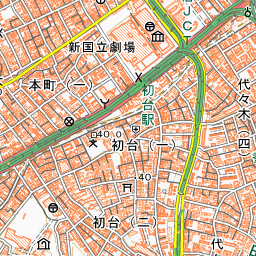
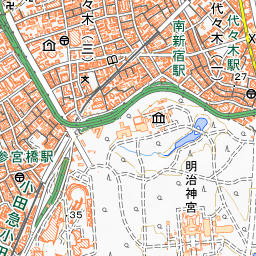
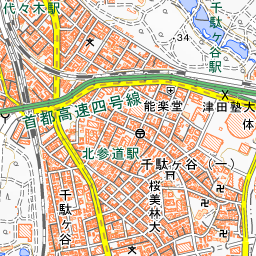
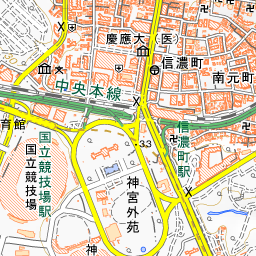
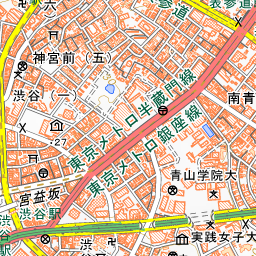
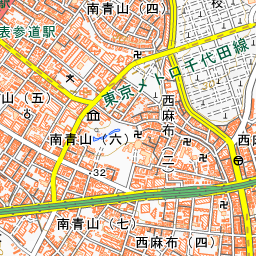
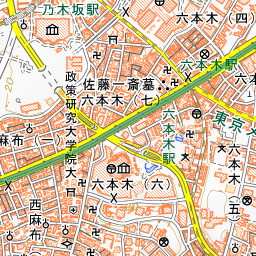
Spot location © OpenStreetMap contributors (ODbL)
Open in Google MapsUse asobot while you walk
- See where you are on the map and find spots nearby
- Listen to the guide's audio in course order, one after another (with subtitles)
- Walk to the next spot while following the map
Open on your phone
Scan to open this spot in asobot on your phone.