 ✨ AI Generated
Jigen-in Temple
Japanese: 慈眼院
Izumisano, Osaka
This information was written by AI and may contain mistakes. Please check official sources for opening hours, fees, and other details before you go.
Found a mistake? Let us know with “✏️ Something's wrong” on this spot's screen in asobot →
🎧 Audio guide(1:16)
In short
A temple of the Omuro branch of Shingon Buddhism, whose head temple is Ninna-ji Temple in Kyoto, located in Hineno, Izumisano City; its Tahoto pagoda, built during the Kamakura period, is a National Treasure. According to temple tradition, it is said to have been founded in 673 (Tenmu 2) as a chokugan-ji (emperor's prayer temple) of Emperor Tenmu, and it is introduced as the oldest temple in Senshu. It stands on the land of Hine-no-sho Estate, a medieval manor of the Kujo family, and the temple grounds are a National Historic Site.
- Small National Treasure Tahoto Pagoda: Built in 1271 (Bunei 8), it is counted, along with those of Ishiyama-dera Temple in Shiga and Kongo Sanmai-in Temple on Mt. Koya, as one of Japan's three celebrated Tahoto pagodas. It features a hiwadabuki (cypress bark) roof and has a round pagoda body on the upper tier
- Important Cultural Property Kondo: Along with the Tahoto pagoda, it is a Kamakura-period building that remains from before the fires of war of the Kishu Campaign, and its principal image is a seated statue of Yakushi Nyorai
- Yukawa Canal and Ubazakura: The Yukawa Canal, flowing between the temple and Hine-jinja Shrine, is an irrigation channel built for the development of the estate and is also a World Heritage Irrigation Structure. The Ubazakura (old-woman cherry tree) on the temple grounds is a prefectural Natural Monument
History and Highlights
Jigen-in Temple is a temple of the Omuro branch of Shingon Buddhism, whose head temple is Ninna-ji Temple in Kyoto, located in Hineno, Izumisano City. Its Tahoto pagoda, built during the Kamakura period, is designated as a National Treasure.
According to temple tradition, it is said to have been founded in 673 (the second year of Emperor Tenmu's reign) by Kakugo Ajari as a chokugan-ji (emperor's prayer temple) and is introduced as the oldest temple in Senshu. Serving as the jingu-ji (shrine-temple) of the neighboring Hine-jinja Shrine, many temple halls once stood here. In 1585 (Tensho 13), it was burned down by the fires of war during Toyotomi Hideyoshi's Kishu Campaign, but Toyotomi Hideyori restored it in 1602 (Keicho 7). The only buildings remaining from before the fire are the Tahoto pagoda and the Kondo (main hall). The temple's current name was bestowed by Ninna-ji Temple in the Edo period and derives from the in-go (Buddhist honorary name) of Kujo Masamoto, who had descended to this land.
This area was Hine-no-sho Estate, a medieval manor belonging to the Kujo family, and the temple grounds are a National Historic Site. The story of Hine-no-sho Estate is certified as a Japan Heritage site under the title "A Town Told Through a Travel Diary and Two Pictorial Maps," and Jigen-in Temple is one of the cultural properties that comprise it. There is also a theory that "Muhenko-in," depicted on the manor's pictorial map, was the temple where Kujo Masamoto first stayed and corresponds to the present-day Jigen-in Temple.
Viewing and Experience Highlights
- Small Kamakura-Period National Treasure Tahoto Pagoda: Built in 1271 (Bunei 8), this Tahoto pagoda is the only National Treasure building in Izumisano City. Along with Ishiyama-dera Temple in Shiga and Kongo Sanmai-in Temple on Mt. Koya, it is counted as one of Japan's three celebrated Tahoto pagodas. It is small in scale, features a hiwadabuki (cypress bark) roof, and has a round pagoda body on the upper tier. It is considered one of the representative examples of Kamakura-period Tahoto pagodas.
- Statues Inside the Pagoda and the Meiji-Period Relocation: Housed inside the pagoda are a seated statue of Dainichi Nyorai, flanked by Jikokuten and Tamonten. The pagoda originally stood beside the Kondo, but was moved to its current location during repairs in the Meiji period.
- Important Cultural Property Kondo and the Yukawa Canal Flowing Through the Grounds: The Kondo is also a Kamakura-period building and is designated as a National Important Cultural Property. The principal image is a seated statue of Yakushi Nyorai. The Yukawa Canal, flowing between the temple and Hine-jinja Shrine, is an irrigation channel built for the development of the estate and has been registered as a World Heritage Irrigation Structure. The Ubazakura (old-woman cherry tree) on the temple grounds is a prefectural Natural Monument.
Tips for Exploring
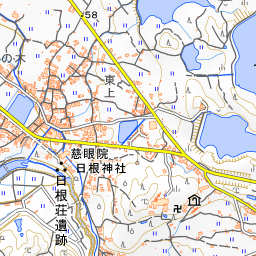
To reach the temple, take the Nankai Bus bound for Mt. Inunaki from JR Hanwa Line Hineno Station, get off at "Higashikami," and it is just a short walk away. If you wish to visit the Tahoto pagoda and the Kondo, please make a reservation in advance through the temple's official website. Walking through the temple alongside the adjacent Hine-jinja Shrine lets you feel the connection between temple and shrine from the manor period. Proceeding about 3.6 kilometers further southeast will bring you to the Ogi District, where the rural landscape of Hine-no-sho Estate remains, and beyond it, on Mt. Inunaki, lies Shipporyu-ji Temple.
Guides that include this spot (1)
Use asobot while you walk
- See where you are on the map and find spots nearby
- Listen to the guide's audio in course order, one after another (with subtitles)
- Walk to the next spot while following the map
Open on your phone
Scan to open this spot in asobot on your phone.