 ✨ AI Generated
Naniwa Palace
Japanese: 難波宮
Chuo Ward, Osaka
This information was written by AI and may contain mistakes. Please check official sources for opening hours, fees, and other details before you go.
Found a mistake? Let us know with “✏️ Something's wrong” on this spot's screen in asobot →
🎧 Audio guide(1:11)
In short
An imperial palace located south of present-day Osaka Castle from the Asuka period to the Nara period. Its remains have been designated as a national Historic Site under the name "Naniwa Palace Site with the Hoenzaka Site" and have been developed into Naniwa Palace Site Park. The remains of the "Early Naniwa Palace," Japan's first full-scale palace, built following the relocation of the capital to Naniwa that accompanied the Taika Reforms beginning in 645, and the "Late Naniwa Palace," constructed by Emperor Shomu starting in 726 (Jinki 3), overlap on almost the same central axis.
- Base Platform of the Daigokuden Hall of the Late Naniwa Palace: The base platform of the Daigokuden Hall of the Late Naniwa Palace has been restored toward the north of the park's center. From atop the platform, you can view Osaka Castle
- How the Two Palaces Are Represented: The remains of the Late Naniwa Palace are indicated by a stone platform raised one step above the ground, and the remains of the Early Naniwa Palace are set one step lower with red tiles laid down and column positions marked with red granite
- "The Schliemann of Japan": The long-mysterious location of Naniwa Palace became known when Yamane Tokutaro, a former professor at Osaka City University, and others discovered the remains of the Daigokuden Hall in 1961 (Showa 36). Dr. Yamane is now called "the Schliemann of Japan"
History and Highlights
Naniwa Palace was an imperial palace located south of present-day Osaka Castle from the Asuka period to the Nara period. Its remains have been designated as a national Historic Site under the name "Naniwa Palace Site with the Hoenzaka Site" and have been developed into Naniwa Palace Site Park.
Here, the remains of two palaces from different eras overlap on almost the same central axis. One is the "Early Naniwa Palace," Japan's first full-scale palace, built following the relocation of the capital to Naniwa that accompanied the Taika Reforms beginning in 645. It is thought to be Emperor Kotoku's Naniwa-no-Nagara-no-Toyosaki Palace, and is presumed to have burned down in 686. The other is the "Late Naniwa Palace," constructed by Emperor Shomu starting in the 3rd year of Jinki (726) during the Nara period, and in the 16th year of Tenpyo (744), Naniwa Palace was designated as the capital.
The location of Naniwa Palace remained a mystery for a long time, but full-scale excavations began in 1954 (Showa 29), and in 1961 (Showa 36), Yamane Tokutaro, a former professor at Osaka City University, and others finally discovered the remains of the Daigokuden Hall. Dr. Yamane is now called "the Schliemann of Japan."
Viewing and Experience Highlights
- Base Platform of the Daigokuden Hall of the Late Naniwa Palace: The base platform of the Daigokuden Hall of the Late Naniwa Palace has been restored toward the north of the park's center. The platform measures approximately 21 meters north-to-south and an estimated 42 meters east-to-west, and it has been confirmed that there were three staircases each on both the south and north sides. From atop the platform, you can view Osaka Castle.
- How the Two Palaces Are Represented: The remains of the Late Naniwa Palace are indicated by a stone platform raised one step above the ground. The remains of the Early Naniwa Palace are set one step lower with red tiles laid down, column positions marked with red granite, and surrounded by hedges of sasanqua camellia.
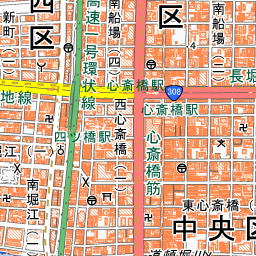
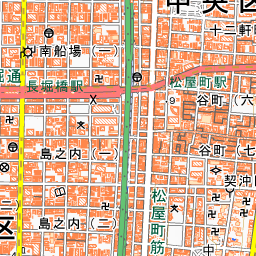
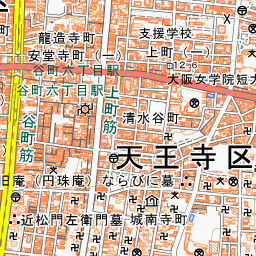
- Palace Layout: South of Chuo-odori Street are the sites of the Daigokuden-in (hall precinct) and Chodoin, where important ceremonies and state affairs were conducted, and to the north lies the site of the Dairi, where the emperor lived. West of Uemachi-suji Street was the government offices district, where a large group of warehouses stood in the 5th century.
Walking Tips
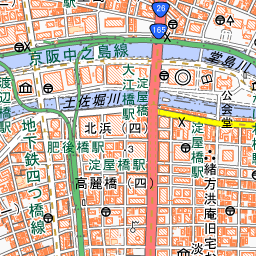
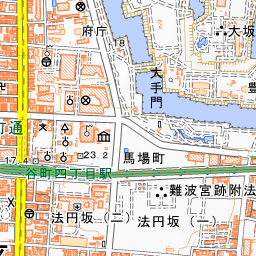
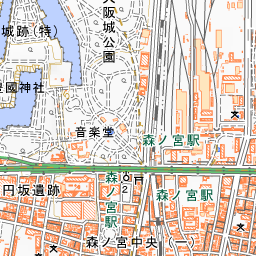
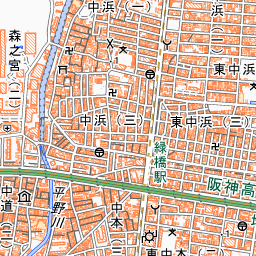
The site is right near Tanimachi 4-chome Station and about a 5-minute walk from Morinomiya Station. At the Osaka Museum of History, located about 310 meters to the northwest, you can look out over the entire view of the Naniwa Palace site from the 10th-floor windows, and you can also enter a full-scale reconstructed display of the Daigokuden Hall. It is also recommended to visit along with Hokoku-jinja Shrine, about 490 meters to the northeast, and Osaka Castle, about 780 meters to the north.

Guides that include this spot (1)
Use asobot while you walk
- See where you are on the map and find spots nearby
- Listen to the guide's audio in course order, one after another (with subtitles)
- Walk to the next spot while following the map
Open on your phone
Scan to open this spot in asobot on your phone.