 ✨ AI Generated
Itasuke Kofun Burial Mound
Japanese: いたすけ古墳
Kita Ward, Sakai, Osaka
This information was written by AI and may contain mistakes. Please check official sources for opening hours, fees, and other details before you go.
Found a mistake? Let us know with “✏️ Something's wrong” on this spot's screen in asobot →
🎧 Audio guide(1:10)
In short
A keyhole-shaped burial mound with its front section facing west, located roughly in the center of the Mozu Kofun Group, with a total mound length of about 146 meters. It is one of the constituent components of the Mozu-Furuichi Kofun Group World Heritage site, and is believed to have been constructed in the first half of the 5th century. Around 1955 (Showa 30), it was in danger of destruction due to soil excavation work; a citizen movement led to the decision to preserve it, and in 1956 (Showa 31), it was designated a national Historic Site.
- Bridge Piers Remaining in the Moat: The bridge piers that still remain in the moat are remnants from the time the soil excavation work was about to take place, and are traces that speak of the preservation movement
- Helmet-Shaped (Kabutogata) Haniwa: A haniwa discovered in the circular rear section during the preservation movement, faithfully modeled on an actual iron helmet. It serves as the symbol mark of cultural property protection for Sakai City
- Large Southern Embankment and a Small Burial Mound: A large embankment is built along the south side of the moat. On the east side of the circular rear section, a small burial mound called Zen'emonyama Kofun Burial Mound still remains today
History and Highlights
Itasuke Kofun Burial Mound is a keyhole-shaped burial mound with its front section facing west, located roughly in the center of the Mozu Kofun Group. It is one of the constituent components of the Mozu-Furuichi Kofun Group World Heritage site, inscribed on the World Heritage List in 2019. Based on the shape of the mound and the condition of the haniwa (terracotta funerary figures), it is believed to have been constructed in the first half of the 5th century.
The mound has a total length of about 146 meters, with a circular rear section measuring about 90 meters in diameter and about 12.2 meters in height, making it the eighth largest within the Mozu Kofun Group. It was constructed in three tiers, and there is a tsukuridashi (projection) on the south side of the constricted section. A characteristic feature is its front section, which is wide and relatively short. Underground radar exploration revealed that no stone materials were used for the burial facility, suggesting a high likelihood that a wooden coffin was encased in clay.
Around 1955 (Showa 30), this kofun was in danger of destruction due to soil excavation work to build housing. A citizen movement led to the decision to preserve it, and in 1956 (Showa 31), it was designated as a national Historic Site. It is not only an important burial mound within the Mozu Kofun Group, but also a significant kofun when telling the history of cultural property preservation in Japan.
Highlights of Appreciation and Experience
- Bridge Piers Remaining in the Moat: The bridge piers that still remain in the moat are remnants from the time the soil excavation work was about to take place. As traces that speak of the preservation movement, look for them when walking along the south side of the moat.
- Symbol of Cultural Property Preservation, the Helmet-Shaped Haniwa: The helmet-shaped haniwa discovered in the circular rear section during the preservation movement faithfully modeled an actual iron helmet. This haniwa serves as the symbol mark of cultural property protection for Sakai City.
- Large Southern Embankment and a Small Burial Mound: Being located at the southern edge of the plateau, a large embankment is built along the south side of the moat. On the east side of the circular rear section, a small burial mound called Zen'emonyama Kofun Burial Mound still remains today.
Walking Tips
In Sakai City's guide for touring the burial mounds around this area, Mozu Station on the JR Hanwa Line is listed as one of the nearest stations. About 610 meters to the north is the Sakai City Museum, which introduces the Mozu Kofun Group. Walking about 470 meters east brings you to Gobyoyama Kofun Burial Mound, and walking about 770 meters west brings you to Kamiishizu Misanzai Kofun Burial Mound, allowing visitors to sequentially compare burial mounds of differing sizes and shapes.
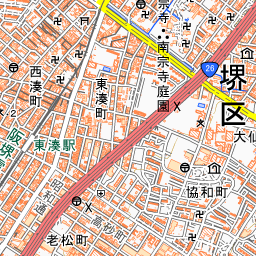
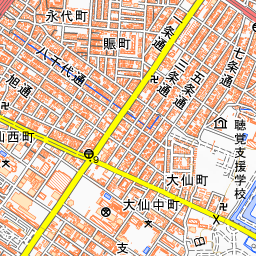
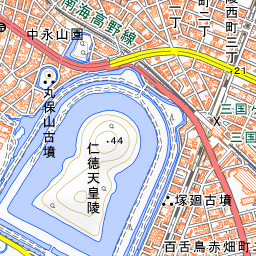
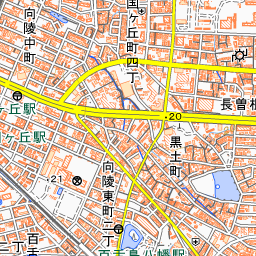
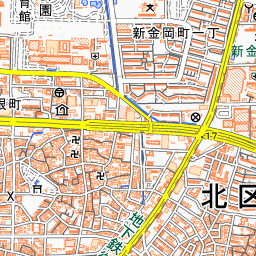
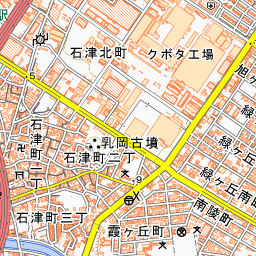
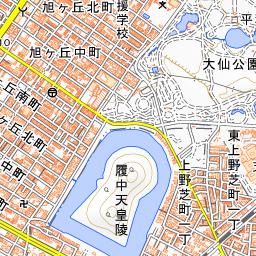
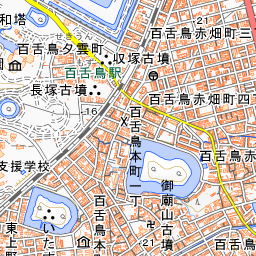
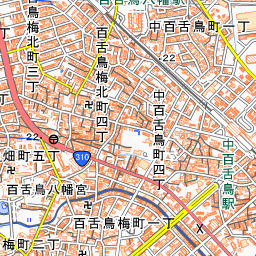
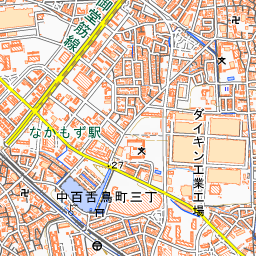
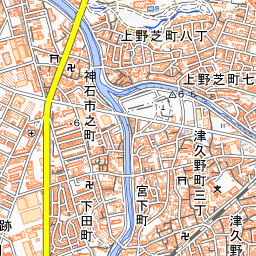
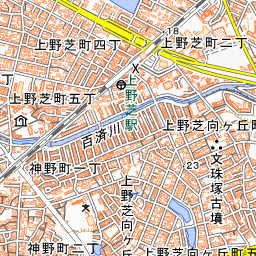
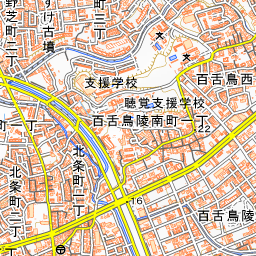
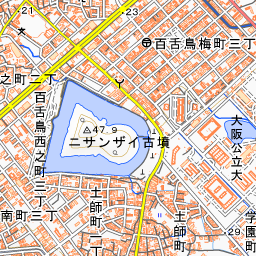
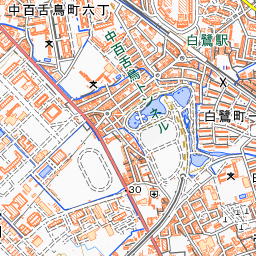
Spot location © OpenStreetMap contributors (ODbL)
Open in Google MapsGuides that include this spot (1)
Use asobot while you walk
- See where you are on the map and find spots nearby
- Listen to the guide's audio in course order, one after another (with subtitles)
- Walk to the next spot while following the map
Open on your phone
Scan to open this spot in asobot on your phone.