 ✨ AI Generated
Bukko-ji Temple
Japanese: 佛光寺
Shimogyo Ward, Kyoto
This information was written by AI and may contain mistakes. Please check official sources for opening hours, fees, and other details before you go.
Found a mistake? Let us know with “✏️ Something's wrong” on this spot's screen in asobot →
🎧 Audio guide(1:06)
In short
The head temple of the Shinshu Bukkoji branch. It is said to have originated as a thatched hermitage built in Yamashina by Shinran Shonin, who had been pardoned from his exile to Echigo and returned to Kyoto in 1212 (Kenryaku 2). In 1586 (Tensho 14), the temple was relocated to its present site at the request of Toyotomi Hideyoshi, and the head temple, burned down by the flames of war in 1864 (Genji 1), was rebuilt by the 27th head priest, Shin'ini-ko.
- Daishi-do Hall: A massive wooden hall reconstructed in 1884 (Meiji 17), measuring 26.5 meters wide and 33.1 meters deep, which houses the seated statues of Shinran Shonin and Ryogen Shonin
- Amida-do Hall: The main hall, reconstructed in 1904 (Meiji 37), houses a standing statue of Amida Nyorai, believed to have been created around the end of the Heian period and characterized by its gentle facial expression and long legs
- Eight-Line Slogans and Hogo-in: Each month, the temple issues an "Eight-Line Slogan" that conveys its teachings through eight short lines of words. As a memento of their visit, visitors can also receive two types of "hogo-in" stamps: a text-only version and an illustrated version
History and Highlights
Bukko-ji Temple is the head temple of the Shinshu Bukkoji branch. It is said to have originated as a thatched hermitage built in Yamashina in 1212 by Shinran Shonin after he was pardoned from his exile to Echigo and returned to Kyoto. It was initially named Koryu Shobo-ji Temple.
Ryogen Shonin, the 7th head priest considered the restorer of the temple, focused on missionary work in western Japan based in Kyoto, and moved the temple from Yamashina to the vicinity of the present-day Kyoto National Museum in 1320. According to tradition, after the principal image was stolen and discarded in a bamboo grove, it was found by an envoy sent by Emperor Godaigo, who had seen a light in a dream; as a result, the temple was bestowed the temple name "Amida Bukko-ji." After Ryogen Shonin's death, his wife, Ryomyoni-ko, succeeded as the 9th head priest, becoming a female chief priest (monshu).
In 1586, the temple was relocated to its present site at the request of Toyotomi Hideyoshi. The head temple was burned down by the flames of war in 1864 at the end of the Edo period, but was rebuilt by the 27th head priest, Shin'ini-ko. The current structures, including the two main halls, date from this time. The temple's pictorial lineage chart (E-keizu) is designated as a national Important Cultural Property.
Viewing and Experience Highlights
- Daishi-do Hall: Reconstructed in 1884, this is a massive wooden hall measuring 26.5 meters wide and 33.1 meters deep. It houses the seated statues of Shinran Shonin and Ryogen Shonin. The temple's visiting guide recommends that visitors first sit before Shinran Shonin, press their palms together, and quietly reflect on what is currently most important to them.
- Amida-do Hall: The main hall, reconstructed in 1904, houses the principal image, a standing statue of Amida Nyorai. Believed to have been created around the end of the Heian period, the statue is characterized by its gentle facial expression and long legs. The gate of the Amida-do Hall is a four-legged gate (shikyakumon) built in 1879, featuring a gable roof with Chinese-style undulating gables (karahafu) at the front and back.
- Eight-Line Slogans and Hogo-in: Each month, Bukko-ji Temple issues an "Eight-Line Slogan" that conveys teachings through eight short lines of words, and visitors can read both the current month's slogan and past slogans on the official website. As a memento of their visit, visitors can also receive two types of "hogo-in" stamps: a text-only version and an illustrated version.
Strolling Tips
It is about a 5-minute walk from Exit 5 of Shijo Station on the Subway Karasuma Line, or Exit 15 of Karasuma Station on the Hankyu Line. Walking about 250 meters to the southwest brings you to Byodo-ji Temple (Inaba-do), and about 600 meters to the west is Kandaijin-jinja Shrine, allowing you to easily visit temples and shrines in the Shijo Karasuma area in succession. Walking about 550 meters to the northeast leads to Nishiki Market.

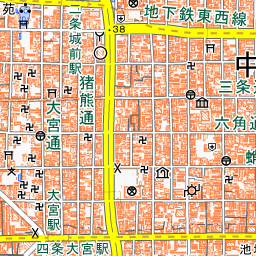

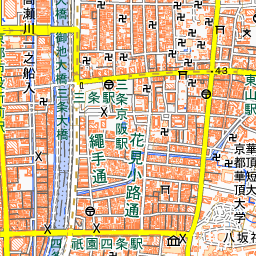


Spot location © OpenStreetMap contributors (ODbL)
Open in Google MapsUse asobot while you walk
- See where you are on the map and find spots nearby
- Listen to the guide's audio in course order, one after another (with subtitles)
- Walk to the next spot while following the map
Open on your phone
Scan to open this spot in asobot on your phone.