 ✨ AI Generated
Mausoleum of Emperor Sujin
Japanese: 崇神天皇陵
Tenri, Nara
This information was written by AI and may contain mistakes. Please check official sources for opening hours, fees, and other details before you go.
Found a mistake? Let us know with “✏️ Something's wrong” on this spot's screen in asobot →
🎧 Audio guide(1:07)
In short
The Mausoleum of Emperor Sujin is a keyhole-shaped tumulus (zenpo-koen-fun) with a mound length of 242 meters, located in Yanagimoto-cho, Tenri City. The Imperial Household Agency designates it as the mausoleum of the 10th emperor, Emperor Sujin, and its official mausoleum name is Yamanobe-no-Michi-no-Magari-no-Oka-no-E Imperial Mausoleum. As an archaeological burial mound, it is called the Andonyama Kofun Burial Mound, and it is surrounded by a water-filled moat.
- A walk around the moat: You can walk entirely around the burial mound along the embankment of the moat.
- Three satellite mounds (baizuka): On the west side of the burial mound, three satellite mounds believed to be the graves of attendants are lined up.
- Resting spot on the Yamanobe-no-Michi Path: The outer bank of the moat serves as part of the walking course along the Yamanobe-no-Michi Path.
History and Highlights
The Mausoleum of Emperor Sujin is a keyhole-shaped tumulus located in the Yanagimoto Tumulus Cluster in Yanagimoto-cho, Tenri City. The mound length is 242 meters, making it the 16th largest in Japan. When including the surrounding moat, the total length reaches 360 meters. It is believed to have been constructed during the early Kofun period, around the first half of the 4th century.
The Imperial Household Agency designates this tumulus as the mausoleum of the 10th emperor, Emperor Sujin, and its mausoleum name is Yamanobe-no-Michi-no-Magari-no-Oka-no-E Imperial Mausoleum. Archaeologically, it is known as the Andonyama Kofun Burial Mound. The person actually interred here is not clearly known. In the late Edo period, Gamo Kumpei regarded this tumulus as the mausoleum of Emperor Keiko in his Sanryoshi. Towards the end of the Edo period, Tanimori Yoshiomi identified it as the mausoleum of Emperor Sujin in his Sanryoko, a view that was subsequently adopted by the Imperial Household Ministry during the Meiji period. At the end of the Edo period, the Yanagimoto Domain carried out repair works on the mausoleum.
Emperor Sujin is recorded in the Kojiki and Nihon Shoki as the 10th emperor, and was a son of Emperor Kaika. According to the Nihon Shoki, his capital was Shiki-no-Mizukaki-no-Miya, which corresponds to present-day Sakurai City. It is passed down that when an epidemic broke out, he enshrined the deity of Mt. Miwa, and dispatched the Shido Shogun (generals sent to four regional circuits) to expand the power of the Yamato court. He is also referred to as "Hatsukunishirasu Sumeramikoto." Isonokami-jingu Shrine, situated along the same Yamanobe-no-Michi Path, traces its origin to the enshrinement of a deity in the 7th year of Emperor Sujin's reign. Oyamato-jinja Shrine also retains a tradition that a deity was transferred from the imperial palace and enshrined there during the reign of Emperor Sujin.
Viewing and Experience Highlights
- Walking along the moat: The burial mound is surrounded by a water-filled moat, allowing visitors to walk all the way around it along the embankment. Experience the sheer scale of the mound across the surface of the water.
- Worshiping the mausoleum from the haisho (worship place): Because it is managed as an imperial mausoleum, visitors cannot enter inside the burial mound. You can view and pay respects to the mausoleum from the designated worship place established by the Imperial Household Agency.
- Satellite mounds on the west side: On the west side of the burial mound are three satellite mounds (baizuka), believed to be the tombs of attendants: Minami-Andoyama Kofun (total length 65 meters), Andoyama Kofun (total length 120 meters), and Tenjinyama Kofun (103 meters). These satellite mounds are keyhole-shaped tumuli comparable in size to those of local chieftains, suggesting that the great ruler buried here possessed considerable power.
Walking Tips
It is about a 12-minute walk from JR Yanagimoto Station. The outer bank of the moat forms part of the "Yamanobe-no-Michi Path (South) Course" and the "Himiko's Homeland Course" for walking the Yamanobe-no-Michi Path, making it popular as a place to take a rest. Walking south along the Yamanobe-no-Michi Path, it takes about 10 minutes to reach the Mausoleum of Emperor Keiko (Shibutani Mukaiyama Kofun Burial Mound). On the Himiko's Homeland Course, Kurozuka Kofun Burial Mound, where numerous bronze mirrors were discovered, is about a 10-minute walk away (about 620 meters to the west-northwest). Chogaku-ji Temple is located about 460 meters to the northeast.
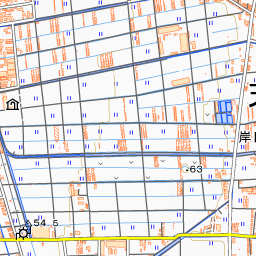
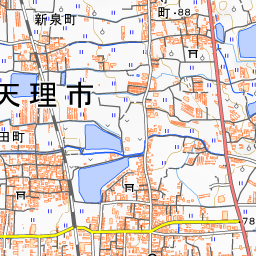
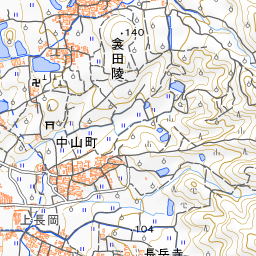
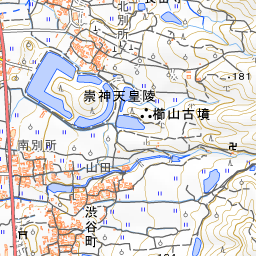
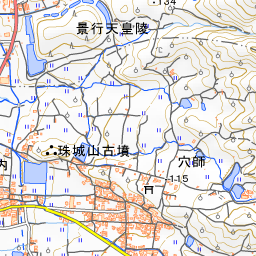
Spot location © OpenStreetMap contributors (ODbL)
Open in Google MapsGuides that include this spot (1)
Use asobot while you walk
- See where you are on the map and find spots nearby
- Listen to the guide's audio in course order, one after another (with subtitles)
- Walk to the next spot while following the map
Open on your phone
Scan to open this spot in asobot on your phone.