 ✨ AI Generated
Nezu Museum
Japanese: 根津美術館
Minato City, Tokyo
This information was written by AI and may contain mistakes. Please check official sources for opening hours, fees, and other details before you go.
Found a mistake? Let us know with “✏️ Something's wrong” on this spot's screen in asobot →
🎧 Audio guide(1:05)
In short
The Nezu Museum is an art museum dedicated to preserving and exhibiting the pre-modern Japanese and East Asian art collection assembled by the industrialist Nezu Kaichiro I, who served as president of Tobu Railway, among other roles. It opened in 1941 at its present location, where the Nezu family private residence once stood. The collection includes the National Treasure "Irises" by Ogata Korin, and its 17,000-square-meter garden is also a highlight.
- Bamboo-lined Approach: Walk along a quiet path surrounded by bamboo toward the main building designed by Kuma Kengo, which was completed in 2009.
- National Treasure "Irises": A masterpiece by Ogata Korin depicting clusters of irises painted in shades of azurite and malachite on gold foil folding screens.
- Undulating Garden: Paved stone pathways lead toward tearooms and various stone monuments.
History and Highlights
The Nezu Museum is an art museum created to preserve and exhibit the pre-modern Japanese and East Asian art collected by the industrialist Nezu Kaichiro I, who was president of Tobu Railway and other enterprises. He began collecting in earnest after moving his base to Tokyo in 1896. Observing the culture of making large donations to public facilities while traveling as a member of an industrial delegation to the United States in 1909 appears to have inspired his vision for the museum.
Following the death of the first Kaichiro in 1940, his eldest son, Kaichiro II, carried on his wishes and established a foundation. The museum opened the following year, in 1941, at its present location where the Nezu family private residence had stood. Although most of the exhibition galleries and tearooms were lost to air raids in 1945, exhibitions resumed in temporary barracks on the burned ruins by the autumn of the following year.
The current main building is a structure designed by Kuma Kengo that opened in 2009. Its grand roof, reminiscent of traditional Japanese houses, catches the eye. As of the end of March 2025, the collection comprises 7,630 works, including 7 National Treasures and 93 Important Cultural Properties. It spans a wide variety of genres—calligraphy, painting, sculpture, ceramics, lacquerware, metalwork, and textiles—and the tea utensils collected in the founder's later years as he enjoyed the way of tea also form a major pillar.
Viewing and Experience Highlights
- Bamboo Approach: Follow the quiet approach surrounded by bamboo to reach the entrance hall. Beyond it, six exhibition rooms, each with a distinct atmosphere, await.
- National Treasure "Irises": A pair of six-panel folding screens painted by Ogata Korin. On an all-gold background, clusters of Japanese irises (kakitsubata) are rendered in shades of azurite and malachite. In the background lies a waka poem set at Yatsuhashi from The Tales of Ise, and stencils were used repeatedly for parts of the blossoms. Please note that collection items are not on permanent display.
- Strolling the Garden: Stepping out through the garden entrance on the first floor or the tea-ceremony entrance on the basement level, stone-paved paths lead into the trees. Nezu Kaichiro I fell in love with this hilly terrain and acquired the land in 1906. Evoking the atmosphere of a secluded mountain valley, the garden reveals tearooms and an array of stone monuments.
Tips for Visitors
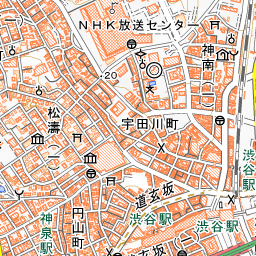
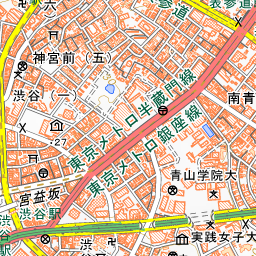
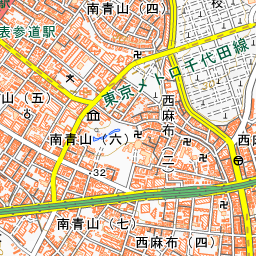
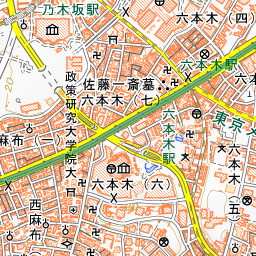
The museum is an 8-minute walk from Exit A5 of Tokyo Metro Omotesando Station. The garden and the NEZUCAFÉ are accessible to museum visitors. The 17,000-square-meter garden includes four tearooms, but visitors cannot enter inside them. Please watch your step, as there are undulations, steps, and ponds. The NEZUCAFÉ is located within the garden, allowing visitors to view seasonal scenery through its glass walls. For the blooming status of the irises, the "Garden Today" updates and blooming records on the official website are helpful references. The Taro Okamoto Memorial Museum is located about 190 meters to the southwest, and The National Art Center, Tokyo is about 900 meters to the east-northeast.

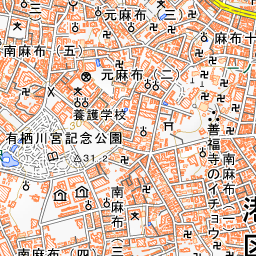
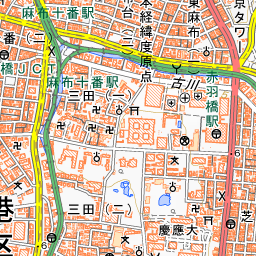
Spot location © OpenStreetMap contributors (ODbL)
Open in Google MapsGuides that include this spot (1)
Use asobot while you walk
- See where you are on the map and find spots nearby
- Listen to the guide's audio in course order, one after another (with subtitles)
- Walk to the next spot while following the map
Open on your phone
Scan to open this spot in asobot on your phone.