
Nose Myokenzan
Japanese: 能勢妙見山
Nose Town, Osaka
This information was written by AI and may contain mistakes. Please check official sources for opening hours, fees, and other details before you go.
Found a mistake? Let us know with “✏️ Something's wrong” on this spot's screen in asobot →
🎧 Audio guide(1:21)
In short
A sacred site of the Nichiren sect at the summit of Mount Myoken, a prominent peak of the Hokusetsu region on the border with Hyogo Prefecture. It enshrines Myoken Daibosatsu, the guardian deity of good fortune originating from the worship of the North Star, and has long been known throughout Japan as "Nose no Myoken-san." In 1605 (Keicho 10), Nichiken Shonin enshrined a statue he carved himself at the summit, and from then on, Mount Iraku came to be known as Mount Myoken.
- Kaiun-den and Devotion from the Performing Arts: The main hall, Kaiun-den, was rebuilt in 1787 (Tenmei 7). Because "myo" signifies "beautiful" and "ken" signifies "appearance," it has drawn deep faith from performing artists such as actors since the Edo period, and an inscription bearing the name of Nakamura Utaemon IV remains on a pillar of the Josui-do purification hall
- Seirei Believers' Hall: A believers' hall made of glass and wood, designed by architect Takamatsu Shin, and selected for the BCS Prize in 1999. Below, you can look out over the Osaka Bay area as far as Awaji Island
- Beech Primeval Forest: An unusual beech forest growing on a comparatively low mountain with an elevation of 660.1 meters, designated a Natural Monument of Osaka Prefecture in 1983 (Showa 58). There are about 100 beech trees measuring 2 meters or more around
History and Highlights
Nose Myokenzan is a sacred site of the Nichiren sect of Buddhism situated at the summit of Mount Myoken, a prominent peak of the Hokusetsu region on the border with Hyogo Prefecture. Enshrining Myoken Daibosatsu, the guardian deity of good fortune originating from the worship of the North Star, it has long been known throughout Japan as "Nose no Myoken-san." Although it features torii gates and komainu (guardian lion-dogs) and is also called "Myoken-gu," it is a Buddhist temple of the Nichiren sect. It serves as a detached precinct of Shinnyo-ji Temple located to the north, and its official name is "Murozan Shinnyo-ji Keigai Butsudo Nose Myokenzan."
It is said that the worship of the North Star in this area began during the Tenpyo-Shoho era (around 750), when the mountain was still called Mount Iraku, and local villagers asked Gyoki to enshrine the North Star at the summit. In 986 during the Heian period, Minamoto no Mitsunaka is said to have moved a statue he had enshrined at his residence to this location, and his descendants, the Nose clan, maintained the faith. Nose Yoritsugu, who revived the Nose clan after its temporary fall, became a devotee of Nichiken Shonin, who became the head priest of Kuon-ji Temple on Mount Minobu. Nichiken Shonin designated the deity long worshipped by the Nose clan as Myoken Daibosatsu, a guardian deity of the Lotus Sutra, and enshrined a statue he carved himself at the summit of Mount Iraku. This took place in 1605, after which Mount Iraku came to be known as Mount Myoken.
Sights and Experiences
- Kaiun-den and Devotion from the Performing Arts: The main hall, Kaiun-den, was founded in 1605 by Nose Yoritsugu and rebuilt in 1787 at the request of Nose Yorinao; it enshrines Hokushin Myoken Daibosatsu in the inner sanctuary. Because "myo" signifies "beautiful" and "ken" signifies "appearance," the temple has garnered deep faith from actors and performing artists since the Edo period, and an inscription bearing the name of Nakamura Utaemon IV remains on a pillar of the Josui-do purification hall.
- Seirei Believers' Hall: Built in 1998, this believers' hall made of glass and wood was designed by architect Takamatsu Shin. Designed with motifs of stars and the "yahazu" (arrow notch) crest of the Nose family, it was selected for the BCS Prize in 1999. Below it, one can look out over Osaka Bay and as far as Awaji Island.
- Beech Primeval Forest: In southwestern Japan, Japanese beeches generally grow on mountains over 1,000 meters, making this beech forest near the summit unusual as it thrives on a comparatively low mountain with an elevation of 660.1 meters. It was designated a Natural Monument of Osaka Prefecture in 1983. There are approximately 100 beech trees with a circumference of over 2 meters.
Tips for Exploring
You can hike to the summit from Myokenguchi Station on the Nose Electric Railway. Along the "Shin-taki-michi Course," an old approach that flourished during the Meiji and Taisho periods, mileposts (choseki) from that era remain, while the "Uesugi Ridge Course" along the ridge offers views of Osaka Bay to the right. The Myoken-no-Mori Cable Car and Lift, which formerly ran to the top of the mountain, ceased operations on December 3, 2023.
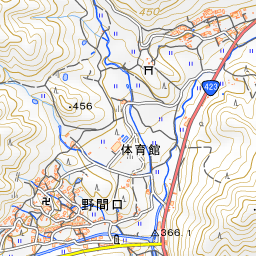


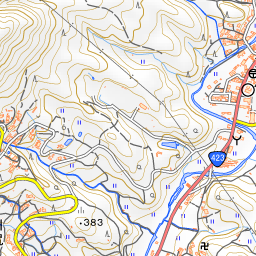
Spot location © OpenStreetMap contributors (ODbL)
Open in Google MapsUse asobot while you walk
- See where you are on the map and find spots nearby
- Listen to the guide's audio in course order, one after another (with subtitles)
- Walk to the next spot while following the map
Open on your phone
Scan to open this spot in asobot on your phone.