 ✨ AI Generated
Alley Karasukojima
Japanese: アレイからすこじま
Kure, Hiroshima
This information was written by AI and may contain mistakes. Please check official sources for opening hours, fees, and other details before you go.
Found a mistake? Let us know with “✏️ Something's wrong” on this spot's screen in asobot →
🎧 Audio guide(0:54)
In short
Alley Karasukojima is a seaside park facing Kure Port, where you can view up close the submarines and escort vessels berthed at the quay of the Japan Maritime Self-Defense Force's Kure Base right next door. The area is the site of the former quayside of the Kure Naval Arsenal, and it is also one of the cultural properties constituting the Japan Heritage story "The Four Dynamic Coastal Cities of Yokosuka, Kure, Sasebo, and Maizuru."
- Submarines and escort vessels up close: Vessels are berthed just beyond the seawall, and the black hulls of the submarines can be viewed up close. The berthed vessels vary from day to day
- Stone seawall and torpedo crane: A stone seawall about 300 meters long, built in 1895, remains as it was back then. At the southern end stands a British-made 15-ton crane, installed in 1901 for loading and unloading torpedoes
- Red brick warehouses of Showa-cho: Along the street beside the park stand red brick warehouses built between 1897 and 1906. As they are still in use as warehouses, viewing is from the outside only
History and Highlights
Alley Karasukojima is a coastal park facing Kure Port. It is situated right next to the Kure Base of the Japan Maritime Self-Defense Force, allowing visitors to view submarines and escort vessels berthed along the quay up close. It is considered one of the few places in Japan where active submarines can be observed from such a close distance. The name "Karasukojima" comes from a small island that once lay offshore called Karasukojima. This island disappeared in the Taisho era due to land reclamation carried out to construct a torpedo firing range. The "Alley" at the beginning of the name is said to derive from the English word for a narrow lane, reflecting how the path stretching along the quay resembles an old British alleyway.
This entire area is the site of the former quayside of the Kure Naval Arsenal. A stone seawall approximately 300 meters long, built in 1895 during the Meiji era, remains as it was back then. The area around the seawall, which had fallen into disrepair after the war, was developed into a park in 1985 (Showa 60). Today, it is also designated as one of the cultural properties constituting the Japan Heritage story "The Four Dynamic Coastal Cities of Yokosuka, Kure, Sasebo, and Maizuru."
Viewing and Experience Highlights
- Submarines and Escort Vessels Up Close: Vessels of the Japan Maritime Self-Defense Force are berthed just beyond the seawall. The black hulls of the submarines can be viewed closely across the water. The berthed vessels vary from day to day.
- Stone Seawall and Torpedo Crane: Granite known as "Kurahashi mikage," quarried on the opposite Kurahashijima Island, is neatly stacked along the seawall, where stone steps and bollard stones for tying up ships also remain. At the southern end stands a British-made 15-ton crane installed in 1901 (Meiji 34) for loading and unloading torpedoes.
- Red Brick Warehouses of Showa-cho: Along the street running alongside the park stand red brick warehouses built in the 1890s to 1900s (the fourth decade of the Meiji era). These buildings were used as navy goods depots and cannon storehouses; as they are still in use as warehouses today, viewing is from the outside only.
Tips for Exploring
The park is long and narrow along the sea, allowing you to view the naval vessels while strolling along the brick-paved promenade. Entry into the base is not permitted, so observations are made from the park. A short walk further brings you to "Rekishi-no-Mieru-Oka Hill," which overlooks the site where the battleship Yamato was constructed, offering a broader look into naval port history. For those who wish to see the inside of a submarine, the interior of an actual submarine is open to visitors at the "JMSDF Kure Museum" located near Kure Station.
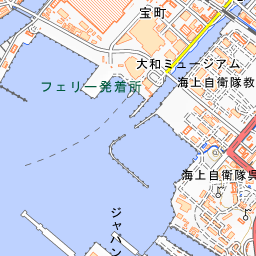
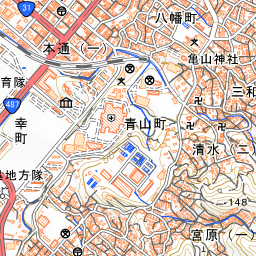


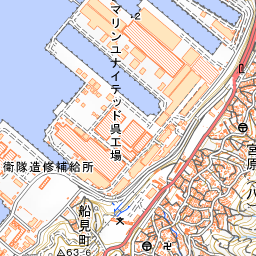
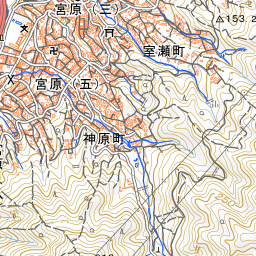

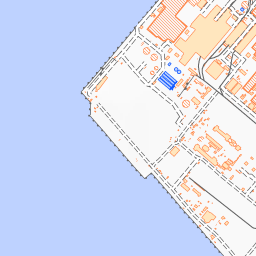
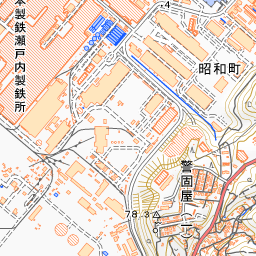
Spot location © OpenStreetMap contributors (ODbL)
Open in Google MapsGuides that include this spot (1)
Use asobot while you walk
- See where you are on the map and find spots nearby
- Listen to the guide's audio in course order, one after another (with subtitles)
- Walk to the next spot while following the map
Open on your phone
Scan to open this spot in asobot on your phone.