 ✨ AI Generated
Yokoyama Taikan Memorial Hall
Japanese: 横山大観記念館
Taito City, Tokyo
This information was written by AI and may contain mistakes. Please check official sources for opening hours, fees, and other details before you go.
Found a mistake? Let us know with “✏️ Something's wrong” on this spot's screen in asobot →
🎧 Audio guide(0:58)
In short
Yokoyama Taikan Memorial Hall is a facility that opens to the public the former residence, studio, and garden of Yokoyama Taikan, one of the leading painters of modern Japan. Located west of Shinobazu Pond, the former residence and garden are designated as a national Historic Site and Place of Scenic Beauty. Taikan continued to create Nihonga (Japanese-style paintings) here until his death. Visitors can view Taikan's works inside a sukiya-style Japanese house entered by taking off one's shoes.
- Works in the Tokonoma (Alcove): Works mounted as hanging scrolls are displayed as they are, hung in the tokonoma alcoves.
- The Guest Room Shokodo: A guest room on the first floor, recreating the room that existed before the fire.
- Taikan's Garden: The garden has a long, narrow, winding pond in the center, and Taikan personally gave instructions on where and in which direction to plant the trees.
History and Highlights
Yokoyama Taikan Memorial Hall is a facility that opens to the public the former residence, studio, and garden of Yokoyama Taikan (1868–1958), one of the leading painters of modern Japan. Located west of Shinobazu Pond, the former residence and garden are designated as a national Historic Site and Place of Scenic Beauty.
Taikan was a student of the first graduating class of the Tokyo Fine Arts School and looked up to Okakura Tenshin as his mentor. In Meiji 41 (1908), he moved to this location. Initially, it was a small plot for temporary living, but as his fame as a painter grew, he purchased additional land, reaching nearly its present scale in Taisho 8 (1919). In that same year, the building and garden designed by Taikan himself were constructed. Taikan continued creating Nihonga here until his death at this location in Showa 33 (1958).
The residence was destroyed by fire during the air raids on Tokyo in Showa 20 (1945), leaving only the storehouse. Through Taikan's strong determination, the present two-story wooden sukiya-style Japanese house was rebuilt in Showa 29 (1954) in nearly the same form. During his lifetime, Taikan expressed the wish that after his death, this site should be used for the benefit of the Japanese art world as public property rather than personal property. Based on his wishes, it was opened to the general public in November of Showa 51 (1976).
Highlights of Viewing and Experiencing
- Works in the Tokonoma: Making the most of the Japanese architectural ambiance, works mounted as hanging scrolls are displayed as they are, hung in the tokonoma alcoves. Visitors can experience the appeal of traditional Japanese architecture by taking off their shoes upon entering.
- Shokodo and the Studio: On the first floor is the Shokodo, a guest room recreating the one that existed before the fire. The second floor is the studio, equipped with many windows to take in ample natural light.
- Taikan's Garden: In this 400-tsubo (approx. 1,320 m²) garden, a long, narrow, winding pond lies in the center of the main garden extending to the south of the building. In the back right when viewed from the building, there is an artificial hill (tsukiyama), in front of which sits a garden stone presented by Marquis Hosokawa Moritatsu. Taikan personally made sketches to show which trees to plant and gave instructions regarding their planting positions and orientations. Many trees and elements of this garden were chosen as subjects for his paintings.
Walking Tips
Visitors must remove their shoes upon entering the hall, and wearing socks is required. Please prepare socks before your visit. Because the collection is extensive and the number of works that can be exhibited at one time is limited, rotating exhibitions are held.
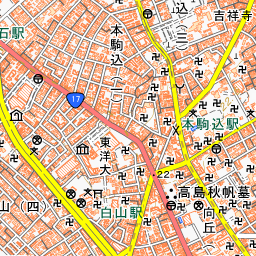
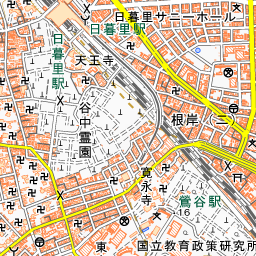
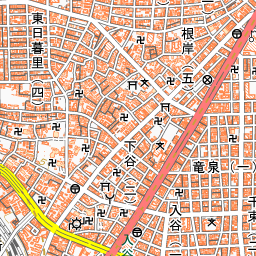
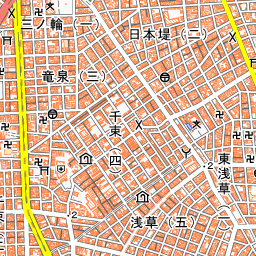
The nearest station is Yushima Station on the Tokyo Metro Chiyoda Line, a 7-minute walk away. It is a 1-minute walk from the Ikenohata 1-chome bus stop on the Toei Bus network. Shinobazu Pond is about 240 meters to the east, and Kyu-Iwasaki-tei Gardens is about 280 meters to the south, making them convenient to visit together on foot. Taikan's grave is located in Yanaka Cemetery.


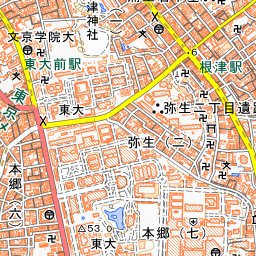

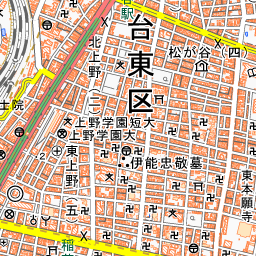

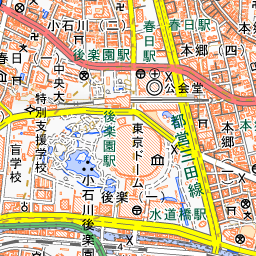
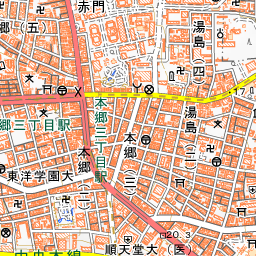


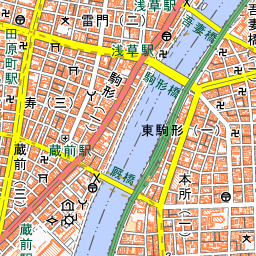
Spot location © OpenStreetMap contributors (ODbL)
Open in Google MapsUse asobot while you walk
- See where you are on the map and find spots nearby
- Listen to the guide's audio in course order, one after another (with subtitles)
- Walk to the next spot while following the map
Open on your phone
Scan to open this spot in asobot on your phone.