 ✨ AI Generated
Otonashi Shinsui Park
Japanese: 音無親水公園
Kita City, Tokyo
This information was written by AI and may contain mistakes. Please check official sources for opening hours, fees, and other details before you go.
Found a mistake? Let us know with “✏️ Something's wrong” on this spot's screen in asobot →
🎧 Audio guide(0:58)
In short
Otonashi Shinsui Park is a park created on the former riverbed of the Shakujii River, located right next to JR Oji Station. The Shakujii River around this area was known as the Otonashi River and has long been a famous scenic spot for cherry blossom viewing and autumn foliage. It has been selected as one of the 100 Best Urban Parks in Japan.
- Otonashi-bashi Bridge: A reinforced concrete bridge with three arches spans directly above the park.
- Gongen-no-Taki Waterfall: A reconstructed waterfall reproducing one of the former Seven Waterfalls of Oji, flowing at a rate of one ton per minute.
- Stream and Funakushi-bashi Bridge: In summer, the stream fills with children playing in the water. The Funakushi-bashi Bridge, which was once washed away by a typhoon, has also been restored.
History and Highlights
Otonashi Shinsui Park was developed on the former river channel of the Shakujii River, which originates in the eastern part of Kodaira City and flows into the Sumida River. Near Kita Ward, the Shakujii River was called the Otonashi River. It has long been a renowned seasonal destination throughout the year, featuring cherry blossoms in spring, lush green maples and waterfall bathing in summer, and colorful foliage in autumn.
In 1857 (Ansei 4), Hiroshige depicted the area around the Oji Ozeki (weir), located slightly upstream of this park, in his "One Hundred Famous Views of Edo." Built in 1656 (Meireki 2), this stone weir became a famous site in Oji due to its grand scale.
In September 1958 (Showa 33), the Kanogawa Typhoon caused the Shakujii River to flood, destroying the gorge. Prompted by this flood damage, river improvement works progressed, and the Oji Ozeki disappeared. As part of the improvements, two tunnels were dug beneath Asukayama Park to create a shortcut for the river's flow. This park was created along the abandoned old riverbed to bring back the former mountain stream.
It opened in 1988 and was selected as one of the 100 Best Urban Parks in Japan the following year, in 1989. The park also preserves a monument to Kumagai Genzaemon, a village official (kumigashira) of Oji Village in the early Meiji period who helped attract Shoshi Kaisha, founded by Shibusawa Eiichi, to this area.
Viewing and Experience Points
- Look up at Otonashi-bashi Bridge: A bridge with three arches spanning directly above the park. It is a reinforced concrete bridge built to connect Oji Town and Takinogawa Town, which were once separated by the deep gorge of the Shakujii River, with financial support from Shibusawa Eiichi. You can view the arched piers from the promenade.
- Gongen-no-Taki Waterfall and Funakushi-bashi Bridge: The waterfall reproduces Gongen-no-Taki, one of the former Seven Waterfalls of Oji. It has a flow rate of one ton per minute. The Funakushi-bashi Bridge is a reconstruction of a bridge that was washed away and abandoned during the 1958 Kanogawa Typhoon.
- Stream with Waterwheel and Cherry Blossoms: There is a stream of about 100 meters featuring a waterwheel, bridges, and rocks. The water is circulated through a filtration system. In summer, it is crowded with children enjoying water play. Twenty-one Somei Yoshino cherry trees and 44 sasanqua camellias are also planted in the park.
Walking Tips
The park is right next to the North Exit of JR Oji Station and Exit 3 of Oji Station on the Tokyo Metro Namboku Line. Stroll along the promenade flanking the stream and look up at the arches under Otonashi-bashi Bridge. You can reach the top of the bridge via an elevator or stairs. Kita Ward provides information on the wading period and scheduled cleaning days.
Just to the north lies Oji-jinja Shrine, and Asukayama Park is about 370 meters to the southeast. About 620 meters to the northwest is Nanushi-no-Taki Park, home to Nanushi-no-Taki Waterfall, the only surviving fall among the Seven Waterfalls of Oji.
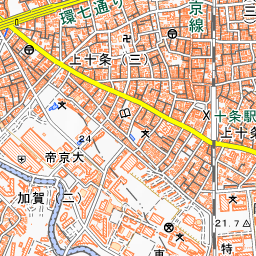
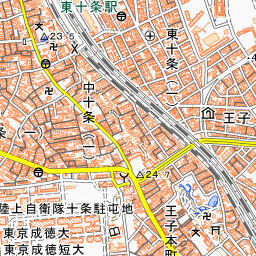
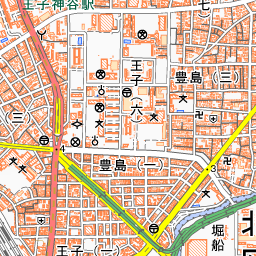
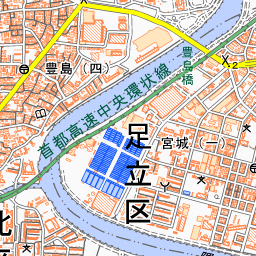
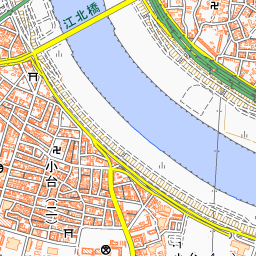
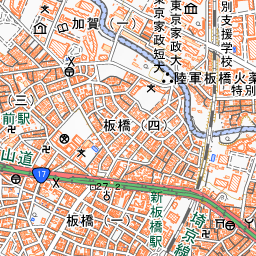
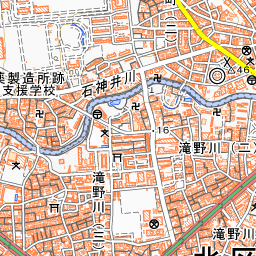
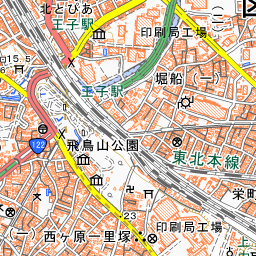
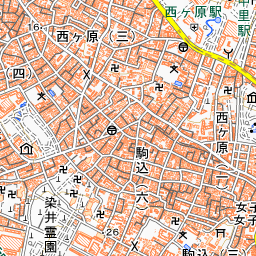
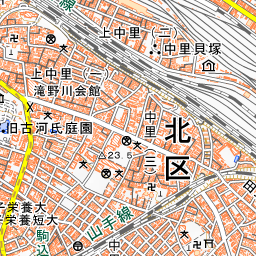
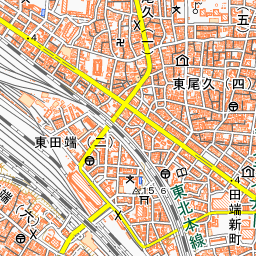
Spot location © OpenStreetMap contributors (ODbL)
Open in Google MapsUse asobot while you walk
- See where you are on the map and find spots nearby
- Listen to the guide's audio in course order, one after another (with subtitles)
- Walk to the next spot while following the map
Open on your phone
Scan to open this spot in asobot on your phone.