 ✨ AI Generated
Tokyo Midtown
Japanese: 東京ミッドタウン
Minato City, Tokyo
This information was written by AI and may contain mistakes. Please check official sources for opening hours, fees, and other details before you go.
Found a mistake? Let us know with “✏️ Something's wrong” on this spot's screen in asobot →
🎧 Audio guide(1:08)
In short
Tokyo Midtown is a mixed-use urban complex in Roppongi that opened on March 30, 2007. It brings together a hotel, art museums, around 130 shops, offices, residences, and a park. Born on land that had been closed to the public for over 400 years, the complex has green open spaces covering about 40% of its area.
- Midtown Garden: Cherry and camphor trees that had taken root here since the Defense Agency era were transplanted, creating a tunnel of cherry blossoms in spring.
- Design and Art: Home to the Suntory Museum of Art and 21_21 DESIGN SIGHT, and works by sculptor Yasuda Kan welcome visitors.
- Hinokicho Park: A park connected to the garden, where a large pond recalls the feudal lord's garden "Shimizu-en" from the Edo period.
History and Highlights
Tokyo Midtown is a mixed-use urban complex that opened in Roppongi on March 30, 2007. It gathers The Ritz-Carlton, Tokyo, cultural facilities such as the Suntory Museum of Art, about 130 shops, offices, residences, a hospital, and a park.
During the Edo period, this land was the suburban residence (shimoyashiki) of the Mori clan of the Hagi domain. In the Meiji period, it became an army garrison; after the war, it served as housing for U.S. military officers; and after being returned to Japan, it became the Hinokicho office of the Defense Agency. For over 400 years, this land had remained closed to the general public. In 1878 (Meiji 11), Nogi Maresuke was appointed commander of the 1st Infantry Regiment stationed here.
With the relocation of the Defense Agency headquarters to Ichigaya in 2000, redevelopment began, including the Minato Municipal Hinokicho Park. About 140 trees that had been planted at the former Defense Agency were preserved in green spaces, and stones from the masonry drainage ditch of the Mori clan's suburban residence site were repurposed into retaining walls. The arrangement of the buildings was modeled after the rock arrangement of a traditional Japanese garden.
Viewing and Experience Points
- Midtown Garden: A green open space covering about 40% of the complex. Conceived with the entrance along Gaien-Higashi-dori Avenue resembling deep mountains and a spring, four zones continue to Hinokicho Park. Camphor and cherry trees that had rooted here since the Defense Agency era were transplanted, forming a tunnel of cherry blossoms in spring.
- Design and Art Facilities: The Suntory Museum of Art, which has held "Beauty in Everyday Life" as its basic philosophy since its opening in 1961, relocated here. Within the garden stands 21_21 DESIGN SIGHT. The main art installations of the complex are two works by sculptor Yasuda Kan: "Ishinki" and "Myomu".
- Hinokicho Park: A Minato Municipal park continuing from the garden. The suburban residence of the Mori clan in the Edo period featured a feudal lord's garden called "Shimizu-en", and the large pond recalls its former appearance. The name Hinokicho originates from the fact that a splendid cypress (hinoki) grove was located on the south side of the residence, which led to it being called the "Hinoki Residence".
Tips for Exploring
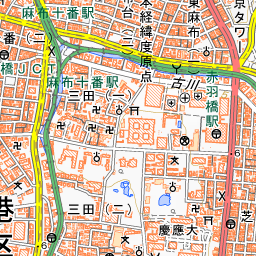
The complex is directly connected to Exit 8 of Roppongi Station on the Toei Oedo Line. It is also directly connected via an underground walkway from Roppongi Station on the Tokyo Metro Hibiya Line, and is about a 3-minute walk from Exit 3 of Nogizaka Station on the Chiyoda Line. After exploring inside the buildings, take a stroll through the garden to the pond in Hinokicho Park. The Suntory Museum of Art, The National Art Center, Tokyo, and the Mori Art Museum are known as the "Art Triangle". The National Art Center, Tokyo is about 430 meters to the west, Nogi-jinja Shrine is about 410 meters to the northwest, and Akasaka Hikawa-jinja Shrine is about 500 meters to the northeast.


Guides that include this spot (1)
Use asobot while you walk
- See where you are on the map and find spots nearby
- Listen to the guide's audio in course order, one after another (with subtitles)
- Walk to the next spot while following the map
Open on your phone
Scan to open this spot in asobot on your phone.