 ✨ AI Generated
Yoyogi First Gymnasium
Japanese: 代々木第一体育館
Shibuya City, Tokyo
This information was written by AI and may contain mistakes. Please check official sources for opening hours, fees, and other details before you go.
Found a mistake? Let us know with “✏️ Something's wrong” on this spot's screen in asobot →
🎧 Audio guide(0:54)
In short
Yoyogi First Gymnasium is an arena of the Yoyogi National Stadium, built for the 1964 Tokyo Olympics. A masterpiece by architect Tange Kenzo, it is known for its "suspended roof structure," where the roof is suspended by cables stretched between two pillars. In 2021, along with the adjacent Second Gymnasium, it was designated as an Important Cultural Property of Japan.
- A sweeping, curved roof: The roof's shape is said to resemble the main ridge (omune) and ridge-end roof tiles (shibi) of a traditional tiled roof
- Two Olympic Games: It served as the venue for swimming in 1964, and sports such as handball in 2021
- An Important Cultural Property still in use: It continues to be used as a venue for sports competitions and concerts
History and Highlights
Yoyogi First Gymnasium is one of the two gymnasiums at the Yoyogi National Stadium. For the 1964 Tokyo Olympics, it was built alongside the Olympic Village on the site of "Washington Heights," a former residential compound for the U.S. military. As for the design, Tange Kenzo was in charge of construction and overall design, Tsuboi Yoshikatsu of structural design, and Inoue Uichi of facility equipment.
To create a large space without pillars, Tange Kenzo chose a "suspended roof structure." Two main cables, each 280 meters long, are strung between two 40-meter-tall pillars to support the roof. Applying the technology used to build large bridges to a large building was an unprecedented challenge. The construction period lasted only 18 months. The building was completed on August 31, 1964, in a high-wire operation with just 39 days remaining before the opening of the Olympics.
The resulting roof is said to resemble the main ridge and ridge-end roof ornaments (shibi) of a tiled roof. During the Olympics, it served as the swimming venue; afterward, it was used as a swimming pool in summer and an ice skating rink in winter. In 1983, the first concert was held here. For the Tokyo 2020 Games held in 2021, it hosted handball, wheelchair rugby, and para-badminton, making it a rare facility in the world that has experienced two Olympic Games. In August 2021, together with the Second Gymnasium, it was designated as an Important Cultural Property of Japan. At the time of its designation, it was the newest Important Cultural Property in terms of completion year.
Viewing and Experience Tips
- Roof Curves: The curve of the roof descending from the two pillars is a shape that could not be achieved solely with wire. It was realized by using pre-shaped steel framing for the suspension members.
- Tomoe-pattern Layout: It features a "tomoe" (comma-shaped swirl) layout combining two shifted semicircles. This shape makes the flow of people entering and exiting easy to understand.
- Comparing with the Second Gymnasium: The adjacent Second Gymnasium has its roof suspended with spiral hanging pipes branching from a single pillar. Try comparing its shape with the two-pillar First Gymnasium.
Walking Tips
At the stadium grounds, there are many artworks created to commemorate the 1964 Tokyo Olympics. Inside the First Gymnasium, there are ceramic mosaics by Okamoto Taro titled "Eye," "Hand," "Compete," and "Foot." Outside, "Butterfly of Summer in Manazuru" by A. Cárdenas is also installed. Yoyogi Park is about 610 meters to the northwest, and Omotesando is about 350 meters to the northeast. Yoyogi Park is also the site where the Olympic Village was located. Walking through both allows you to trace the history of the 1964 Olympics.
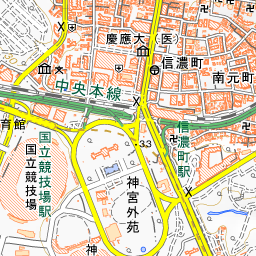
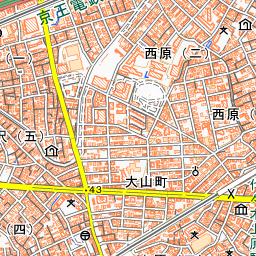
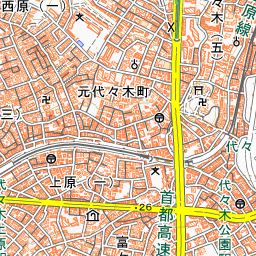
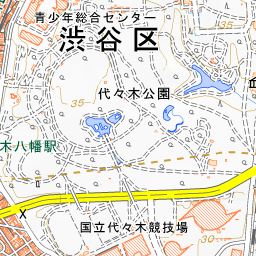
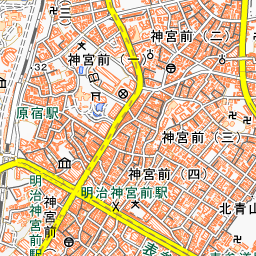
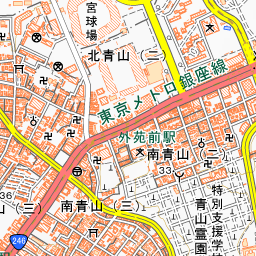
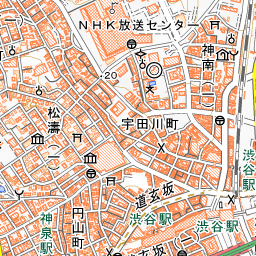
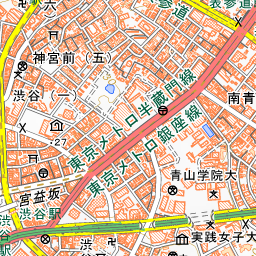
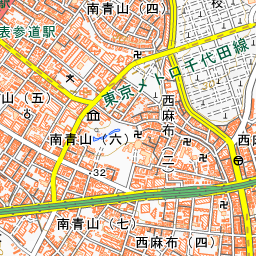
Spot location © OpenStreetMap contributors (ODbL)
Open in Google MapsUse asobot while you walk
- See where you are on the map and find spots nearby
- Listen to the guide's audio in course order, one after another (with subtitles)
- Walk to the next spot while following the map
Open on your phone
Scan to open this spot in asobot on your phone.