 ✨ AI Generated
Fudo-in Temple
Japanese: 不動院
Higashi Ward, Hiroshima
This information was written by AI and may contain mistakes. Please check official sources for opening hours, fees, and other details before you go.
Found a mistake? Let us know with “✏️ Something's wrong” on this spot's screen in asobot →
🎧 Audio guide(1:04)
In short
Fudo-in Temple is a Shingon sect temple in Ushita-shinmachi, along the Ota River in Higashi Ward, Hiroshima City. The Main Hall (Kondo) on its grounds has remained since the Muromachi period and is the only National Treasure in Hiroshima City. Even in the atomic bombing on August 6, 1945, it escaped disaster because it was located at the foot of a mountain, and it remains an invaluable temple for Hiroshima, which lost many of its cultural properties.
- National Treasure Main Hall (Kondo): Said to be the Buddha hall of a Zen temple built in Yamaguchi by Ouchi Yoshitaka and relocated here by Ankokuji Ekei, it boasts the largest scale among medieval Zen Buddhist temple halls
- Structure of the Main Hall: The roof is in the hip-and-gable style with wood shingle roofing and an attached pent roof (mokoshi), and fine details such as the bracket complexes under the eaves show a delicacy amidst its grandeur
- Romon Gate and Bell Tower: A Romon (two-story gate) from the Momoyama period and a Bell Tower dating to 1433, in the middle of the Muromachi period, remain on the grounds, and both are designated national Important Cultural Properties
History and Highlights
Fudo-in Temple is a Shingon sect temple located in Ushita-shinmachi along the Ota River in Higashi Ward, Hiroshima City. The Main Hall (Kondo) on the grounds is a remnant of the Muromachi period and the only National Treasure in Hiroshima City.
While the exact period when a temple was first built on this site is not clearly known, it is believed that a temple complex already existed by around the end of the Heian period, as suggested by items such as the seated statue of Yakushi Nyorai enshrined in the Main Hall. During the Muromachi period, when the brothers Ashikaga Takauji and Ashikaga Tadayoshi founded Ankoku-ji temples across various provinces to comfort the spirits of samurai who died in the wars of the Northern and Southern Courts, the Ankoku-ji of Aki Province was established at this site and flourished as a Zen temple. However, the temple complex was burned down in the fires of war during the Daiei era (1521–1528).
The person who rebuilt it was Ankokuji Ekei, who lived through the Sengoku period as a diplomatic monk for the Mori clan and later won the trust of Toyotomi Hideyoshi. Ekei served as chief priest for about 30 years until Keicho 5 (1600), during which time he built or rebuilt almost all of the temple buildings. After the Battle of Sekigahara, Ekei was executed. Later, Yuchin, who had served as a prayer monk for the new feudal lord Fukushima Masanori, entered the temple and changed the sect from Rinzai Zen to Shingon. Because Fudo Myoo was enshrined in the main living quarters (honbo), it came to be called Fudo-in Temple.
Even during the atomic bombing on August 6, Showa 20 (1945), it escaped disaster because it was located at the foot of a mountain. For Hiroshima, which lost many of its cultural properties, it remains an invaluable temple.
Sights and Highlights
- National Treasure Main Hall (Kondo): The Main Hall is said to be a Zen temple hall originally built in Yamaguchi by the Sengoku warlord Ouchi Yoshitaka, which Ekei later relocated to this site. Based on the year inscribed in the ceiling painting, the building is believed to date from around Tenbun 9 (1540). It boasts the largest scale among medieval Zen Buddhist temple halls and was designated a National Treasure in Showa 33 (1958).
- Structure of the Main Hall: The roof is built in the hip-and-gable style (irimoya-zukuri) with wood shingle roofing (kokera-buki) and features an attached pent roof (mokoshi). The fine details, such as the bracket complexes under the eaves, show a delicacy amidst its grandeur. The front row, one bay deep, is left open without walls, a feature not seen in other Zen-style Buddhist temple halls.
- Romon Gate and Bell Tower: The grounds preserve a Romon (two-story gate) from the Momoyama period and a Bell Tower dating to 1433 in the middle of the Muromachi period, both of which are designated national Important Cultural Properties. The Romon is a two-story gate with a hip-and-gable roof covered in traditional formal tiling (hongawarabuki).
Tips for Visitors
It is about a 2-minute walk after getting off at Fudoin-mae Station on the Astram Line. From Hiroshima Station, take the JR Sanyo Main Line to Shin-Hakushima Station and transfer to the Astram Line. Shukkeien Garden is about 3 kilometers to the south.


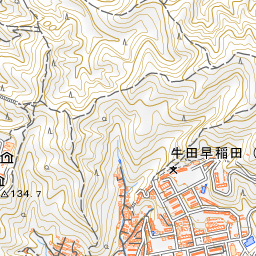

Spot location © OpenStreetMap contributors (ODbL)
Open in Google MapsGuides that include this spot (1)
Use asobot while you walk
- See where you are on the map and find spots nearby
- Listen to the guide's audio in course order, one after another (with subtitles)
- Walk to the next spot while following the map
Open on your phone
Scan to open this spot in asobot on your phone.