 ✨ AI Generated
Habu Port
Japanese: 波浮の港
Oshima Town, Tokyo
This information was written by AI and may contain mistakes. Please check official sources for opening hours, fees, and other details before you go.
Found a mistake? Let us know with “✏️ Something's wrong” on this spot's screen in asobot →
🎧 Audio guide(1:01)
In short
Habu Port is a small port town on the southeastern coast of Izu Oshima. Originally a crater lake formed by a volcanic eruption, it became connected to the sea by a tsunami and was later opened by human hands to flourish as a port for waiting out unfavorable winds. It is also known as the town where the woman said to be the model for the dancer in Kawabata Yasunari's novel The Dancing Girl of Izu lived.
- A Port That Was Once a Crater: Looking down from the Habu Port Observation Deck, you can clearly see how it was once a crater lake.
- Historic Buildings of the Port Town: Buildings such as the three-story wooden Former Minatoya Ryokan and the Former Jinnomaru Residence with its namako walls remain.
- Setting for Songs and Novels: You can stroll through a town associated with the song "Habu no Minato" and the novel The Dancing Girl of Izu.
History and Highlights
The origin of Habu Port lies in a phreatomagmatic eruption. When magma came into contact with groundwater, an explosive eruption occurred, forming a large crater. This eruption is thought to have taken place at the beginning of the 9th century. The crater was soon filled with groundwater and became a crater lake known as "Habu Pond."
In 1703, a massive tsunami triggered by the Genroku earthquake eroded the rim of the crater lake, connecting the lake to the sea. The Edo merchant Akihiro Heiroku took notice of this topography. Heiroku petitioned the shogunate and undertook the construction work, excavating the area by removing the rocks that remained at the port's entrance. Work began in 1800 and was completed the following year in 1801.
Protected by natural windbreak walls, this port flourished as a place to wait for favorable winds. Many fishing vessels from across the country gathered at the rich fishing grounds south of the island, and Habu Port became a relay base for transporting caught fish to the mainland.
From the Meiji era to the Showa era, diverse writers and artists visited the town. In 1928, the song "Habu no Minato," with lyrics by Noguchi Ujo and music by Nakayama Shinpei, became a huge hit, leading to a sharp rise in tourists. Kaoru, the dancing girl appearing in Kawabata Yasunari's The Dancing Girl of Izu, is said to have been modeled after Tami, a dancer who lived at Habu Port. It is said that when requested, the dancers would perform dances in the tatami rooms of the Minatoya Ryokan and the Former Jinnomaru Residence.
Highlights for Viewing and Experiencing
- View from Habu Port Observation Deck: Gazing at the port from the observation deck clearly reveals its past as a crater lake. Nearby stands a statue of Akihiro Heiroku, as well as a stone monument inscribed with the lyrics of "Anko Tsubaki wa Koi no Hana."
- Former Minatoya Ryokan: A three-story wooden inn whose old wing was built in the Meiji era and new wing in the Taisho era. It now operates as the Minatoya Dancing Girl Museum, displaying photographs and writings that convey the atmosphere of the past.
- Former Jinnomaru Residence: A mansion from the Meiji era. Surrounded by an Oya Stone wall, a two-story stone building with namako walls stands here.
Tips for Strolling
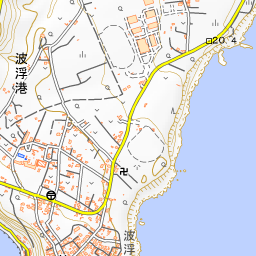
Habu Port is about a 30-minute ride on the Oshima Bus Habu Port Line from Motomachi Port. Start by taking a walk along the port's winding roads and alleys. You can stop by shops offering freshly caught seafood, seafood dishes, potato croquettes, sweets, and more. The slope in front of the Former Minatoya Ryokan is Odoriko Slope; climbing the stone steps will lead you to the Former Jinnomaru Residence. Habuhimenomikoto Shrine, located on the west shore at the entrance of the bay, is traditionally worshipped by entering from the boat landing located beneath the seaside torii gate. The Habu Port Observation Deck overlooking the port is located beside the Oshima Ring Road. Along the same road, about 6 km to the west-northwest, lies the Great Strata Cross-Section.









Spot location © OpenStreetMap contributors (ODbL)
Open in Google MapsGuides that include this spot (1)
Use asobot while you walk
- See where you are on the map and find spots nearby
- Listen to the guide's audio in course order, one after another (with subtitles)
- Walk to the next spot while following the map
Open on your phone
Scan to open this spot in asobot on your phone.