 ✨ AI Generated
Sangenjaya
Japanese: 三軒茶屋
Setagaya City, Tokyo
This information was written by AI and may contain mistakes. Please check official sources for opening hours, fees, and other details before you go.
Found a mistake? Let us know with “✏️ Something's wrong” on this spot's screen in asobot →
🎧 Audio guide(0:59)
In short
A neighborhood in Setagaya Ward, also commonly called "Sancha." The name originates from the three teahouses (sangen chaya) that once stood at a fork along Oyama-michi, where people traveling on the Oyama pilgrimage came and went during the Edo period. Today, it is one of the most well-known commercial districts in Setagaya Ward.
- Oyama-michi Milestone: Beside the station entrance at the fork where the Shigaraki teahouse once stood, an old Oyama-michi milestone is preserved.
- Carrot Tower: A commercial complex created through redevelopment and the neighborhood's landmark. It features an observation lobby on the 26th floor.
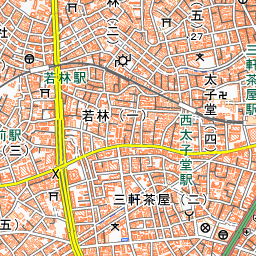
- Sankaku Chitai (Triangle Zone): An area bordered by Route 246 and Setagaya-dori, where a black market emerged shortly after the war. Izakaya pubs and bars line its maze-like alleys.
History and Highlights
Sangenjaya is a neighborhood name in Setagaya Ward, often shortened to "Sancha." It is one of the most prominent commercial areas in the ward. Its name derives from three teahouses that stood along Oyama-michi during the Edo period.
Oyama-michi was a bustling ancient route used by pilgrims on the Oyama pilgrimage. Starting from Akasaka in Edo, it passed through Shibuya, Sangenjaya, and Yoga, crossed the Tama River at the Futako ferry crossing, and headed toward Isehara, where Oyama is located. After the mid-Edo period, as the Oyama pilgrimage gained immense popularity, a shortcut was opened between Sangenjaya and Yoga, and both routes came to be called Oyama-michi. At the three-way junction along this route, three teahouses—Shigaraki, Kadoya, and Tanakaya—were established and flourished as rest stops for travelers. This spot became a landmark for travelers, and over time, it came to be called Sangenjaya.
In 1907 (Meiji 40), the Tamagawa Electric Railway, popularly known as "Tamaden," began service between Shibuya and Tamagawa. It was a streetcar line, and most of its route ran along Oyama-michi.
Tips for Enjoyment
- Oyama-michi Milestone: The Shigaraki teahouse stood at the junction between the main route of Oyama-michi (present-day Setagaya-dori) and the new route (present-day Tamagawa-dori). In front of that site, beside the station entrance, a milestone for Oyama-michi is preserved. Among the three original teahouses, Tanakaya continues to operate near its original location as a ceramics shop named Tanakaya Toen.
- Carrot Tower: A complex building constructed during the redevelopment of the Sangenjaya Station area and a landmark of the town. The 26th floor houses an observation lobby; from the west side, you can look out across western Tokyo and see Mount Fuji depending on the season, while the east side offers views of central Tokyo's nightscape and Tokyo Tower.
- Sankaku Chitai: An area around Sangenjaya Station bounded by Route 246 and Setagaya-dori. A black market was set up in this quarter shortly after the war, and today izakaya pubs and bars line its intricate, labyrinthine alleys. The nostalgic atmosphere of the Showa era remains strongly felt here.
Walking Advice
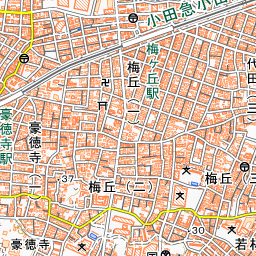
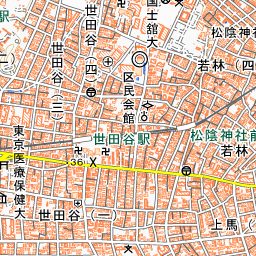
Sangenjaya Station is served by the Tokyu Den-en-toshi Line and the Tokyu Setagaya Line. It is about 4 minutes from Shibuya on the Tokyu Den-en-toshi Line. Start by viewing the Oyama-michi milestone next to the station entrance, check the point where Setagaya-dori and Tamagawa-dori diverge, and then take a walk through the alleys of the Sankaku Chitai. The Tokyu Setagaya Line is a streetcar line that connects Sangenjaya Station with Shimo-Takaido Station, passing through Shoin-jinja-mae Station and Miyanosaka Station. You can reach Shoin-jinja Shrine and Gotoku-ji Temple by taking the Tokyu Setagaya Line.




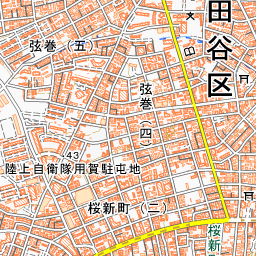
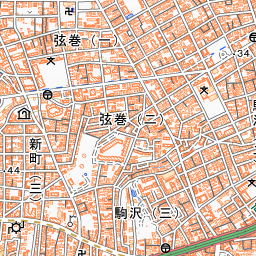
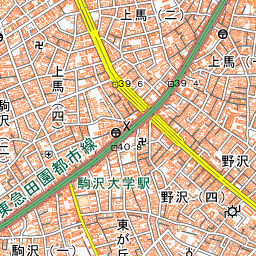
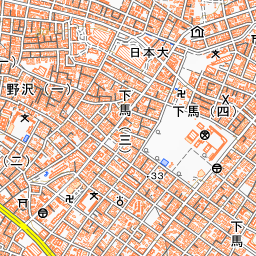
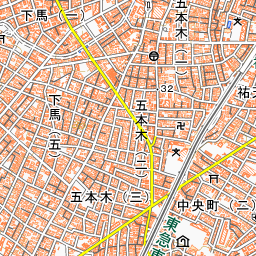
Spot location © OpenStreetMap contributors (ODbL)
Open in Google MapsGuides that include this spot (1)
Use asobot while you walk
- See where you are on the map and find spots nearby
- Listen to the guide's audio in course order, one after another (with subtitles)
- Walk to the next spot while following the map
Open on your phone
Scan to open this spot in asobot on your phone.