 ✨ AI Generated
Nanushi-no-Taki Park
Japanese: 名主の滝公園
Kita City, Tokyo
This information was written by AI and may contain mistakes. Please check official sources for opening hours, fees, and other details before you go.
Found a mistake? Let us know with “✏️ Something's wrong” on this spot's screen in asobot →
🎧 Audio guide(1:00)
In short
Nanushi-no-Taki Park is a stroll garden that cleverly utilizes the slope of Oji. It originated when the Hatano family, who served as the nanushi (village headman) of Oji Village, created a waterfall on their private estate. It contains Nanushi-no-Taki Falls, the only surviving waterfall among the former "Oji Seven Waterfalls." Currently, the Odaki (male waterfall) has ceased flowing due to revitalization and renovation work.
- Nanushi-no-Taki Falls: Consists of four waterfalls—Medaki (female waterfall), Dokko Falls, and Yugyoku Falls—centered around the 8-meter-high Odaki.
- Japanese Mountain Maples (Yamamomiji): More than 100 trees are planted on the slope, with their leaves turning color every year around November.
- Trees Resembling a Deep Mountain: Covered in thick, lush vegetation, where wild birds can be heard singing.
History and Highlights
Nanushi-no-Taki Park is a stroll garden situated in Oji, at the edge of the Musashino Plateau, that makes skillful use of the terrain's slope. There were once many waterfalls in this area, including seven waterfalls known as the "Oji Seven Waterfalls." Among them, the only one that remains today is Nanushi-no-Taki Falls.
Its history dates back to the latter half of the Edo period. Hatano Magohachi, the headman (nanushi) of Oji Village, created a waterfall within his residential estate. This is the origin of the name "Nanushi-no-Taki." He also grew tea and opened the grounds as a summer retreat for people to use.
During the mid-Meiji period, the property passed into the hands of the import-export merchant Kakiuchi Tokusaburo. Fashioning the grounds after the scenery of Shiobara in Tochigi Prefecture, which he admired, Kakiuchi brought in garden stones, planted maples, and created a mountain stream. This garden, featuring a deep ravine, was opened to the public.
In 1938 (Showa 13), Seiyoken acquired the property and constructed a restaurant and a swimming pool. However, these facilities were destroyed by fire during the air raid in April 1945 (Showa 20). The Tokyo Metropolitan Government reopened the park in 1960 (Showa 35), and jurisdiction was transferred to Kita Ward in 1975 (Showa 50).
Currently, revitalization and renovation work is underway to address the aging of the facilities.
Viewing and Experience Points
- Four Waterfalls: Nanushi-no-Taki Falls consists of four waterfalls: Odaki, which has a drop of 8 meters (one of the largest in Tokyo), Medaki, Dokko Falls, and Yugyoku Falls. Before the construction, only Odaki was active, flowing with pond water that was pumped up. That Odaki has also currently been stopped due to the construction.
- Trees on the Slope: The slopes surrounding the waterfalls are planted with zelkovas, hackberries, chinquapins, and more than 100 Japanese mountain maples. Every year around November, the leaves of the mountain maples turn crimson.
- Streams and Birdsongs: Mountain streams and ponds are scattered throughout the park. Thickly covered with dense trees where wild birds sing, it is a place evocative of deep mountains.
Tips for Strolling
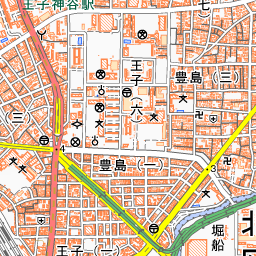
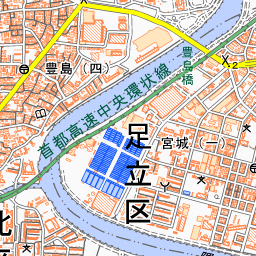
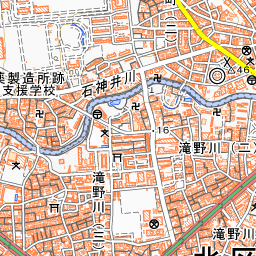
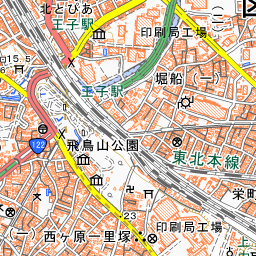
The park is a 10-minute walk from the North Exit of JR Oji Station and the Tokyo Metro Namboku Line Oji Station. While the waterfalls cannot be seen during the construction period, visitors can still stroll through the grounds. Because some areas are closed for safety, please follow the signs as you walk. As the garden takes advantage of the sloped topography, comfortable walking shoes are recommended.
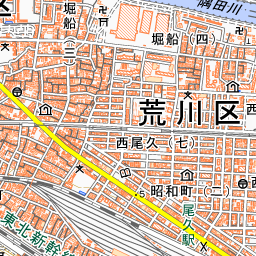
Oji Inari-jinja Shrine is located approximately 160 meters south-southeast of the park. If you venture a bit further, Oji-jinja Shrine is about 550 meters southeast, Otonashi Shinsui Park is about 620 meters southeast, and Asukayama Park is about 980 meters southeast. If you wish to see flowing waterfalls, head to Otonashi Shinsui Park, where there is a waterfall recreating Gongen Falls, one of the Oji Seven Waterfalls.
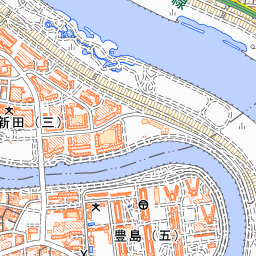
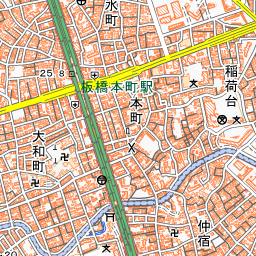
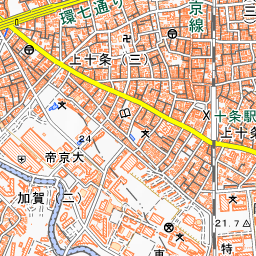
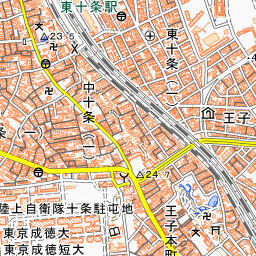
Spot location © OpenStreetMap contributors (ODbL)
Open in Google MapsUse asobot while you walk
- See where you are on the map and find spots nearby
- Listen to the guide's audio in course order, one after another (with subtitles)
- Walk to the next spot while following the map
Open on your phone
Scan to open this spot in asobot on your phone.