 ✨ AI Generated
Tokyo Camii
Japanese: 東京ジャーミイ
Shibuya City, Tokyo
This information was written by AI and may contain mistakes. Please check official sources for opening hours, fees, and other details before you go.
Found a mistake? Let us know with “✏️ Something's wrong” on this spot's screen in asobot →
🎧 Audio guide(1:04)
In short
Tokyo Camii is a mosque built in the architectural style of the Ottoman Empire, located in a residential area near Yoyogi-Uehara Station. Its predecessor was the Tokyo Mosque, built in 1938, and the current building was completed in 2000. Accommodating about 1,200 people for prayer at the same time, it is the largest mosque in Japan.
- Minaret and Dome: A towering single minaret and a dome-shaped roof serve as its landmarks
- Prayer Hall on the Second Floor: Visitors can tour the prayer hall, which is surrounded by stained glass and Arabic calligraphy decorations
- Craftsmanship from Turkey: Approximately 100 engineers and craft artisans came from Turkey to Japan for its construction
History and Highlights
Tokyo Camii is a mosque located in a quiet residential neighborhood in Shibuya Ward. A mosque is a place of worship where Muslims gather. Its official name is Tokyo Camii & Diyanet Turkish Culture Center.
Its origins trace back to the 1917 Russian Revolution. Persecuted Turkic people from the Kazan Governorate in Russia relocated through Central Asia to Manchuria, and subsequently moved to Japan. They first opened a school for children. Then, in 1938, they built their long-desired prayer hall next to the school. This was the Tokyo Mosque.
For a long time, the prayer hall served as a spiritual haven for Muslims in Japan. However, due to deterioration, it was demolished in 1986. Later, donations were collected from across Turkey, and in 2000, the current Tokyo Camii was completed. It was designed by Muharrem Hilmi Senalp, an architect representing modern Turkish religious architecture. Approximately 100 engineers and craft artisans from Turkey traveled to Japan for the construction. Aside from water, concrete, and steel rebar, all building materials and furnishings were transported from Turkey.
The building is constructed in the architectural style of the Ottoman Empire. Its design resembles the Blue Mosque in Istanbul. It can accommodate approximately 1,200 people for worship at one time, making it the largest mosque in Japan.
Viewing and Experience Points
- Minaret and Dome: Standing in front of the building, you will see a single tall tower and a dome-shaped roof. The tower is called a minaret, and from its balcony, the adhan—the call to prayer—is proclaimed.
- Prayer Hall on the Second Floor: The prayer hall is surrounded by stained glass and decorated with Arabic calligraphy, plant-inspired motifs, and geometric patterns. The large dome represents God's universe, and the ceiling features the names of God, the Prophet Muhammad, and the four successors written in Arabic.
- Tour Etiquette: Shoes must be removed before entering the prayer hall, and personal conversations should be kept to a minimum inside. Women are required to wear a headscarf before entering the prayer hall. Both men and women should visit in clothing that minimizes skin exposure. Scarves are available for loan to women who do not have one.
Tips for Exploring
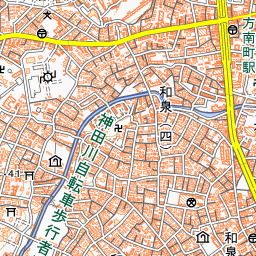
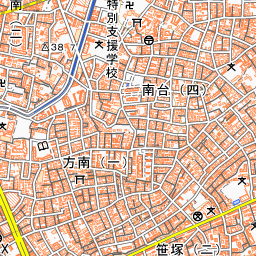
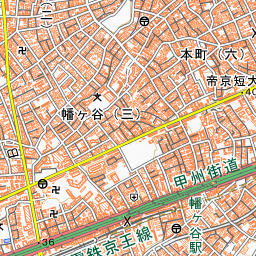
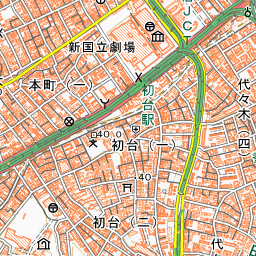
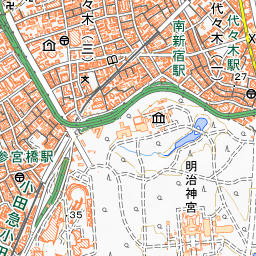
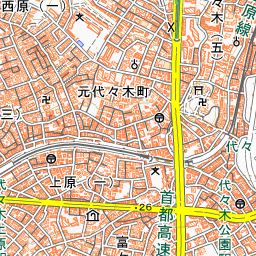
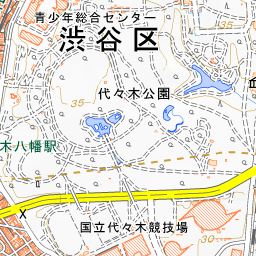
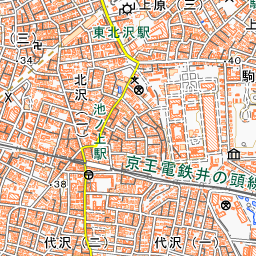
From Yoyogi-Uehara Station on the Odakyu Line, head out onto Inokashira-dori and pass under the Odakyu Line elevated railway tracks; it is about a 5-minute walk. Non-Muslims are also welcome to visit, and reservations are not required for individuals or small groups. Visitors may tour during prayer times, but during these periods, please sit quietly in the back and avoid walking around. Prior permission is required for taking photos and videos in the prayer area, and photography during prayer is not permitted. The upper floor of the prayer hall is a worship area reserved exclusively for women, so men may not enter. Congregational prayer is held around noon on Fridays. For first-time visitors, guided interior tours led by Japanese-speaking guides are also offered.
Spot location © OpenStreetMap contributors (ODbL)
Open in Google MapsUse asobot while you walk
- See where you are on the map and find spots nearby
- Listen to the guide's audio in course order, one after another (with subtitles)
- Walk to the next spot while following the map
Open on your phone
Scan to open this spot in asobot on your phone.