 ✨ AI Generated
Okochi Sanso Villa
Japanese: 大河内山荘
Ukyo Ward, Kyoto
This information was written by AI and may contain mistakes. Please check official sources for opening hours, fees, and other details before you go.
Found a mistake? Let us know with “✏️ Something's wrong” on this spot's screen in asobot →
🎧 Audio guide(1:07)
In short
A mountain villa of gardens and buildings spreading across the foot of Mt. Ogura. Okochi Denjiro, a star of period dramas, fell in love with the scenery from Mt. Ogura and kept building it based on his own aesthetic sense over 30 years, from the age of 34 until his death at 64.
- Circuit-Style Borrowed-Scenery Garden: A garden to stroll while taking in views such as the Hozu River. Mt. Hiei and the Kyoto cityscape can be seen in the distance, while Arashiyama rises directly behind
- Buildings Registered as National Tangible Cultural Properties: Four buildings, the Daijokaku, Tekisuian, Jibutsu-do, and Chumon Gate, are national Registered Tangible Cultural Properties. The interior of the central building, the Daijokaku, is generally not open to the public
- Okochi Denjiro Museum: Visitors can learn about Denjiro's career through video, panels, and displays of his memorabilia
History and Highlights
Okochi Sanso Villa is a mountain villa consisting of gardens and buildings, spreading across the foot of Mt. Ogura. Okochi Denjiro, a star of period dramas who gained immense popularity with works such as Tange Sazen and Hatamoto Taikutsuotoko, fell in love with the scenery from Mt. Ogura—a mountain known through the Hyakunin Isshu—and built the villa based on his own aesthetic sense.
Okochi was an actor active from the silent film era of the Taisho period through the postwar period, and had a deep devotion to Zen. He designed the villa himself, selected the building materials with his own hands, and continuously worked on its construction over a span of 30 years from the age of 34 until his death at age 64.
Extending across the slopes of Mt. Ogura, the garden is a circuit-style borrowed-scenery garden where visitors stroll while taking in views of traditional Japanese architecture, diverse plants, and the Hozu River. From the garden, Mt. Hiei and the Kyoto cityscape can be seen in the distance, while Arashiyama rises directly behind it. Four buildings on the grounds—the Daijokaku, Tekisuian, Jibutsu-do, and Chumon Gate—are national Registered Tangible Cultural Properties.
Points for Viewing and Experiencing
- Daijokaku: Built in 1941 (Showa 16), this is the central building of the villa. Featuring an innovative design that combines a sukiya-style shoin with a protruding izumidono-style shinden pavilion, a tea room, a vernacular minka-style kitchen, and an earthen-floor doma under one structure, it is considered the masterpiece of sukiya master Usui Kaichiro. The interior is generally not open to the public.
- Tekisuian: A tea hut with a thatched roof situated within the garden to the south of Daijokaku. Built in a light, graceful sukiya style using abundant logs and bamboo, it is an essential architectural element in the garden's scenery. A building dating from the Meiji period, it was relocated here in 1932 (Showa 7).
- Jibutsu-do and Memorial Museum: Jibutsu-do is a small hall located in the southwest of the grounds, built in 1931 (Showa 6). Although small, it is crafted with elaborate techniques throughout. The grounds also house the Okochi Denjiro Museum, where visitors can learn about Okochi's career through video, panels, and displays of his memorabilia.
Walking Tips
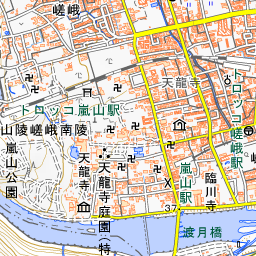
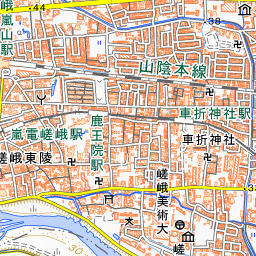
Chikurin-no-Komichi Path, which continues from Nonomiya-jinja Shrine past the North Gate of Tenryu-ji Temple, leads directly to Okochi Sanso Villa. The Arashiyama Bamboo Grove is about 140 meters to the east, Tenryu-ji Temple is about 310 meters to the east, and Jojakko-ji Temple is about 350 meters to the north. Combining a walk through the bamboo grove with visits to the temples at the foot of Mt. Ogura is recommended.
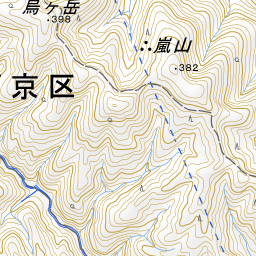
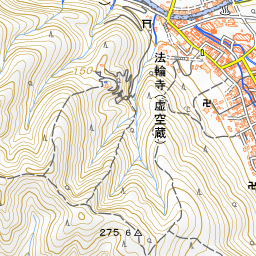
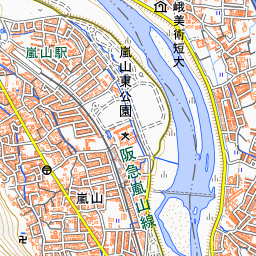
Spot location © OpenStreetMap contributors (ODbL)
Open in Google MapsGuides that include this spot (1)
Use asobot while you walk
- See where you are on the map and find spots nearby
- Listen to the guide's audio in course order, one after another (with subtitles)
- Walk to the next spot while following the map
Open on your phone
Scan to open this spot in asobot on your phone.