 ✨ AI Generated
Nishi Hongwanji Temple
Japanese: 西本願寺
Shimogyo Ward, Kyoto
This information was written by AI and may contain mistakes. Please check official sources for opening hours, fees, and other details before you go.
Found a mistake? Let us know with “✏️ Something's wrong” on this spot's screen in asobot →
🎧 Audio guide(1:02)
In short
The head temple of the Jodo Shinshu Hongwanji-ha sect, formally named Hongwanji and affectionately known as "O-Nishi-san." In 1591 (the 19th year of the Tensho era), it was relocated to its current site at Rokujo Horikawa based on Toyotomi Hideyoshi's urban planning project for Kyoto. The Goei-do Hall, Amida-do Hall, Karamon Gate, Shoin, Hiunkaku Pavilion, and other buildings are designated as National Treasures, and in 1994 (the 6th year of the Heisei era), the temple was registered as a World Heritage Site.
- Goei-do Hall and Amida-do Hall: A wooden statue of the monk Shinran is enshrined at the center of the Goei-do Hall, and a wooden statue of Amida Nyorai at the center of the Amida-do Hall. On the verandas and hallways of both halls, there are "umegi" (inlaid wood patches) shaped like fish, eggplants, and other motifs
- Karamon Gate: A gate densely covered with lavish decorative carvings from the Momoyama period. It is also known as the "Higurashi-mon" (Day-Spending Gate) because people forget that the sun is setting as they admire its superb carvings
- Grand Ginkgo Tree: Approximately 400 years old, it is a Kyoto City Natural Monument. It is also called the "Upside-down Ginkgo" and the "Water-spraying Ginkgo"
History and Highlights
Nishi Hongwanji Temple is the head temple of the Jodo Shinshu Hongwanji-ha sect. Its mountain name is Ryukokuzan, and its official name is Hongwanji. It is also affectionately known as "O-Nishi-san." Its origins date back to 1272 (the 9th year of the Bunei era), ten years after the death of the monk Shinran, when the Otani Mausoleum was built in Higashiyama, Kyoto. Later, the temple moved to locations such as Yamashina and Ishiyama in Osaka. In 1591 (the 19th year of the Tensho era), it was relocated to its current site at Rokujo Horikawa based on Toyotomi Hideyoshi's urban planning project for Kyoto.
After losing both main halls and other structures in a fire in 1617 (the 3rd year of the Genna era), the Goei-do Hall was rebuilt in 1636 (the 13th year of the Kanei era). Around this time, the Shoin (drawing room), Hiunkaku Pavilion, and Karamon Gate were also arranged, and with the full-scale reconstruction of the Amida-do Hall in 1760 (the 10th year of the Horeki era), the current layout of the temple complex was established. The Goei-do Hall, Amida-do Hall, Karamon Gate, Shoin, and Hiunkaku Pavilion are designated as National Treasures. In 1994 (the 6th year of the Heisei era), the temple was registered as a World Heritage Site as part of the "Historic Monuments of Ancient Kyoto."
Points for Appreciation and Experiences
- Goei-do Hall and Amida-do Hall: The Goei-do Hall is a massive hall measuring 48 meters east to west, 62 meters north to south, and 29 meters in height, enshrining a wooden statue of the monk Shinran at its center. In the center of the Amida-do Hall, a wooden statue of Amida Nyorai is enshrined. On the verandas and hallways of both halls, there are "umegi" (inlaid wood patches) shaped like fish, eggplants, sake flasks, and other motifs, making it a delightful activity to look for the playful touches left by the carpenters of the time.
- Karamon Gate and Hiunkaku Pavilion: The Karamon Gate is a gate with hiwadabuki (cypress bark shingle roofing) and karahafu (undulating Chinese gable), densely covered with lavish decorative carvings from the Momoyama period. It is also known as the "Higurashi-mon" (Day-Spending Gate) because one could spend an entire day gazing at its superb carvings until the sun sets. Located in the southeastern corner of the grounds, Hiunkaku Pavilion is a three-storied pavilion counted among the "Three Famous Pavilions of Kyoto" alongside the Golden Pavilion (Kinkaku) and Silver Pavilion (Ginkaku); it is usually closed to the public.
- Grand Ginkgo Tree: The grand ginkgo tree, approximately 400 years old, is a Kyoto City Natural Monument. It is called the "Upside-down Ginkgo" because of its shape that looks like its roots are spreading out toward the sky. It is also called the "Water-spraying Ginkgo" from the legend that water gushed forth from this ginkgo tree to extinguish a fire when the temple was ablaze.
Tips for Strolling
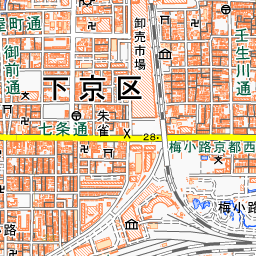
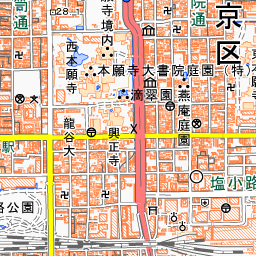
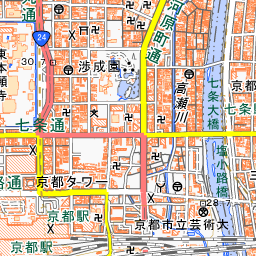
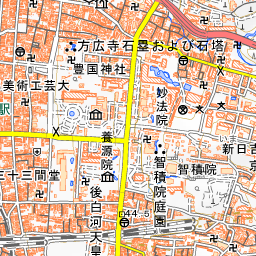
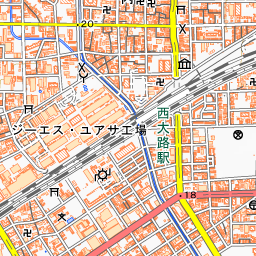
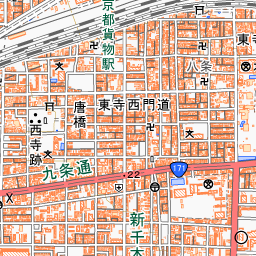
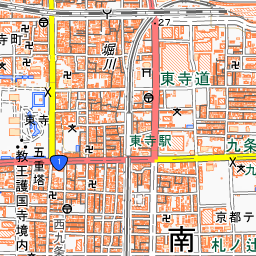
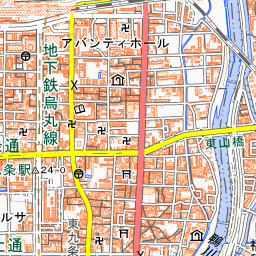
It is just a short walk after taking a city bus from Kyoto Station and getting off at "Nishi Hongwanji-mae." It is also about 1 kilometer northwest of the Kyoto Station Building, making it accessible on foot. About 250 meters to the east is the Ryukoku Museum, which introduces Buddhist history and art, and further east is Higashi Hongan-ji Temple. About 550 meters to the west stands the Shimabara Omon Gate, which was once the entrance to the pleasure quarter (hanamachi).
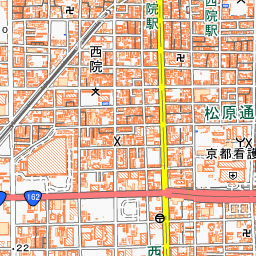
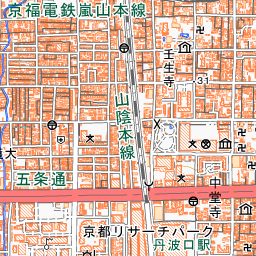
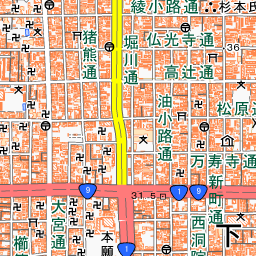


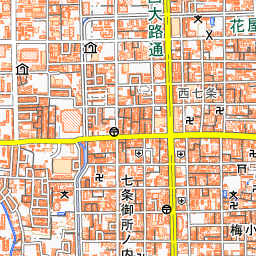
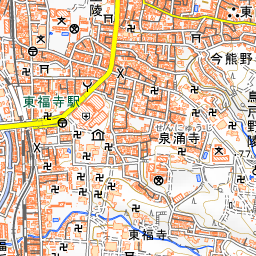
Spot location © OpenStreetMap contributors (ODbL)
Open in Google MapsGuides that include this spot (1)
Use asobot while you walk
- See where you are on the map and find spots nearby
- Listen to the guide's audio in course order, one after another (with subtitles)
- Walk to the next spot while following the map
Open on your phone
Scan to open this spot in asobot on your phone.