 ✨ AI Generated
Takiyama Castle Ruins
Japanese: 滝山城跡
Hachioji, Tokyo
This information was written by AI and may contain mistakes. Please check official sources for opening hours, fees, and other details before you go.
Found a mistake? Let us know with “✏️ Something's wrong” on this spot's screen in asobot →
🎧 Audio guide(1:02)
In short
Takiyama Castle Ruins are the remains of a Sengoku period castle located on the Kasumi Hills in Hachioji City. It served as the residence of Hojo Ujiteru until he relocated to Hachioji Castle. With its moats and earthen ramparts retaining much of their historic appearance, the site is designated as a National Historic Site. Tokyo Metropolitan Takiyama Park, which encompasses the castle ruins, is also known as a popular cherry blossom spot.
- Honmaru and Drawbridge: A drawbridge spans the deep moat between the honmaru (main bailey) and the naka-no-maru (central bailey). From the northern side of the honmaru, you can overlook the Musashino Plateau across the Tama River.
- Defenses of the Ni-no-maru: The ni-no-maru (second bailey), where ridges converge, is fortified with three umadashi (barbicans) and deep moats, showcasing Sengoku-period castle architecture.
- Spring Cherry Blossoms: In Tokyo Metropolitan Takiyama Park, approximately 5,000 Somei-yoshino and yamazakura (wild cherry) trees bring vibrant color to spring.
History and Highlights
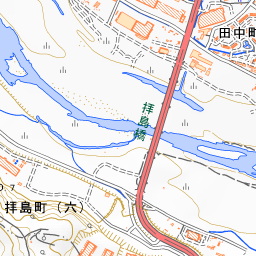
Takiyama Castle Ruins are situated in a corner of the Kasumi Hills, which spread to the south of the confluence of the Tama River and the Aki River. To the north, steep cliffs face the Tama River, while to the south, the site adjoins flatland along the Yaji River. In 1951 (Showa 26), along with the Hachioji Castle ruins, it was designated as a National Historic Site as an important archaeological site for understanding the scale of medieval castles. Its moats and earthen ramparts retain much of their ancient appearance. In 2017, it was also selected as one of the Continued Top 100 Japanese Castles.
It is often said that the castle was built by Oishi Sadashige in 1521 (Daiei 1), although this is not certain. There is also a theory that it was newly constructed by Hojo Ujiteru. Oishi Sadahisa adopted Hojo Ujiteru, the third son of Hojo Ujiyasu, and Ujiteru made this castle his residence.
In 1569 (Eiroku 12), the forces of Takeda Shingen marched toward Takiyama Castle. The military chronicle Koyo Gunkan recounts that the Takeda army assaulted the san-no-kuruwa (third bailey) and that Ujiteru ascended to the two-story gate of the ni-no-kuruwa (second bailey) to command the defense. However, in a letter written by Ujiteru after the battle, it is stated that the fighting took place in the castle town below.
By around 1587 (Tensho 15), Ujiteru moved his primary castle to Hachioji Castle, and Takiyama Castle was abandoned. There is no historical record of it ever falling. Because it was not later used as a daimyo's castle and was left unmodified, visitors can still see the form of a castle built in the Sengoku period today.
Points for Viewing and Experiencing
- Honmaru and Drawbridge: The honmaru consists of upper and lower stepped enclosures and is regarded as the site where the residence of the castle lord, Ujiteru, stood. From the northern section, you can command a panoramic view of the Musashino Plateau and the Sayama Hills across the Tama River. To the south of the lower tier, there is a stone-lined well about 1.8 meters in diameter, and you can still peer inside today. Between the honmaru and the naka-no-maru, there is a moat dug deeply by human labor, spanned by a drawbridge. The bridge is wooden today, but the original bridge is said to have been set even lower and could be removed during times of battle.
- Ni-no-maru and Kaku-umadashi: The ni-no-maru is an enclosure where defenses were concentrated, constructed at the point where all the ridges gather. The paths leading to the center of the castle were restricted to the koguchi (gateways) of three umadashi, and it is said that the Hojo clan favored kaku-umadashi (square barbicans). The moat that served as the final defensive line still has a depth of about 9 meters today.
- Cherry Blossoms and Kasumi Shrine: In 1912 (Meiji 45), Kasumi Shrine was erected on the honmaru site to honor the war dead, and 300 cherry saplings were planted. Today, approximately 5,000 Somei-yoshino and yamazakura cherry trees bloom in Tokyo Metropolitan Takiyama Park, brightening the spring season. Around the time of Golden Week, the yama-tsutsuji (torch azaleas) are also splendid.
Tips for Exploring
From JR Hachioji Station or Keio-Hachioji Station, take a Nishi Tokyo Bus bound for Tobuki and get off at "Takiyama-joshita." From there, it is about a 15-minute walk. The distance from the Otemon (main gate entrance) to the honmaru is roughly 850 meters, taking around 15 minutes. Climbing up from the Otemon entrance, you will proceed in the order of the side of the san-no-maru, the kaku-umadashi beside the Senjojiki, the ni-no-maru, the naka-no-maru, and finally the honmaru. It is also said that during Ujiteru's era, a large mansion stood on the Senjojiki and served the role of receiving guests. Hachioji Castle, where Ujiteru later relocated, is located approximately 8.8 kilometers to the southwest.
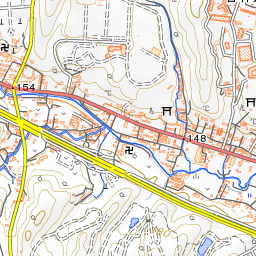
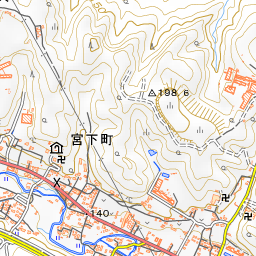

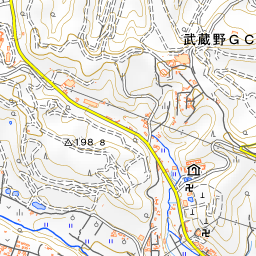
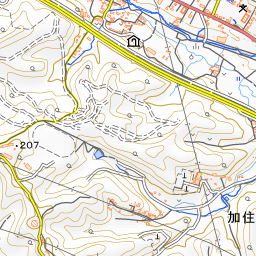
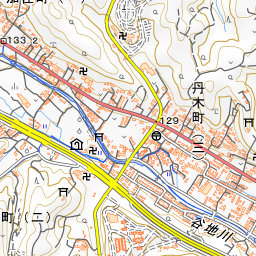
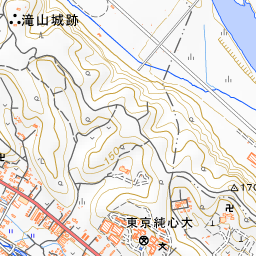
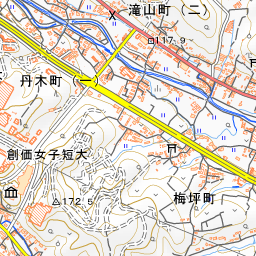
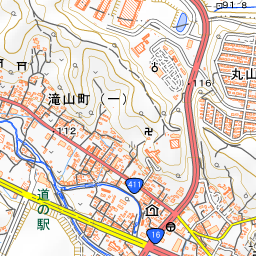
Spot location © OpenStreetMap contributors (ODbL)
Open in Google MapsUse asobot while you walk
- See where you are on the map and find spots nearby
- Listen to the guide's audio in course order, one after another (with subtitles)
- Walk to the next spot while following the map
Open on your phone
Scan to open this spot in asobot on your phone.