 ✨ AI Generated
Tokyo National Museum
Japanese: 東京国立博物館
Taito City, Tokyo
This information was written by AI and may contain mistakes. Please check official sources for opening hours, fees, and other details before you go.
Found a mistake? Let us know with “✏️ Something's wrong” on this spot's screen in asobot →
🎧 Audio guide(1:09)
In short
Beginning with an exhibition held at the Taiseiden of Yushima Seido in 1872, the Tokyo National Museum is the museum with the longest history in Japan. It primarily focuses on cultural properties from Japan, as well as various regions across Asia. Its collection comprises approximately 120,000 items, including 90 National Treasures and 652 Important Cultural Properties (as of April 2026).
- Honkan (Japanese Gallery): A representative example of the "Imperial Crown style" (Teikan-yoshiki) architecture featuring a tiled roof atop a concrete structure, and designated as an Important Cultural Property. On the second floor, you can trace the history of Japanese art.
- The Gallery of Horyuji Treasures: Houses and exhibits over 300 treasures donated from Horyu-ji Temple to the Imperial Household. It includes many treasures from the 7th century.
- Garden: Spreading to the north of the Honkan, it features five teahouses arranged around a pond.
History and Highlights
The Tokyo National Museum was born on March 10, 1872 (Meiji 5), when the Museum Bureau of the Ministry of Education held its first exhibition at the Taiseiden of Yushima Seido. The golden shachihoko (kinshachi) from Nagoya displayed in a glass case attracted great attention, drawing a total of 150,000 visitors. The museum later moved to Uchiyamashita-cho, and then relocated to Ueno Park in 1882 (Meiji 15). Focusing primarily on Japan and extending broadly to cultural properties of Asian regions, its collection totals around 120,000 items, of which 90 are National Treasures and 652 are Important Cultural Properties (as of April 2026).
The current Honkan was built to replace the former main building damaged in the Great Kanto Earthquake and opened in 1938 (Showa 13). It was designed by Watanabe Jin. A prime example of the "Imperial Crown style" combining a concrete structure with a tiled roof, it was designated as an Important Cultural Property in 2001 (Heisei 13).
There are six exhibition galleries in total. Japanese art is displayed in the Honkan, Japanese archaeology in the Heiseikan, Asian art in the Toyokan (Asian Gallery), and the treasures donated from Horyu-ji Temple in the Gallery of Horyuji Treasures. The Hyokeikan is open during special exhibitions and events. The Kuroda Memorial Hall is located outside the grounds and exhibits the works of Western-style painter Kuroda Seiki.
Viewing and Experience Tips
- The Honkan Staircase: Located in the open atrium of the entrance is a grand marble staircase. You might recognize it from a scene in a commercial or drama. The exhibits are arranged chronologically on the second floor to trace the evolution of Japanese art, and categorized by genre on the first floor.
- The Gallery of Horyuji Treasures: Houses over 300 treasures that were donated from Horyu-ji Temple in Nara to the Imperial Household in 1878 (Meiji 11) and transferred to the national government after World War II. While the Shoso-in treasures center around 8th-century works, a distinctive feature here is the large number of treasures from the 7th century, one era earlier. The building, designed by Taniguchi Yoshio, features a bright exterior arranged alongside an artificial pond.
- Hyokeikan and Toyokan: Opened in 1909 (Meiji 42), the Hyokeikan is a building representative of Western-style architecture of the late Meiji period. Of the two lions at the entrance, the right one has an open mouth and the left has a closed mouth, representing "A-un". In the Toyokan, designed by Taniguchi Yoshiro, visitors tour the exhibition rooms while ascending in a spiral fashion from the basement floor to the 5th floor.
Strolling Tips
It is a 10-minute walk from the Park Exit of JR Ueno Station or the South Exit of Uguisudani Station. Beyond the fountain square of Ueno Park, you can see the Honkan, with the Hyokeikan on its left and the Toyokan on its right.
If you want to view the architecture in detail, there is a "Building Tour Course" offered by the museum. It takes about 60 minutes and takes you through the Honkan, Toyokan, Hyokeikan, Kuromon (Black Gate), and the Gallery of Horyuji Treasures.
The garden to the north of the Honkan features five teahouses situated around a pond and was originally part of Kan'ei-ji Temple. A bronze five-story pagoda, dedicated to Horyu-ji Temple by the fifth shogun Tokugawa Tsunayoshi, also remains here. After finishing your visit, you can extend your walk to other facilities in Ueno Park, such as the National Museum of Nature and Science, The National Museum of Western Art, and Ueno Zoological Gardens.
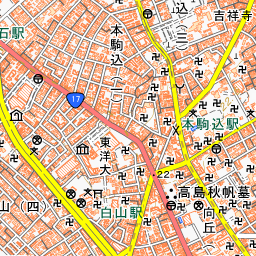

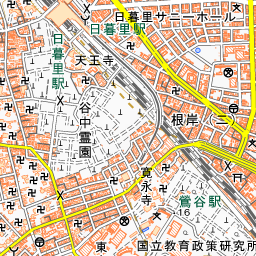
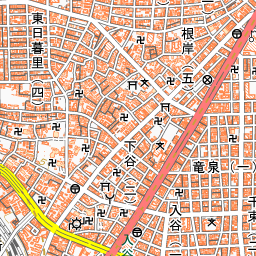
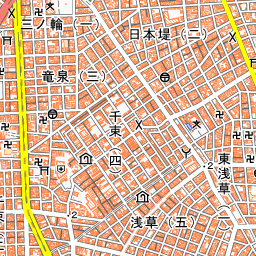

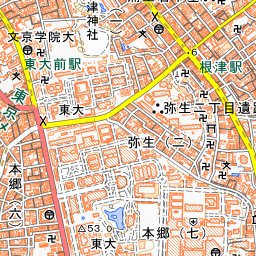

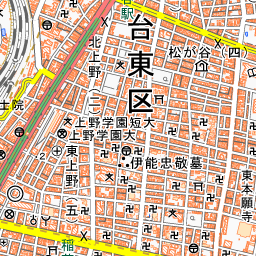

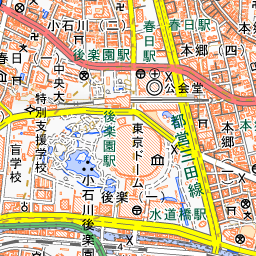
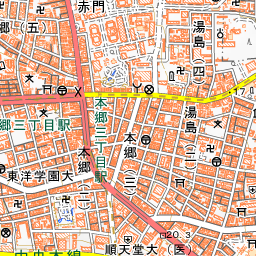


Spot location © OpenStreetMap contributors (ODbL)
Open in Google MapsGuides that include this spot (1)
Use asobot while you walk
- See where you are on the map and find spots nearby
- Listen to the guide's audio in course order, one after another (with subtitles)
- Walk to the next spot while following the map
Open on your phone
Scan to open this spot in asobot on your phone.