 ✨ AI Generated
Toyokawa Inari Tokyo Betsuin Temple
Japanese: 豊川稲荷東京別院
Minato City, Tokyo
This information was written by AI and may contain mistakes. Please check official sources for opening hours, fees, and other details before you go.
Found a mistake? Let us know with “✏️ Something's wrong” on this spot's screen in asobot →
🎧 Audio guide(1:07)
In short
Toyokawa Inari Tokyo Betsuin Temple is a Soto Zen Buddhist temple located along Aoyama-dori Avenue in Akasaka. It is a directly administered branch temple of Toyokawa Inari in Toyokawa City, Aichi Prefecture. It enshrines a divided spirit of Toyokawa Inari, which was venerated in daily life by Ooka Echizen-no-kami Tadasuke, a renowned magistrate of the Edo period. Hundreds of Inari deities are enshrined on the grounds, and passing through the sanmon gate, visitors encounter fox statues in various places.
- A Buddhist Temple, Not a Shinto Shrine: The enshrined deity is Toyokawa Dakini-shinten, a benevolent deity protecting the Buddhist law who carries ears of rice and rides atop a white fox.
- Reikozuka: Fox statues offered in gratitude for fulfilled wishes line this mound, each bearing a different facial expression.
- Seven Lucky Gods on the Grounds: All Seven Lucky Gods are gathered here, allowing visitors to undertake a pilgrimage to all seven within the temple grounds.
History and Highlights
The official name of Toyokawa Inari is Toyokawa-kaku Myogon-ji Temple. It is a Soto Zen Buddhist temple whose mountain name (sangō) is Enpukuzan, and its head temple is located in Toyokawa City, Aichi Prefecture.
When hearing the word "Inari," many people may imagine a Shinto shrine enshrining foxes. However, what is enshrined at this temple is the tutelary deity Toyokawa Dakini-shinten. This benevolent deity protecting Buddhist law was perceived in spiritual awakening by Zen Master Kangan, who is said to have been the third prince of Emperor Juntoku. Because this deity carries ears of rice and rides a white fox, the name "Toyokawa Inari" became widespread. According to the origin story of the head temple, this deity appeared over the sea before Zen Master Kangan aboard a ship returning from the Song Dynasty. After returning to Japan, the Zen master carved the figure himself and enshrined it.
Toyokawa Inari Tokyo Betsuin Temple enshrines the divided spirit of Toyokawa Inari that was faithfully worshiped by Ooka Echizen-no-kami Tadasuke. The divided spirit was enshrined at the Ooka residence in Hitotsugi, Akasaka. In 1828, a temple was built within the estate, and starting the following year, people from outside the residence were also permitted to pray there. In 1887, it moved from the Ooka residence to its current location and became a directly administered branch of the head temple. Despite facing disasters such as the Great Kanto Earthquake and World War II, it was rebuilt each time through the support of devotees.
Viewing and Experience Highlights
- Main Hall and Okunoin: The main hall enshrines the principal image, Toyokawa Dakini-shinten, flanked by two large seated koma-kitsune (guardian foxes). Passing through the red torii gates in the back of the grounds, visitors will find the pure white Okunoin at the end of an approach densely lined with banners expressing wishes.
- Reikozuka and Sanshinden: At the Reikozuka mound in front of Sanshinden, statues of foxes dedicated in gratitude for granted wishes are enshrined on a mound of stacked octagonal stones. Their expressions and postures differ one by one. Meanwhile, the foxes lining the approach to the Sanshinden all share the same expression and face the exact same direction.
- Shrines for Making Wishes: At the Yuzu Inari, there is a custom of taking home a 10-yen "yuzukin" (borrowed lucky coin) and returning it one year later in gratitude. With the Kano Inari for severing bad relationships and the Ooka Shrine (Ooka-byo), the grounds feature numerous spots to make wishes.
Tips for Exploring
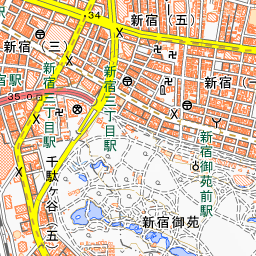
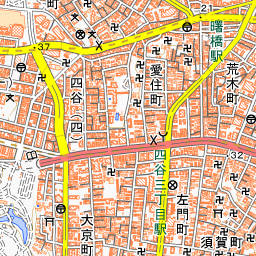
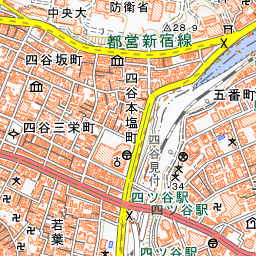
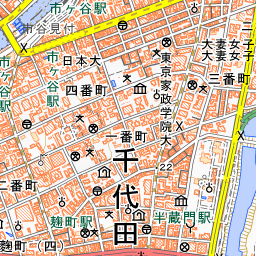
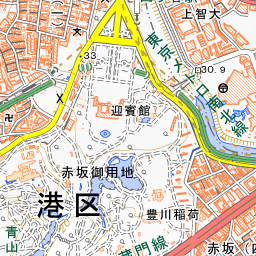
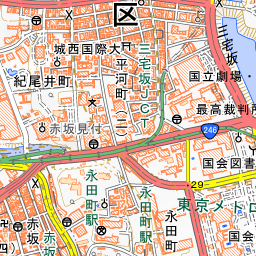
The temple is a 5-minute walk from Exit B of Tokyo Metro Akasaka-mitsuke Station and Exit 7 of Nagatacho Station. It is located at the corner of the Akasaka Police Station intersection along National Route 246 (Aoyama-dori Avenue). The red lanterns surrounding the grounds serve as a landmark and are lit when darkness falls. Hundreds of Inari deities are enshrined within the precincts. Right by the sanmon gate is a statue of Ebisu, one of the Seven Lucky Gods. Since all statues of the Seven Lucky Gods are present on the grounds, visitors can pay their respects to each one. It is said that Ooka Tadasuke was the only town magistrate throughout the entire Edo period to rise to the rank of daimyo, leading many people to pray here for success in life and career advancement. The State Guest House (Akasaka Palace) is approximately 530 meters to the northwest, and Hie-jinja Shrine is approximately 670 meters to the east-southeast.
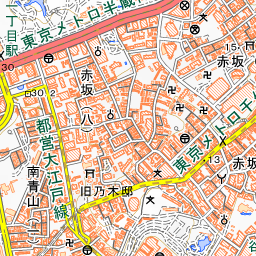


Spot location © OpenStreetMap contributors (ODbL)
Open in Google MapsUse asobot while you walk
- See where you are on the map and find spots nearby
- Listen to the guide's audio in course order, one after another (with subtitles)
- Walk to the next spot while following the map
Open on your phone
Scan to open this spot in asobot on your phone.