 ✨ AI Generated
Taito City Asakura Museum of Sculpture
Japanese: 台東区立朝倉彫塑館
Taito City, Tokyo
This information was written by AI and may contain mistakes. Please check official sources for opening hours, fees, and other details before you go.
Found a mistake? Let us know with “✏️ Something's wrong” on this spot's screen in asobot →
🎧 Audio guide(1:07)
In short
The Taito City Asakura Museum of Sculpture is a building that served as the studio and residence of sculptor Asakura Fumio (1883–1964). The current building was constructed in 1935 and was designed by Asakura himself. The entire grounds are designated as a National Place of Scenic Beauty under the name "Former Fumio Asakura Garden," and the building is registered as a National Registered Tangible Cultural Property.
- Studio: An atrium spanning three stories, with a ceiling height of 8.5 meters. Beneath the floor is an electrically operated elevating work platform.
- Goten-no-Ike Pond: A garden surrounded on all four sides by the studio and residential quarters. It is said that its five giant stones give form to the Five Confucian Virtues.
- Rooftop Garden: A garden that was once a site for horticultural training for the Asakura Choso Juku (Asakura School of Sculpture); today, part of it has been recreated as a vegetable garden.
History & Highlights
The Taito City Asakura Museum of Sculpture is a building that served as the studio and residence of sculptor Asakura Fumio (1883–1964). In 1907, at the age of 24 after graduating from the Tokyo Fine Arts School, Asakura established his studio and home in Yanaka. Marking a turning point with his masterwork The Grave Keeper (1910), he maintained a naturalistic realism throughout his career and in 1948 became the first sculptor to receive the Order of Culture.
The current building was constructed in 1935 and was designed by Asakura himself. It consists of a reinforced concrete studio wing and a wooden residential wing. Asakura named this place the "Asakura Choso Juku" and trained pupils here. The term choso (sculpture and modeling) combines chokoku (carving) and sozo (plastic modeling), and was proposed by Asakura's teacher, Omura Seigai.
In 2001, the building was registered as a National Registered Tangible Cultural Property, and in 2008, the entire grounds were designated as a National Place of Scenic Beauty under the name "Former Fumio Asakura Garden." Through preservation and restoration work conducted from 2009 to 2013, the site was restored to closely resemble its state during Asakura's lifetime.
Asakura was an avid cat lover who kept many cats. Throughout his life, he created numerous cat sculptures, and in 1964 he planned an exhibition titled "One Hundred Aspects of Cats," though it was not realized due to his illness.
Highlights for Visitors
- Studio: Located immediately to the left upon entering the building, this studio spans three stories in an open atrium with a ceiling height of 8.5 meters. Beneath the floor is an electrically operated elevating work platform with a depth of 7.3 meters.
- Goten-no-Ike Pond: A garden in the center of the facility, surrounded on all four sides by the studio and living quarters, with most of its area filled with water. According to Asakura's pupil Yamada Masayoshi, Asakura designed this garden as a place for self-reflection, and it is said that the five giant stones give form to the Five Confucian Virtues. Yamada also related that among the trees that bloom with white flowers, there is a single red-flowering crape myrtle because Asakura wished to avoid perfection.
- Rooftop Garden: Laid out on the roof of the concrete building, this garden formerly served as a place for horticultural training for the Asakura Choso Juku. Today, part of it is recreated as a vegetable garden, featuring an olive tree and ever-blooming roses.
Practical Tips
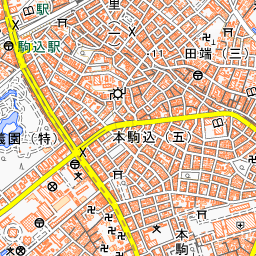
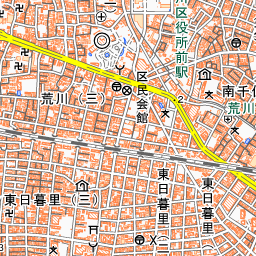
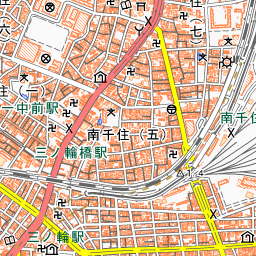
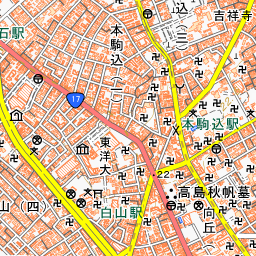
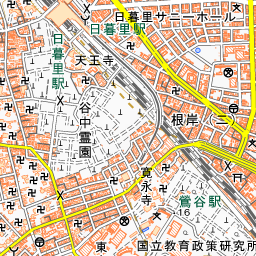
Visitors must remove their shoes before entering. Because there are lacquered floors and tatami-mat corridors, you are required to wear socks without rubber grips on the soles; viewing while barefoot or wearing slippers is restricted. When the rooftop is open, visitors tour following the arrowed route starting from the first-floor studio. From the Soshin-no-ma room on the second floor, one can enjoy an open view, while the Choyo-no-ma room on the third floor is the museum's most prestigious room. The rooftop garden may be closed due to bad weather or construction. The museum is a 5-minute walk from the West Exit of Nippori Station after exiting through the North Ticket Gate; you can also walk to Yanaka Ginza, approximately 310 meters to the west, or Yanaka Cemetery, approximately 250 meters to the southeast.





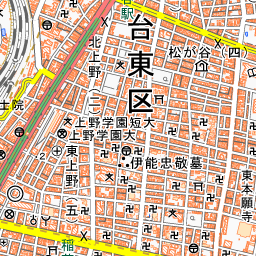

Spot location © OpenStreetMap contributors (ODbL)
Open in Google MapsGuides that include this spot (1)
Use asobot while you walk
- See where you are on the map and find spots nearby
- Listen to the guide's audio in course order, one after another (with subtitles)
- Walk to the next spot while following the map
Open on your phone
Scan to open this spot in asobot on your phone.