 ✨ AI Generated
Hibiya Park
Japanese: 日比谷公園
Chiyoda City, Tokyo
This information was written by AI and may contain mistakes. Please check official sources for opening hours, fees, and other details before you go.
Found a mistake? Let us know with “✏️ Something's wrong” on this spot's screen in asobot →
🎧 Audio guide(1:08)
In short
Opened in 1903 (Meiji 36), Hibiya Park is Japan's first "Western-style" park. Designed by Dr. Honda Seiroku, it boldly adopted Western culture while also weaving in Japanese elements. Until the end of the Edo period, daimyo residences stood here, and it became an army parade ground during the Meiji era; today, it is a place of relaxation in the business district.
- First Flower Bed and Pelican Fountain: Laid out in the Western flower bed style from the time of the park's opening, it gained popularity with Western flowers that Japanese people were seeing for the first time.
- Hibiya Mitsuke Remains and Shinji-ike Pond: Early Edo period nozurazumi (uncut natural stone) masonry and a pond that preserves a portion of the moat.
- Crane Fountain and Kumogata-ike Pond: The Crane Fountain has been a symbol of the park since its opening, and the surrounding trees turn vibrant colors in autumn.
History and Highlights
Hibiya Park is Japan's first "Western-style" park, opened on June 1, 1903 (Meiji 36). Until the end of the Edo period, daimyo residences stood on the site, and in the Meiji era it was used as an army parade ground. It was subsequently created based on the design by Dr. Honda Seiroku. Spanning approximately 16 hectares, it serves as a place of relaxation for people working in the nearby business district.
One of the concepts behind the park was the "Three Westerns": Western flowers, Western cuisine, and Western music. Matsumotoro, a restaurant handling the Western cuisine, was founded in conjunction with the park's opening. The original building was a three-story structure with a mansard roof, serving as a gathering spot for many literary figures, including Natsume Soseki and Takamura Kotaro. Destroyed by arson in 1971 (Showa 46), it reopened in September 1973 (Showa 48).
The park has also served as a stage for politics. At a political rally in 1913 (Taisho 2), speeches defending constitutional government were delivered from the balcony of Matsumotoro. In 1929 (Showa 4), Hibiya Public Hall was completed and is now designated as a Tangible Cultural Property of Tokyo.
Highlights for Viewing and Experiencing
- First Flower Bed and Pelican Fountain: Laid out in the Western flower bed style from the time of the park's opening, it was planted with many Western flowers that Japanese people were seeing for the first time, such as tulips and pansies, and gained great popularity. The pelican fountain in the flower bed was donated in 1953 (Showa 28).
- Hibiya Mitsuke Remains and Shinji-ike Pond: Remains from the Edo period. To reach Edo Castle from the daimyo residences here, one had to pass through the Hibiya Mitsuke, which was guarded by watch officers. The nozurazumi stone wall was built in the early Edo period, and a portion of the surrounding moat was preserved as "Shinji-ike Pond" in 1903 (Meiji 36). When viewed from above, it forms the cursive shape of the kanji character for "heart" (shin).
- Crane Fountain and Kumogata-ike Pond: The Crane Fountain has been a symbol since the park's opening and is said to be the third oldest decorative park fountain in Japan. During the war, the fountain was removed and the pond was filled in, but it was restored after the war. In the autumn foliage season, the surrounding trees change color, and in winter, one can see icicles hanging from the crane's wings.
Walking Tips
The park is right outside exits A10 and A14 of Hibiya Station and exit B2 of Kasumigaseki Station, and an 8-minute walk from JR Yurakucho Station. Entering through Yurakumon Gate, Shinji-ike Pond is right before you, next to which is the First Flower Bed. Near Kumogata-ike Pond stands Matsumotoro, in front of which rises the "Neck-Betting Ginkgo" (Kubikake Ginkgo). Estimated to be 400 to 500 years old, it was slated to be felled for road widening, but Dr. Honda had it transplanted, declaring "even if it costs my head (neck)." It was moved roughly 450 meters over the course of 25 days. Renovation and revitalization work is currently progressing sequentially inside the park, so some areas are inaccessible. The north side of the park faces the Imperial Palace Plaza across the Hibiya Moat. Please also refer to the guide for Kokyo Gaien National Garden.


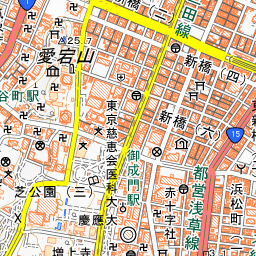

Spot location © OpenStreetMap contributors (ODbL)
Open in Google MapsGuides that include this spot (1)
Use asobot while you walk
- See where you are on the map and find spots nearby
- Listen to the guide's audio in course order, one after another (with subtitles)
- Walk to the next spot while following the map
Open on your phone
Scan to open this spot in asobot on your phone.