 ✨ AI Generated
Takatori Castle Ruins
Japanese: 高取城跡
Takatori Town, Nara
This information was written by AI and may contain mistakes. Please check official sources for opening hours, fees, and other details before you go.
Found a mistake? Let us know with “✏️ Something's wrong” on this spot's screen in asobot →
🎧 Audio guide(1:07)
In short
Takatori Castle Ruins are the remains of a castle built at the top of Mt. Takatori in the town of Takatori. Counted among Japan's Three Great Mountain Castles, it is designated as a National Historic Site. Although all of its buildings have been lost, the remains of the tenshudai (keep base), gates, and yagura (turrets), along with its sturdy stone walls, preserve almost the entire scale of the past.
- Elevation difference from the foot of the mountain: The castle stands at the summit at an elevation of 583.6 m, with an elevation difference of 390 m from the foot to the tenshudai (keep base).
- Saru-ishi Stone: Located at the fork between the road ascending from the castle town and the path leading to Asuka Village, this stone is estimated to have been made during the Asuka period.
- Kunimi Yagura: Situated at a dead end, this spot offers a spectacular view overlooking the Yamato Plain.
History and Highlights
Takatori Castle Ruins are the remains of a castle situated atop Mt. Takatori, which rises in the southern corner of the Yamato Plain. The castle was built at the summit at an elevation of 583.6 m. Counted among Japan's Three Great Mountain Castles, its elevation difference of 390 m from the foot to the keep base is the highest figure among the three castles.
The origin of the castle is said to date back to Genko 2 (1332). It was originally built without a keep or turrets by the Ochi clan, a local powerful family in Takatori who sided with the Southern Court. In Tensho 13 (1585), Honda Toshihisa, a vassal of Toyotomi Hidenaga, became the lord of the castle, and it was renovated and expanded into an early modern castle. In Kanei 17 (1640) of the Edo period, Uemura Iemasa became the castle lord, and thereafter, descendants of the Uemura family inherited it until the Meiji Restoration.
The castle grounds contained large and small keeps, 27 turrets, and 33 gates. The sight of its layered white buildings was compared to a fuyo (cotton rosemallow) flower, and it was also celebrated in song: "Look southeast to Takatori: you may take it for snow, but it is not snow, it is the castle of Tosa." Today, none of the buildings remain, but the traces of the keep base, gates, turrets, koguchi (castle entrances), and the layouts of the baileys, along with the sturdy stone walls, retain almost the entire scale of the past. It became a National Historic Site in Showa 28 (1953) and was selected as one of Japan's Top 100 Castles in Heisei 18 (2006).
Viewing and Experience Points
- Saru-ishi Stone: At the fork between the Otesuji road descending toward the castle town and the path of Okaguchimon Gate heading toward Asuka Village, the Saru-ishi Stone is placed. It is estimated to have been made around the 7th century during the Asuka period, and is of the same type of stone carving as those found at the Tomb of Princess Kibihime in Asuka Village. There is a theory that it was transported from Asuka to be used in the castle's stone walls.
- Kunimi Yagura: Because it is at a dead end, many visitors pass it by. However, it is a magnificent scenic spot looking down upon the Yamato Plain, and Abeno Harukas in Osaka can often be seen as well.
- From the Otemon Gate Ruins to the Honmaru Ruins: Around the Otemon Gate ruins, the stone walls become increasingly impressive. Looking closely, one can find unusually shaped stones that appear to have been repurposed from ancient kofun burial mounds and other sites in the Asuka area. From the honmaru (main bailey) ruins, you can gaze south toward the mountains of Yoshino.
Walking Tips
Takatori Castle was a mountain castle, and vehicles cannot enter the castle grounds. From Tsubosakayama Station on the Kintetsu Yoshino Line, it is about a 2-hour walk one way (4.5 km). You walk from the station through the castle town along the Tosa Kaido, climb the mountain path of Otesuji from the Kamikoshimasawa Sabo Park, and enter the castle after passing the Saru-ishi Stone and going through Ninomon Gate. Tsubosaka-dera Temple (Minami-Hokke-ji Temple) is located to the west-southwest of the castle, about a 1-hour walk from Takatori Castle Ruins. You can also take a route ascending via Tosa Kaido and descending toward Tsubosaka-dera Temple. Inside the castle grounds, there are no shops, vending machines, or flush toilets. It is advisable to complete preparations in the castle town and wear shoes and clothing suitable for mountain climbing.


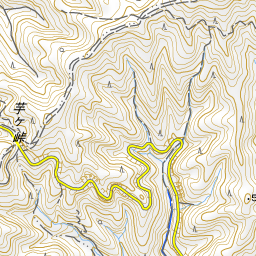
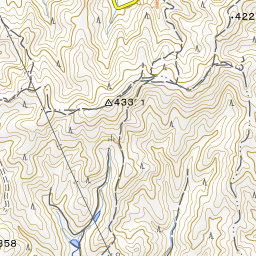

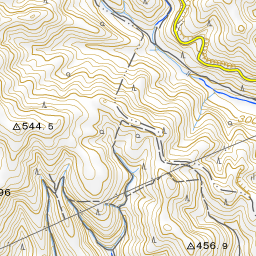
Spot location © OpenStreetMap contributors (ODbL)
Open in Google MapsGuides that include this spot (1)
Use asobot while you walk
- See where you are on the map and find spots nearby
- Listen to the guide's audio in course order, one after another (with subtitles)
- Walk to the next spot while following the map
Open on your phone
Scan to open this spot in asobot on your phone.