 ✨ AI Generated
Nezu-jinja Shrine
Japanese: 根津神社
Bunkyo City, Tokyo
This information was written by AI and may contain mistakes. Please check official sources for opening hours, fees, and other details before you go.
Found a mistake? Let us know with “✏️ Something's wrong” on this spot's screen in asobot →
🎧 Audio guide(1:10)
In short
Nezu-jinja Shrine is an ancient shrine located in Nezu, Bunkyo City. It is said to have been founded in Sendagi by Yamatotakeru-no-Mikoto, and the current shrine buildings were constructed by the fifth shōgun, Tokugawa Tsunayoshi, and completed in 1706 (Hoei 3). Seven structures, including the main hall built in the gongen-zukuri style, remain intact and are designated as National Important Cultural Properties.
- Gongen-zukuri Shrine Buildings: Exemplary gongen-zukuri architecture where the main hall (honden), offering hall (heiden), and worship hall (haiden) are connected as a single structure.
- Torii Gates of Otome Inari: Numerous donated torii gates line the approach leading to Otome Inari.
- Azalea Spot: Planted with 3,000 azaleas of 100 varieties, it hosts the "Bunkyo Tsutsuji Matsuri" (Azalea Festival).
History and Highlights
Nezu-jinja Shrine is an ancient shrine said to have been founded in Sendagi by Yamatotakeru-no-Mikoto more than 1,900 years ago. During the Bunmei era, Ota Dokan constructed shrine buildings. In the era of the syncretism of Shinto and Buddhism, it was known as Nezu Gongen-sha.
During the Edo period, the current site was the residence of Tokugawa Tsunashige, Chancellor of Kofu and elder brother of Tsunayoshi. Tsunatoyo (later Ienobu), who would become the sixth shōgun, was born here. When Tsunayoshi designated Ienobu as his successor, he dedicated this residential estate to Nezu Gongen-sha—Ienobu's ubusunagami (tutelary deity)—and built the current shrine buildings. In 1706 (Hoei 3), the shrine moved from its original location in Sendagi. In 1714 (Shotoku 4), a grand festival known as the "Tenka Matsuri" (festival of the realm), on par with the Sanno Matsuri and Kanda Matsuri, was held here.
In the Meiji period, its name was changed to Nezu-jinja Shrine. Although part of the shrine buildings suffered damage during the war in 1945 (Showa 20), repairs were completed by 1962 (Showa 37), restoring the appearance from the Hoei era. Seven structures—the honden (main hall), heiden (offering hall), haiden (worship hall), karamon (Chinese gate), nishimon (west gate), sukibei (lattice wall), and romon (tower gate)—survive intact and are designated as National Important Cultural Properties. It is also one of the Tokyo Jissha (Ten Shrines of Tokyo).
Viewing and Experience Points
- Romon and Sukibei: The romon is said to be the only tower gate remaining among the shrines within the old Edo city limits. Of the zuishin (guardian figures) placed inside, the one on the right when facing is said to be Mito Komon. The sukibei surrounding the shrine buildings is a wall through which the interior can be seen through diamond-shaped lattice woodwork, extending for a total length of 200 meters.
- Gongen-zukuri Shrine Buildings: When you pray, the building right before your eyes is the haiden. The building on raised ground in the furthest back is the honden, and connecting the haiden and honden is the heiden. The style in which these three form a continuous structure is called gongen-zukuri. The manji symbol, which served as the shrine crest during the era of Shinto-Buddhist syncretism, can be seen throughout the shrine buildings.
- Otome Inari and the Azalea Garden: Numerous donated torii gates line the approach to Otome Inari. Otome Inari is built in the butai-zukuri (stage) style overlooking a pond. The azalea garden is planted with 3,000 azaleas across 100 varieties, and the Bunkyo Tsutsuji Matsuri has been held here since 1970 (Showa 45).
Tips for Strolling
The shrine is about a 5-minute walk from Nezu Station or Sendagi Station on the Tokyo Metro Chiyoda Line, or Todaimae Station on the Namboku Line. Natsume Soseki and Mori Ogai were also parishioners of this shrine, and the grounds contain the "Bungo no Ishi" (Literary Masters' Stone) where the two sat during their walks. There is also a water faucet stand that uses the pedestal of an artillery shell captured as a war trophy, which Ogai dedicated after the Russo-Japanese War. Nezu-jinja Shrine is also depicted in Ogai's novel Seinen (Youth). The "S-zaka" slope, which descends toward the front of the shrine along the north side of the University of Tokyo's baseball ground, owes its name to students of the First Higher School under the old system who read Seinen and began calling it that. Bunkyo City Mori Ogai Memorial Museum is located about 550 meters to the north.

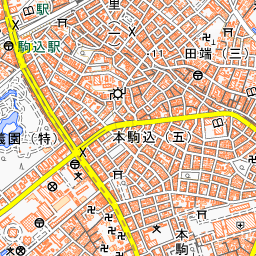


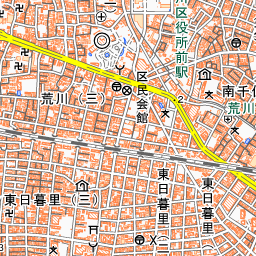

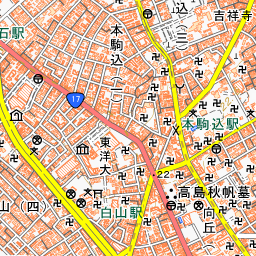

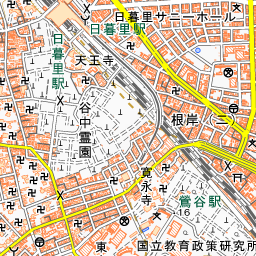
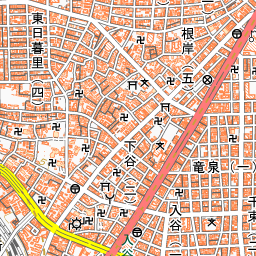
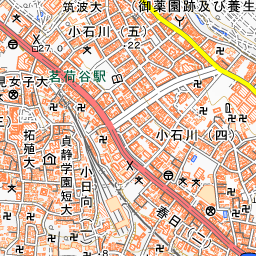

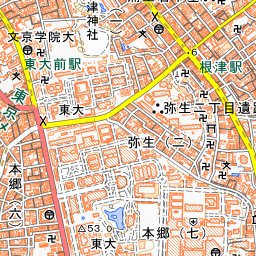

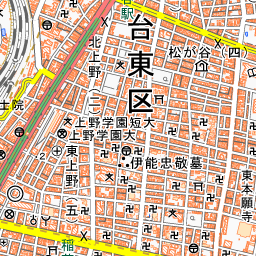
Spot location © OpenStreetMap contributors (ODbL)
Open in Google MapsGuides that include this spot (1)
Use asobot while you walk
- See where you are on the map and find spots nearby
- Listen to the guide's audio in course order, one after another (with subtitles)
- Walk to the next spot while following the map
Open on your phone
Scan to open this spot in asobot on your phone.