 ✨ AI Generated
Kodai-ji Temple
Japanese: 高台寺
Higashiyama Ward, Kyoto
This information was written by AI and may contain mistakes. Please check official sources for opening hours, fees, and other details before you go.
Found a mistake? Let us know with “✏️ Something's wrong” on this spot's screen in asobot →
🎧 Audio guide(1:13)
In short
Kodai-ji Temple is a temple of the Rinzai sect's Kennin-ji branch located at the foot of Ryozen in Higashiyama. Following the death of Toyotomi Hideyoshi, his wife Kita-no-Mandokoro, also known as Nene, established the temple in 1606 (Keicho 11) to pray for his soul. The front gate, Kaisan-do Hall, the Otamaya, the teahouses Karakasa-tei Teahouse and Shigure-tei, the Kangetsudai moon-viewing pavilion, and other structures remain, all of which are designated as Important Cultural Properties of Japan.
- The Otamaya and Kodai-ji Makie: The Shumidan (altar) and zushi (miniature shrine) of the Otamaya, which enshrines Hideyoshi and Kita-no-Mandokoro, are decorated with "Kodai-ji Makie," which represents Momoyama art
- Kaisan-do Hall and the Two Pond Gardens: The pond garden, handed down as the work of Kobori Enshu, is designated as a National Historic Site and a Place of Scenic Beauty. On Engetsu-chi pond sits the Kangetsudai, which Hideyoshi loved
- Karakasa-tei Teahouse and Shigure-tei: These teahouses at the highest point of the grounds are considered to be surviving remnants of Fushimi Castle, and the two teahouses are connected by an earthen corridor
History and Highlights
Kodai-ji Temple is a temple of the Rinzai sect's Kennin-ji branch located at the foot of Ryozen in Higashiyama. Its mountain name (honorific prefix) is Jubuzan, and its formal name is Kodai-jusho-zenji. Following the death of Toyotomi Hideyoshi, his wife Kita-no-Mandokoro, also known as Nene, established the temple in 1606 to pray for his soul. Nene took the tonsure and assumed the name Kodai-in Kogetsu-ni; the title Kodai-in was bestowed upon her by Emperor Goyozei in 1603. During its construction, Tokugawa Ieyasu provided extensive financial assistance out of political considerations, and it is said that the temple's appearance was magnificent. In 1624, Priest Sanko of Kennin-ji Temple was invited to become the founding abbot, and the temple was named Kodai-ji Temple.
Although it suffered several fires, the front gate, Kaisan-do Hall, the Otamaya, the tea houses Karakasa-tei Teahouse and Shigure-tei, and the Kangetsudai moon-viewing pavilion still remain, all of which are designated as Important Cultural Properties of Japan.
Points for Viewing and Experiencing
- The Otamaya and Kodai-ji Makie: In the Otamaya, which enshrines Toyotomi Hideyoshi and Kita-no-Mandokoro, the area beneath the statue of Kita-no-Mandokoro serves as her burial place. The Shumidan (altar) and zushi (miniature shrine) are decorated with splendid makie (gold lacquer work), known as "Kodai-ji Makie," which represents Momoyama art. Featuring flat gold makie on a black lacquer background, it is a lacquer style that feels both graceful and innovative.
- Kaisan-do Hall and the Two Pond Gardens: The pond garden, handed down as the work of Kobori Enshu, is designated as a National Historic Site and a Place of Scenic Beauty. Engetsu-chi and Garyu-chi ponds flank Kaisan-do Hall, each spanned by a covered corridor. On Engetsu-chi pond sits the Kangetsudai, which Hideyoshi loved. Kaisan-do was originally a private chapel, and materials from a gozabune (pleasure boat) used by Hideyoshi and a goshoguruma (ox carriage) used by Nene are incorporated into its ceiling. From Kaisan-do Hall, visitors can ascend to the Otamaya midway up the mountain via the Garyoro corridor spanning Garyu-chi pond.
- Karakasa-tei Teahouse and Shigure-tei: These teahouses, situated at the highest point of the grounds overlooking downtown Kyoto, are considered to be surviving remnants of Fushimi Castle. Karakasa-tei has no ceiling boards, and because the exposed framework of log and bamboo trusses resembles an open umbrella (karakasa), it is called by this name. The two-story Shigure-tei to the south features a mizuya (scullery) and waiting area on the first floor and a tearoom on the second floor, and the two teahouses are connected by an earthen corridor.
Walking Tips
It is about a 7-minute walk east from the Higashiyama Yasui city bus stop, and about a 15-minute walk from Gion-Shijo Station on the Keihan Railway. The bamboo grove on the grounds is also situated within the garden. Special nighttime admissions are held in spring, summer, and autumn. Hokan-ji Temple (Yasaka Pagoda) is just over 200 meters to the southwest, and Yasaka-jinja Shrine is about 400 meters to the northwest.

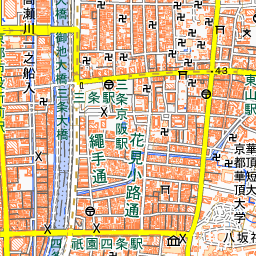


Spot location © OpenStreetMap contributors (ODbL)
Open in Google MapsGuides that include this spot (2)
Use asobot while you walk
- See where you are on the map and find spots nearby
- Listen to the guide's audio in course order, one after another (with subtitles)
- Walk to the next spot while following the map
Open on your phone
Scan to open this spot in asobot on your phone.