 ✨ AI Generated
Tabata Bunshimura Memorial Museum
Japanese: 田端文士村記念館
Kita City, Tokyo
This information was written by AI and may contain mistakes. Please check official sources for opening hours, fees, and other details before you go.
Found a mistake? Let us know with “✏️ Something's wrong” on this spot's screen in asobot →
🎧 Audio guide(1:01)
In short
The Tabata Bunshimura Memorial Museum is a memorial museum that introduces writers and artists associated with Tabata, located a 2-minute walk from the North Exit of JR Tabata Station. Starting in the Meiji period, painters, ceramic artists, novelists, and poets moved to Tabata. It was established in 1993 (Heisei 5) to pass down the history of this "Tabata Writers and Artists Village."
- Model of Akutagawa Ryunosuke's House: A restored model of the house where the Akutagawa family lived in Tabata, built to approximately 1/30 scale.
- Video Corner: Introduces "Tabata Writers and Artists Village," "Akutagawa Ryunosuke," "Itaya Hazan," and "Muro Saisei" in 13-minute videos each.
- Special Exhibitions: Special exhibitions on various themes related to Tabata's writers and artists are held three times a year.
History and Highlights
The Tabata Bunshimura Memorial Museum is a facility that displays works, manuscripts, letters, and other materials of writers and artists associated with Tabata.
Until the middle of the Meiji period, Tabata was a quiet farming village with groves of mixed trees and farm fields spreading out. When the Tokyo Fine Arts School opened in Ueno, young artists began to live here. In 1900 (Meiji 33), painter Kosugi Hoan rented a room here. In 1903 (Meiji 36), ceramic artist Itaya Hazan built a kiln in Tabata.
Through these connections, sculptor Yoshida Saburo, cast metal artist and tanka poet Katori Hozuma, and painter and printmaker Yamamoto Kanae moved in one after another. A social gathering place called the "Poplar Club" was also created, and Meiji-era Tabata became an artists' village.
With the arrival of the Taisho period, novelist Akutagawa Ryunosuke moved here in 1914 (Taisho 3), followed by poet and novelist Muro Saisei in 1916 (Taisho 5). Centered around these two, figures such as Hagiwara Sakutaro, Kikuchi Kan, Hori Tatsuo, and Sata Ineko also gathered in Tabata, giving it the aspect of a writers' village as well.
Many of the anecdotes they left behind in Tabata date from when they were in their 20s and 30s. They spent their time here during an era when they stimulated one another in their efforts to make their mark on the world.
Tabata was devastated by the major air raid of April 1945 (Showa 20), and no traces of the past remain. In 1993 (Heisei 5), the memorial museum was established to convey the history of this "Tabata Writers and Artists Village" to future generations.
Tips for Viewing and Experiencing
- Akutagawa Ryunosuke's House in Tabata: There is a model restoring the house where the Akutagawa family lived in Tabata, at approximately 1/30 scale. Related materials and panels concerning Akutagawa are also on display.
- Video Corner: There are four 13-minute videos titled "Tabata Writers and Artists Village," "Akutagawa Ryunosuke," "Itaya Hazan," and "Muro Saisei." They can be viewed freely.
- Special Exhibitions and Events: Special exhibitions focusing on Tabata's writers and artists are held three times a year. Events such as walking tours and lectures are also organized.
Walking Tips
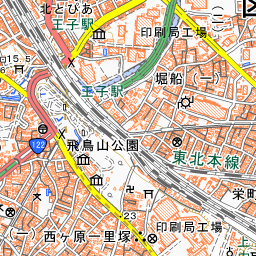
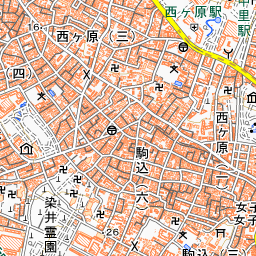
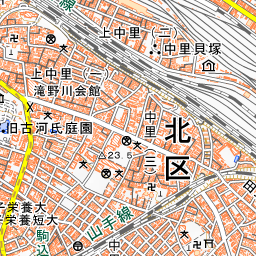
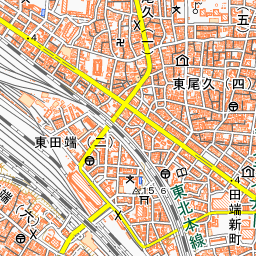
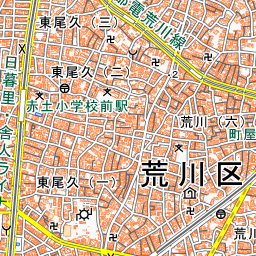
It is a 2-minute walk from the North Exit of Tabata Station on the JR Keihin-Tohoku Line and Yamanote Line.
First, get a sense inside the museum of who lived in Tabata and how they interacted with one another. Then, heading out into the town will make your walk more enjoyable, even though no physical traces remain in Tabata today.
If you take a stroll through the neighborhood, the "Culture Road MAP Asukayama – Tabata" is useful. This map connects the former residences of Shibusawa Eiichi and Akutagawa Ryunosuke, and has been distributed at this memorial museum, as well as at Kyu-Furukawa Gardens, the Shibusawa Memorial Museum in Asukayama Park, and the Paper Museum. Kyu-Furukawa Gardens is about 1.3 km to the west-northwest, and Asukayama Park is about 2.2 km to the northwest.

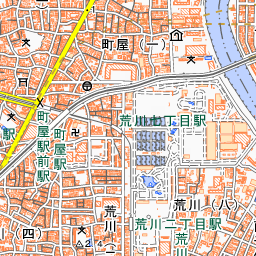

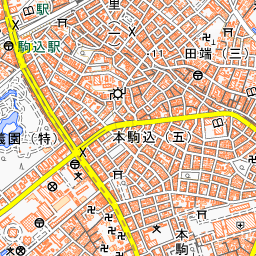


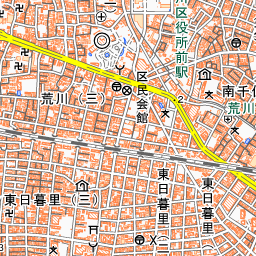
Spot location © OpenStreetMap contributors (ODbL)
Open in Google MapsUse asobot while you walk
- See where you are on the map and find spots nearby
- Listen to the guide's audio in course order, one after another (with subtitles)
- Walk to the next spot while following the map
Open on your phone
Scan to open this spot in asobot on your phone.