 ✨ AI Generated
Tenryu-ji Temple
Japanese: 天龍寺
Ukyo Ward, Kyoto
This information was written by AI and may contain mistakes. Please check official sources for opening hours, fees, and other details before you go.
Found a mistake? Let us know with “✏️ Something's wrong” on this spot's screen in asobot →
🎧 Audio guide(1:08)
In short
The head temple of the Rinzai Sect Tenryu-ji School and one of the World Heritage sites comprising the "Historic Monuments of Ancient Kyoto." In 1339 (Ryakuo 2), Ashikaga Takauji founded the temple to pray for the repose of Emperor Go-Daigo's soul, inviting Muso Soseki as the founding abbot, and during the Muromachi period it held the first rank among the Kyoto Gozan (Five Great Zen Temples of Kyoto).
- Sogenchi Garden: A pond-strolling style garden that retains the appearance from when Muso Soseki created it, and the first in Japan to be designated as both a Historic Site and a Special Place of Scenic Beauty
- Cloud Dragon in the Hatto: Painted in 1997 (Heisei 9) by the Japanese-style painter Kayama Matazo; inside a double circle 9 meters in diameter, a dragon gazing in all eight directions is depicted in ink
- The Temple's Oldest Buddhist Statue: The principal image, a seated statue of Shakyamuni Buddha, is an Important Cultural Property considered to have been crafted in the late Heian period, and it has been preserved without suffering damage from any of the eight fires
History and Highlights
Tenryu-ji Temple is the head temple of the Rinzai Sect Tenryu-ji School and one of the World Heritage sites comprising the "Historic Monuments of Ancient Kyoto." This site was formerly the location of Danrin-ji Temple, a Zen temple founded by the empress of Emperor Saga; later, Retired Emperor Go-Saga built a detached palace here, and Retired Emperor Kameyama also maintained a temporary palace.
In 1339 (the second year of the Ryakuo era), Ashikaga Takauji founded the temple to pray for the repose of Emperor Go-Daigo's soul, inviting Muso Soseki as the founding abbot. The temple's name derives from a dream of a golden dragon seen by Takauji's younger brother, Tadayoshi. Because funds for the construction were insufficient, trade with the Yuan Dynasty, which had been suspended, was resumed, and the profits were allocated to the temple's construction, marking the beginning of the "Tenryu-ji-bune" trading ships. During the Muromachi period, it held the first rank among the Kyoto Gozan (Five Great Zen Temples of Kyoto).
Subsequently, it was struck by eight major fires alone, and its temple complex was also lost to the flames of battle during the Hamaguri Gomon Incident of 1864 (the first year of the Genji era). Most of the present halls were rebuilt during and after the Meiji period; the Hatto (Dharma Hall), the Daihonjo (Main Abbot's Quarters), and the Kuri (temple office/living quarters) were completed in 1899 (the 32nd year of the Meiji period). The temple grounds once covered about ten times their current size, with Arashiyama and Togetsukyo Bridge also falling within the temple boundaries.
Highlights and Experiences
- Sogenchi Garden: Sogenchi Garden is a pond-strolling style garden that retains the appearance from when it was created by Muso Soseki, and was the first in Japan to be designated as both a Historic Site and a Special Place of Scenic Beauty. It incorporates Arashiyama across the Oi River and Mount Kameyama to the west as borrowed scenery. Directly across the pond when viewed from the Hojo is the "Ryumon-no-taki" (Dragon Gate Waterfall), formed by two upright giant rocks.
- Cloud Dragon in the Hatto: The Hatto (Dharma Hall) is a Zen hall from the late Edo period that was relocated here during the Meiji period. On its ceiling is the "Unryu-zu" (Cloud Dragon), painted in 1997 (Heisei 9) by the Japanese-style painter Kayama Matazo; inside a double circle measuring 9 meters in diameter, a dragon gazing in all eight directions is depicted in ink.
- Daihonjo and Principal Image: The Daihonjo, built in 1899, is the largest structure in the temple, with its west side facing Sogenchi Garden. The principal image, a seated statue of Shakyamuni Buddha, is an Important Cultural Property considered to have been crafted in the late Heian period. Having been preserved without suffering damage from any of the eight fires, it is the oldest Buddhist statue in the temple.
Walking Tips
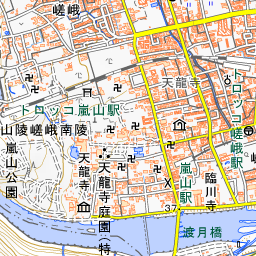
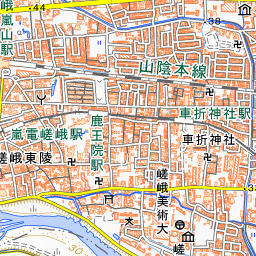
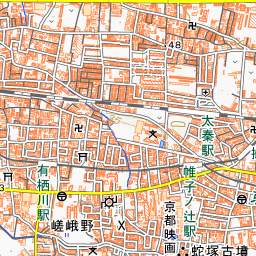
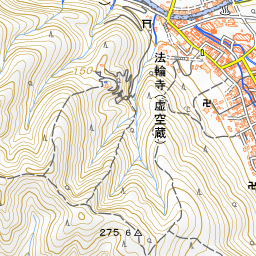
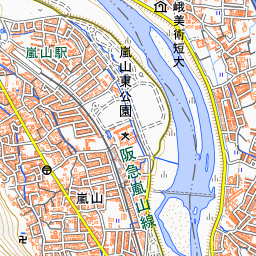
It is located immediately upon exiting Randen's Arashiyama Station, and is a 13-minute walk from JR Saga-Arashiyama Station. Passing through Hyakka-en Garden, which stretches from the Taho-den hall to the north gate, leads to the path of Arashiyama Bamboo Grove, as well as Okochi Sanso Villa, Jojakko-ji Temple, and Rakushisha Hermitage. The sub-temple Hogon-in Temple is about 250 meters to the southeast, Nonomiya-jinja Shrine is about 200 meters to the northeast, and Togetsukyo Bridge is about 580 meters to the southeast.
Spot location © OpenStreetMap contributors (ODbL)
Open in Google MapsGuides that include this spot (1)
Use asobot while you walk
- See where you are on the map and find spots nearby
- Listen to the guide's audio in course order, one after another (with subtitles)
- Walk to the next spot while following the map
Open on your phone
Scan to open this spot in asobot on your phone.