 ✨ AI Generated
Hatonomori Hachiman-jinja Shrine
Japanese: 鳩森八幡神社
Shibuya City, Tokyo
This information was written by AI and may contain mistakes. Please check official sources for opening hours, fees, and other details before you go.
Found a mistake? Let us know with “✏️ Something's wrong” on this spot's screen in asobot →
🎧 Audio guide(1:00)
In short
Hatonomori Hachiman-jinja Shrine, located in Sendagaya, is a Hachiman shrine dedicated to Emperor Ojin and Empress Jingu. The Sendagaya Fujizuka on the grounds is said to have been constructed in 1789 (Kansei 1), making it the oldest among the existing Fujizuka mounds in Tokyo. The shrine has a long-standing cooperative relationship with the Japan Shogi Association and also features a Shogi-do Hall that houses a large shogi piece.
- Sendagaya Fujizuka: A mound built in imitation of Mount Fuji, designated as a Tangible Folk Cultural Property of Tokyo. Visitors can climb it to worship.
- Large Shogi Piece in Shogi-do: A hexagonal hall enshrines a 1.2-meter-tall large shogi piece carved from zelkova wood.
- Legend of the White Pigeons: The shrine's name originates from a legend that white pigeons flew away from the forest.
History and Highlights
Hatonomori Hachiman-jinja Shrine enshrines the two deities Emperor Ojin and Empress Jingu.
According to the origin story handed down at the shrine, long ago, clouds of auspicious omen frequently appeared deep within the forest at this site. One day, a villager who found it mysterious entered the forest, and a flock of white pigeons flew away toward the west. Following this event, the villagers built a small shrine and named it Hatonomori ("Pigeon Forest"). Later, in 860 (Jogan 2), the priest Jikaku Daishi Ennin stopped by this land. It is said that in response to the villagers' wishes, he enshrined it as a Hachiman shrine.
The shrine pavilion built of zelkova wood in 1845 (Koka 2) was destroyed by war damage in 1945 (Showa 20). The current pavilion is an all-zelkova structure completed in 1993 (Heisei 5) through construction work to restore it to its pre-war form. A ginkgo tree that escaped the wartime fires and continues to live today serves as the sacred tree.
The primary highlight on the grounds is the Sendagaya Fujizuka, which is designated as a Tangible Folk Cultural Property of Tokyo. Fujizuka are mounds built in imitation of Mount Fuji for people who found it difficult to travel to Mount Fuji itself. This Fujizuka is said to have been constructed in 1789 (Kansei 1) and is the oldest existing Fujizuka in Tokyo. It is a valuable historic relic conveying the nature of Fuji worship, which was widely practiced by commoners in Edo.
Points for Appreciation and Activities
- Climbing the Fujizuka: The mound was built by heaping earth into the shape of a round burial mound, with lava from Mount Fuji placed near the summit. Climbing the natural stone steps leads to the Okumiya (inner shrine) at the summit. A cave is created at the seventh station, inside which is enshrined a statue of Jikigyo Miroku, an ascetic who spread the Fuji-ko faith in the Edo period.
- Large Shogi Piece of Shogi-do: With your back to the Otorii gate, walk a short way and you will find a hexagonal hall on your right. Inside, a 1.2-meter-tall zelkova shogi piece is housed, dedicated in 1986 (Showa 61) by the 15th Lifetime Meijin Oyama Yasuharu, who was then the president of the Japan Shogi Association. It was dedicated due to the long-standing cooperation between the shrine and the Japan Shogi Association. Ema (votive wooden plaques) praying for improvement in shogi can be hung at the hall.
- Kappa Komainu: The komainu guardian lion-dog standing in front of the torii gate of the Fujizuka has an indentation on its head where water collects, leading some to call it the "Kappa Komainu." It was reportedly inscribed on the pedestal that it was erected in 1735 (Kyoho 20).
Tips for Exploring
The shrine is about a 5-minute walk from Sendagaya Station on the JR Sobu Line, Kokuritsu-kyogijo Station on the Toei Oedo Line, and Kitasando Station on the Tokyo Metro Fukutoshin Line. The Fujizuka can be climbed at any time, but because it is dark and dangerous at night, it is recommended to visit during daylight hours. It may be closed during ceremonies, Takigi Noh (bonfire Noh) performances, and other events. The grounds have a Noh theater hall where Noh can also be performed, and Takigi Noh is held every year in May and September. Shinjuku Gyoen National Garden is about 800 meters to the north, and Meiji Jingu Seitoku Memorial Picture Gallery is about 740 meters to the east.

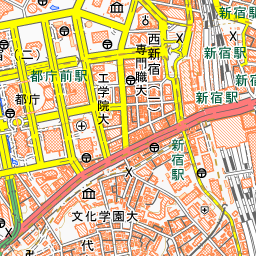


Spot location © OpenStreetMap contributors (ODbL)
Open in Google MapsUse asobot while you walk
- See where you are on the map and find spots nearby
- Listen to the guide's audio in course order, one after another (with subtitles)
- Walk to the next spot while following the map
Open on your phone
Scan to open this spot in asobot on your phone.