 ✨ AI Generated
The Sumida Hokusai Museum
Japanese: すみだ北斎美術館
Sumida City, Tokyo
This information was written by AI and may contain mistakes. Please check official sources for opening hours, fees, and other details before you go.
Found a mistake? Let us know with “✏️ Something's wrong” on this spot's screen in asobot →
🎧 Audio guide(1:02)
In short
The Sumida Hokusai Museum is dedicated to Katsushika Hokusai, the ukiyo-e artist who was born in Sumida City and spent most of his 90-year life within the ward. To honor Hokusai for generations to come as a point of pride for its residents, Sumida City opened the museum in 2016 (Heisei 28). The building was designed by architect Sejima Kazuyo.
- Reflective Exterior Walls: Soft reflections of the surrounding downtown (shitamachi) scenery appear on the lightly mirrored aluminum panels.
- Exhibition Room to Learn about Hokusai: Trace Hokusai's life through full-scale, high-definition replicas of his representative works and touch panels.
- Hokusai's Atelier: View a reconstructed model of the house where Hokusai lived with his daughter Oei when he was about 84 years old by traditional reckoning.
History and Highlights
Katsushika Hokusai was born in 1760 (Horeki 10) near Honjo Warigesui, around present-day Kamezawa in Sumida City. He spent most of his 90-year life within Sumida City, and it is said that he moved more than 90 times. Among his works, many depict the scenery of "Sumida" at that time, such as Ryogoku Bridge, Mimeguri-jinja Shrine, and Ushijima-jinja Shrine. It is also said that he took the name "Katsushika" because the area that included his birthplace was Katsushika District of Musashi Province.
To honor Hokusai for generations as a point of pride for its residents, Sumida City opened The Sumida Hokusai Museum inside Midoricho Park on November 22, 2016 (Heisei 28). It introduces the works of Hokusai and his disciples while sharing Hokusai's connection to "Sumida." The site where the museum stands was once the Edo-period estate of the Tsugaru clan of the Hirosaki Domain. A story remains that Hokusai, requested by the feudal lord, painted a horse on a folding screen before returning home.
The building was designed by architect Sejima Kazuyo. The structure, with four floors above ground and one basement floor, is gently separated by slits and built to harmonize with the surrounding downtown streetscape.
Viewing and Experience Highlights
- Reflective Exterior Walls: Lightly mirrored aluminum panels are used on the exterior walls, softly reflecting the downtown scenery. Its appearance shifts depending on the viewing angle. From the top floor, you can view Tokyo Skytree.
- Exhibition Room to Learn about Hokusai: The permanent exhibition, the "Exhibition Room to Learn about Hokusai," is divided into seven areas, tracing Hokusai's life through representative works and episodes organized by his major artist names (art pseudonyms). Because ukiyo-e prints are extremely sensitive to heat and light, the works displayed here are full-scale, high-definition replicas. You can also view drawing manuals such as the Hokusai Manga on touch panels. Near the entrance is an estimated restoration based on a black-and-white photograph of Hokusai's late-period work "Susanoo-no-Mikoto Yakujin Taiji no Zu" (Susanoo-no-Mikoto Banishing the Pestilence Deities), which was lost in the Great Kanto Earthquake.
- Hokusai's Atelier: When Hokusai was about 84 years old by traditional reckoning, he lived and created works with his daughter Oei in Hannokibaba, Sumida City. At the end of the exhibition, there is a reconstructed model of his studio based on "Hokusai Karitaku no Zu" (Hokusai in His Temporary Studio) drawn by his pupil Tsuyuki Iitsu.
Walking Tips
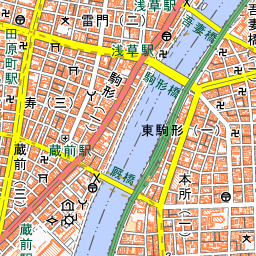
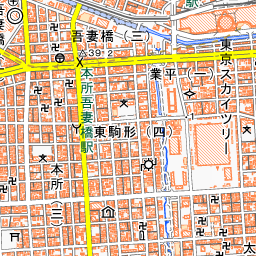
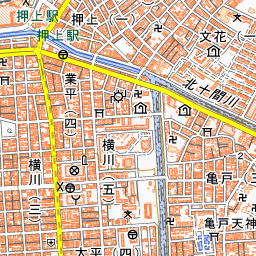
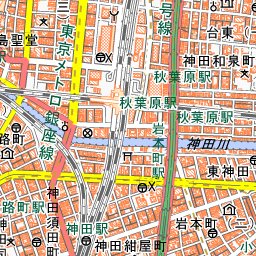
It is about a 7-minute walk from Ryogoku Station on the Toei Oedo Line, and about a 12-minute walk from Ryogoku Station on the JR Sobu Line. Honjo Warigesui, where Hokusai was born, corresponds to the vicinity of present-day Hokusai-dori Street. About 400 meters to the west lies the Edo-Tokyo Museum, about 500 meters to the northwest is Yokoamicho Park, and about 650 meters to the west is Kyu-Yasuda Garden. It is also nice to combine a visit here with a walk around the sights of Ryogoku.




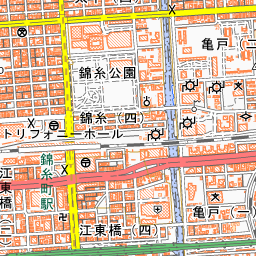
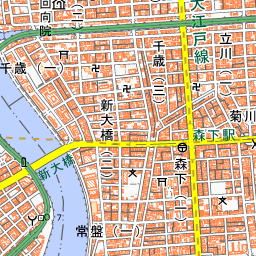
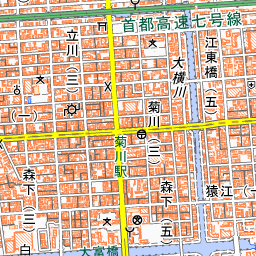
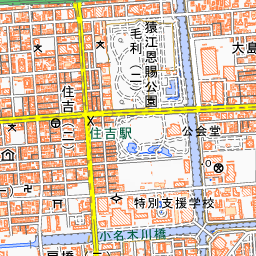
Spot location © OpenStreetMap contributors (ODbL)
Open in Google MapsGuides that include this spot (1)
Use asobot while you walk
- See where you are on the map and find spots nearby
- Listen to the guide's audio in course order, one after another (with subtitles)
- Walk to the next spot while following the map
Open on your phone
Scan to open this spot in asobot on your phone.